

Desert Online General Trading LLC
Dubai, United Arab Emirates
Desert Online General Trading LLC
Dubai, United Arab Emirates






🔋 Stay powered, stay ahead—never get caught dead on the road!
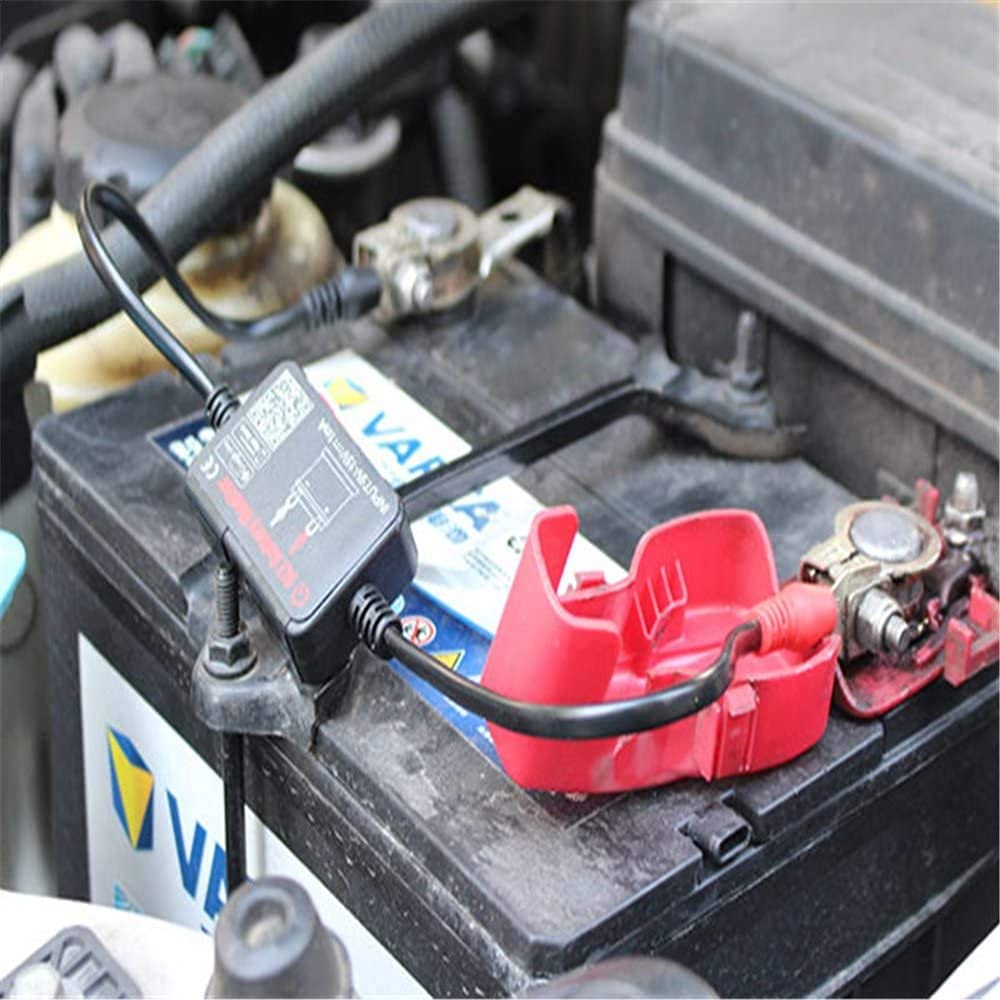
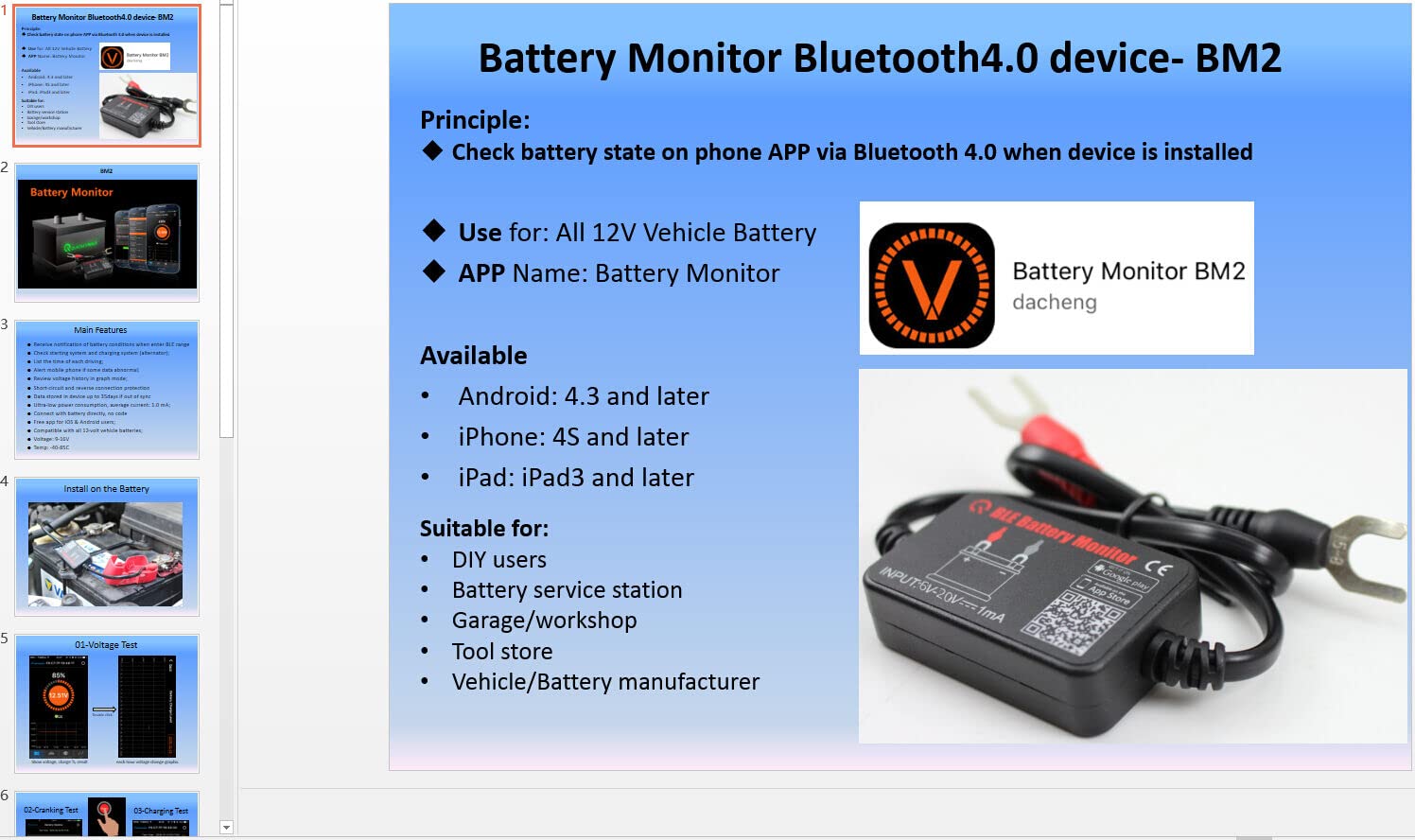
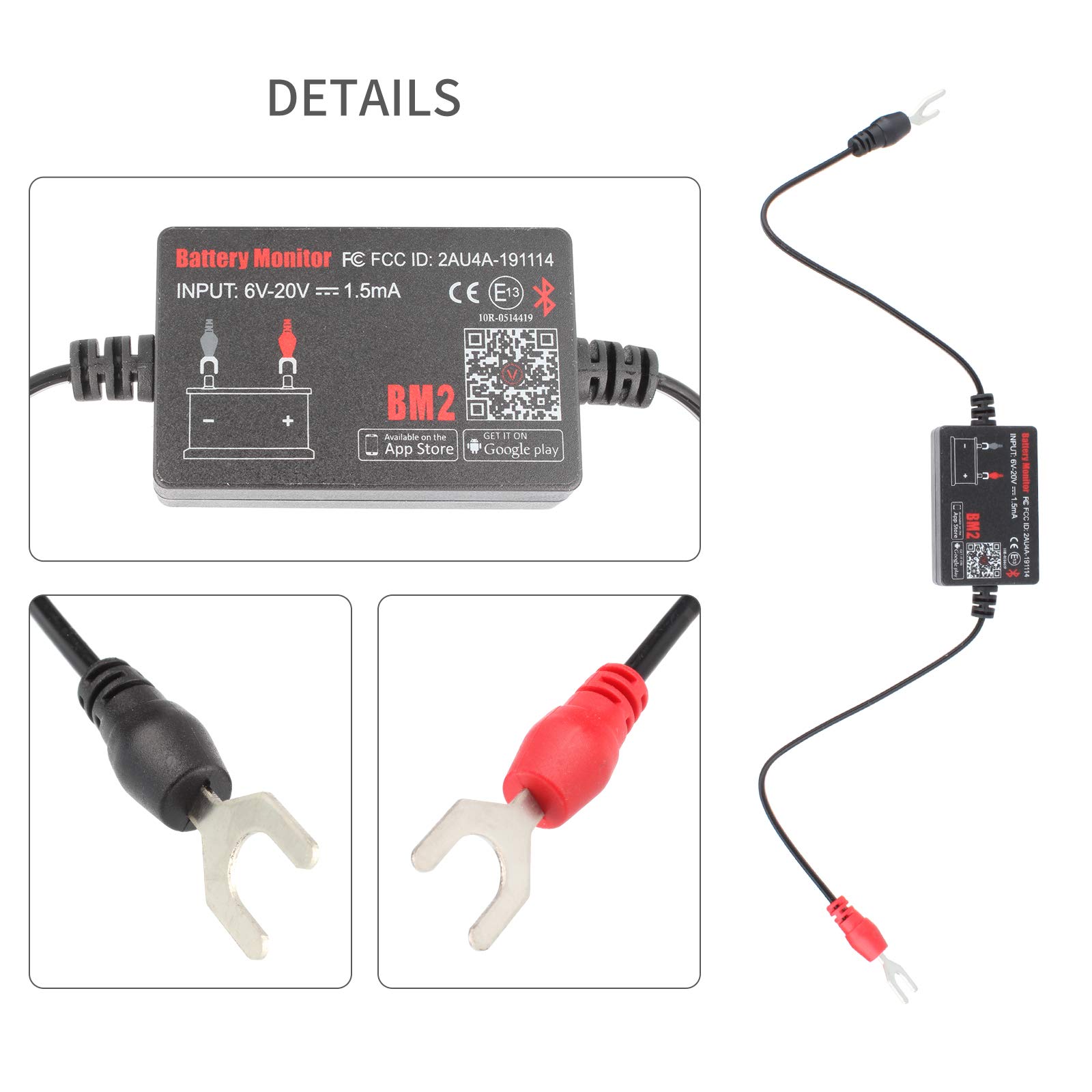
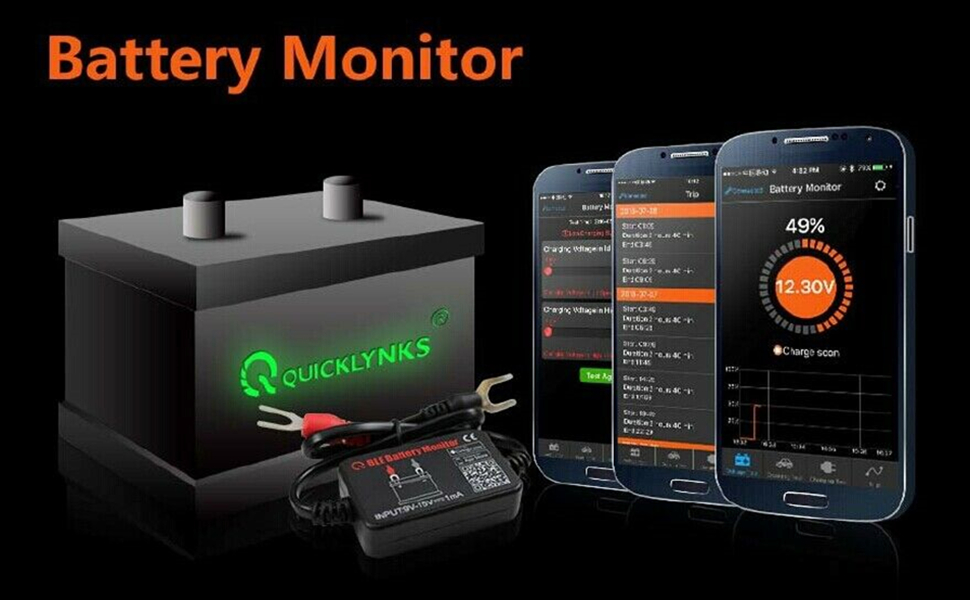
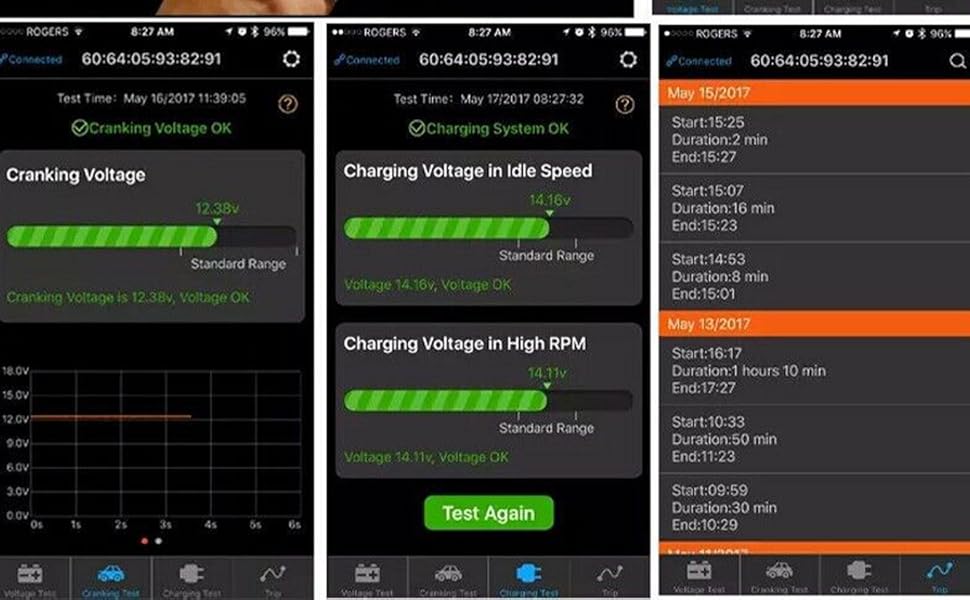
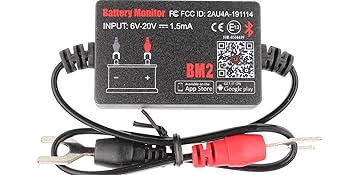
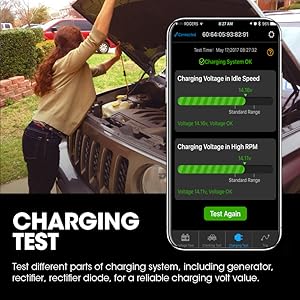
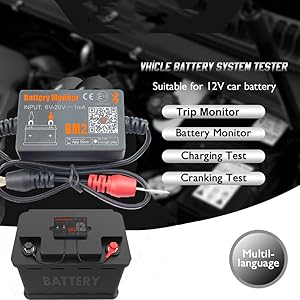
The Auto Battery Monitor BM2 is a sleek, Bluetooth-enabled 12V battery tester that provides instant diagnostics of your vehicle’s battery and alternator status via a free mobile app. Compatible with all 12-volt batteries, it offers quick, color-coded LED feedback and comes in a convenient 2-piece set, empowering you to maintain peak vehicle performance with professional ease.



| Manufacturer | anmas power |
| Part number | 1 |
| Item Weight | 160 g |
| Package Dimensions | 24 x 6.3 x 1.2 cm; 160 g |
| Item model number | T-16 |
| Size | 2pcs |
| Colour | Black, Red |
| Style | Modern |
| Power source type | Battery Powered |
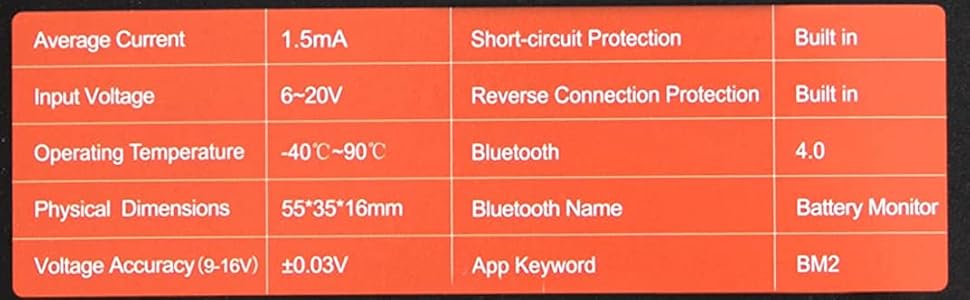
| Voltage | 12 Volts (DC) |
| Item Package Quantity | 1 |
| Included components | 2pcs Auto Battery Monitor |
| Batteries included? | No |
| Batteries Required? | No |
A**D
Excellent battery charge, voltage and cranking voltage monitoring
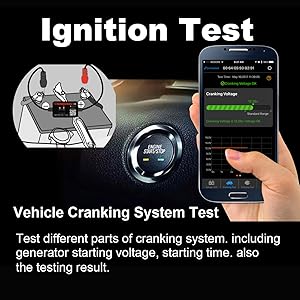
I'm so please I purchased this. It's actually been more helpful than I expected and appears to be pretty accurate and incredibly useful. It can be permanently connected to the car battery for ongoing and automatic monitoring of its percentage charge level, the voltage and how well the car starts when the ignition is turned. It doesn't seem to contribute to battery drain. At the same time I purchased a Konnwei KW210 battery health and load tester (much more expensive).It's winter now and I'm doing mostly very short journeys with electric heating and headlamps on, all of which takes a toll on the car battery. Car batteries are best maintained above 80% charge. If there is any problem with the battery, starter motor, solenoid or related electrics, winter is the time you're more likely to be stuck with the car failing to start. So for me this monitor has been invaluable. It automatically alerts me when my battery needs charging (I can set the percentage at which I'm alerted), and it also alerts me if the voltage when starting the car is low (the cranking voltage). I've not noticed any problems starting my car (except on one occasion), but I now know it does have a low cranking voltage (even when fully charged), so unless I'm careful and keep my battery charged, it might suddenly fail to start. The KW210 indicated a problem with cranking voltage too. But this monitor is cheaper, it's automatic, and it goes one step further: It shows me that the cranking voltage is a problem nearly every time I start the car, not just when I decide to test it with the KW210.I love the fact I can have it permanently connected to my car battery so it automatically monitors everything and keeps a record of my voltage every minute of the day 24/7 without me doing a thing! My smartphone automatically connects and downloads all the details every time I'm in the car. So I can look back at how things are at any time. If I need to check the instant voltage, I just have to stand within a few metres of my car (in the hallway of my house), open the app on my smartphone, and press 'connect'. Brilliant!But there's more ...A killer feature of this tester is the graph which shows how the voltage has varied by the minute over the last few days or weeks. It complements the KW210 perfectly because the KW210 only gives me instant (manual) tests (albeit in more depth), not ongoing (automatic) voltage graphs.As a result, I can also see how fast my battery is draining. I open the voltage history graph and check what the voltage was at 7am each day. So, not only do I know how quickly my battery is discharging; it also alerted me to the fact my battery is draining faster than it should overnight, so there may be some 'parasitic drain'.Another thing. One problem with modern cars is that, when you get out of the car or use the central locking the various computer modules start or keep running. That depresses the battery voltage (because current is being drawn) which means that voltage tests and even the tests run by KW210 give false, inconsistent and inaccurate results. It's important to only test the voltage or the battery when it has settled back to normal (with everything off). Using the historical voltage graph, I can see how long this takes and when the battery is ready to be tested. So now if I want to test the battery, I unlatch the bonnet and then lock the car doors (making sure no light is on in the engine compartment). I then need to wait at least half an hour before doing the testing (using my KW210) or checking the voltage. Without this tester I would have had no idea how long I need to wait (for some cars it can be hours).Not only does it alert that my battery needs charging and of potential problems with starting, but it also helps when charging. When charging the battery my intelligent charger is out of sight under the bonnet. Charging of course takes hours. By using this tester I can monitor the voltage of my battery whilst it has charging without having to open the car bonnet. The instructions for my intelligent charger tell me what the voltage should be at each phase of charging, so by simply launching the app and looking at the graph on my smart phone, I know how far charging has proceeded.But it's not just for people making short journeys with iffy car batteries. I recommend everyone gets one of these, you might never know your battery is starting to fail or its charge is getting low until it's too late. So this tool gives peace of mind. Yes, I could test my battery using a voltmeter or my KW210 - but that requires effort. This tool will automatically alert me to problems.It can even test the how well the battery is charging (in case of problems with the battery or the alternator etc). It does that in two ways. Firstly you can check what the voltage was whilst driving (should be well over 14 volts). Secondly, it has a manual test it does whilst you rev the engine. I get the feeling the KW210 test is more accurate in the charging test because there is a 0.1 volt difference when testing charging between the KW210 and this tester, but I could be wrong. Nevertheless, both tools confirm my battery is charging fine.I do also recommend the KW210 - but, except for a deep analysis and report of battery health and load testing, this tool does much the same. So I'd recommend buying this tool when the battery seems fine, and only if it starts to report problems, buy a KW210 to do a more in depth check before paying a garage or replacing the battery.The KW210 tells me the state of health of my battery is fine but confirms the cranking problems - so the reported problems are probably caused by parasitic drain and the starter motor or solenoid. It is possible the KW210 has it wrong and that my battery is at fault after all, but either way, this tool has alerted me to problems with little effort and at a lower cost than the KW210.What about accuracy? I can't be certain, but the battery readings (except for the charging test reading) are very close the KW210 (within 0.04 volts), which is known to be an accurate and reliable tool. The reading are also consistent with how my battery appears to behave, the voltage when fully charged and the time it takes to charge. In careful tests, the reported percentage charge level seems consistent with the KW210 and agrees with online graphs of battery charge level versus voltage. I have seen the reported charge level stay the same when the voltage has temporarily changed (eg when the lights are left on or the computer modules are activated in the car), whereas the KW210 would always, based on the charge / voltage graphs report a different charge level. However, that is probably a good thing - it seems to be taking into account the fact that the voltage varies depending on what is drawing power, and reporting the actual percentage charge level as best it can estimate it.A couple of things could be improved: It would be good if you zoom in on the graphs showing the voltage history, and it would be better if it kept more than just the last two cranking voltage tests.Highly recommended! Only time will tell about durability - will try to update this review in 6 months time.
4**Z
Accurate readings
First thing to know is these devices have internal software that the app updates when installing as long as the device is connected to power. The update worked flawlessly. The app permits a custom percent program charge state to be entered (or battery type), but programming is permitted only when the device is connected to the power source. My own system uses two new 110Ah AGM batteries connected in parallel in my motorhome show 'charging' when the sensor is connected as the standing voltage is around 13.6V so I may tweek the custom settings over time. Accuracy is very good - almost perfect - checked against a new Fluke 289 showed a small error of 0.006V which is most acceptable to me considering the app display only shows two decimal points.Current consumption of the device is measured around 2mA which would lower my battery capacity by 10% in 11,000 hours or 1.2 years, so this should not be a problem.A graph is provided to show state of charge over time, so a realistic record of what is happening with your battery. If I was designing a Ver 3 of these units, a hall effect current monitoring device would be an ideal way of giving more information along with the voltage. Obviously, this would only be useful for leisure battery purposes as high starter currents in cars or trucks would be difficult to monitor accurately.At this price point, why make a device yourself when this one does the job in such an accurate way? I'm impressed with it.
T**Y
Great Little Device
Brilliant little device, use this to monitor and record my Toyota C-HR Hybrid 12v battery as historically issues have been recorded on many hybrids and indeed full EV's where vehicle 12v batteries are rapidly discharging while not in use and render the vehicles unable to start.Have been able to collect valuable battery voltage trends to better understand the issue and establish if the 12v battery should be replaced or is this an inherent vehicle issue.The associated Android phone app. is excellent and blue tooth connectivity is very easy.Accuracy was amazing, when bench tested using a variable PSU and a calibrated Fluke DMM, voltage readings over the entire range were within 0.05v's to Fluke DMM.Only minor criticism is would like to have had an in line fuse incorporated as it's a direct battery connection, have added this to the positive line for safety reasons using a 3 amp fuse.
Trustpilot
1 month ago
2 months ago
1 day ago
2 weeks ago