![Phoenix [DVD]](https://m.media-amazon.com/images/I/51+iylVOsZL._AC_SL3840_.jpg)


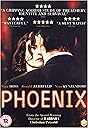
Phoenix [DVD]
Product ID: 48777155
Details
- FormatPAL
- GenreCry
- LanguageEnglish German
- Runtime1 hour and 38
June, 1945. Badly injured, her face destroyed, Auschwitz survivor Nelly returns to Berlin. Having barely recovered from facial surgery, she sets out to find her husband Johnny. Nelly’s family has been murdered in the Holocaust - Johnny is convinced that his wife, too, is dead. When Nelly finally tracks him down he doesn’t recognise her, but seeing a resemblance Johnny asks her to take on the identity of his ‘late’ wife in order to access her inherited fortune. Nelly agrees: she becomes her own imposter. She wants to know if he loved her – and whether he betrayed her. She wants her old life back. Review: One of my favourite films now - Brilliant! some of the family thoughjt it was a bit slow - I felt it was just right to build the tension. Amazing ending Review: " Tomorrow is near, and always too soon " (Weill) - Nina Hoss and Christian Peltzer have pulled off another double act, one as director of award winning films and the other as a woman as the agent of change in the rubble of post-war Berlin. In his previous two films with Hoss, Yella and Barbara, Peltzer has covered the split between east and west Germany, and crossing from one to the other side. This one deals with guilt ,redemption,identity and betrayal, in the reconstruction of a woman’s face and psychic renewal, as survivor of a concentration camp,come out of the land of the dead, who passes through a land of noirish shadows and deathly nights, to find out whether love exists or has been betrayed. Hoss’s bandaged up face shows Kelly barely exists for the 1st twenty minutes, like a pale,shadowy chimera,tentatively stepping forward out of a trauma beyond all conception. The film’s glory is in adumbrating this negative capability, into one of nebulous possibility. This recalls Eyes without a Face. The next part when she comes forth from the bandages,recalls Vertigo, in her man’s attempt to model her into a likeness of his wife in order to gain her inheritance that he’s not entitled to. Kunzendorf is great a tragic friend. Germans have congregated in the Phoenix nightclub where American soldiers gather,casting off their own language, identities and songs, for the American ones on offer.Nelly goes to find her lost love and husband, Johnny( Zehrfeld). He sees a woman he could mould into a passing resemblance of his wife, so he has her live with him, and he shows Nelly’s old things like lip-stick, letters ,dress. Lene ( Kunzendorf) is Nelly’s friend and wants to go with her to Haifa in Palestine. She knows Johnny betrayed her and divorced her on the day she was arrested, but Nelly’s love is strong at 1st as she gives Johnny a chance as they rehearse her role as Nelly, how she should act and behave. She knows Johnny is her husband, he seems blind of her being Nelly, until the Kurt Weill song she sings while all their friends are gathered. This film is dense with deep emotions of the guilt of Germans in post-war Germany, the remaking of Germany, the attitude of Germans to returning Jews, exploring the lives and emotions of Jews in post war Germany trying to reclaim their lost monies and contemplating where to spend their future lives. The film’s final scene is filled with such resonance and power before it fades. Masterly restraint in the telling,as if to echo Weill’s Speak Low. The period detail is meticulous, the cinematography to channel artifice out of trauma.
| ASIN | B00OG482TM |
| Actors | Imogen Kogge, Michael Maertens, Nina Hoss, Nina Kunzendorf, Ronald Zehrfeld |
| Aspect Ratio | 16:9 - 1.78:1 |
| Customer reviews | 4.4 4.4 out of 5 stars (275) |
| Director | Christian Petzold |
| Is discontinued by manufacturer | No |
| Language | German (Dolby Digital 2.0), German (Dolby Digital 5.1) |
| Media Format | PAL |
| Number of discs | 1 |
| Producers | Florian Koerner von Gustorf, Michael Weber |
| Product Dimensions | 19 x 13.59 x 1.57 cm; 60 g |
| Rated | Suitable for 12 years and over |
| Release date | 31 Aug. 2015 |
| Run time | 1 hour and 38 minutes |
| Studio | SODA Pictures |
| Subtitles: | English |
| Writers | Christian Petzold, Harun Farocki |
D**O
One of my favourite films now
Brilliant! some of the family thoughjt it was a bit slow - I felt it was just right to build the tension. Amazing ending
T**Y
" Tomorrow is near, and always too soon " (Weill)
Nina Hoss and Christian Peltzer have pulled off another double act, one as director of award winning films and the other as a woman as the agent of change in the rubble of post-war Berlin. In his previous two films with Hoss, Yella and Barbara, Peltzer has covered the split between east and west Germany, and crossing from one to the other side. This one deals with guilt ,redemption,identity and betrayal, in the reconstruction of a woman’s face and psychic renewal, as survivor of a concentration camp,come out of the land of the dead, who passes through a land of noirish shadows and deathly nights, to find out whether love exists or has been betrayed. Hoss’s bandaged up face shows Kelly barely exists for the 1st twenty minutes, like a pale,shadowy chimera,tentatively stepping forward out of a trauma beyond all conception. The film’s glory is in adumbrating this negative capability, into one of nebulous possibility. This recalls Eyes without a Face. The next part when she comes forth from the bandages,recalls Vertigo, in her man’s attempt to model her into a likeness of his wife in order to gain her inheritance that he’s not entitled to. Kunzendorf is great a tragic friend. Germans have congregated in the Phoenix nightclub where American soldiers gather,casting off their own language, identities and songs, for the American ones on offer.Nelly goes to find her lost love and husband, Johnny( Zehrfeld). He sees a woman he could mould into a passing resemblance of his wife, so he has her live with him, and he shows Nelly’s old things like lip-stick, letters ,dress. Lene ( Kunzendorf) is Nelly’s friend and wants to go with her to Haifa in Palestine. She knows Johnny betrayed her and divorced her on the day she was arrested, but Nelly’s love is strong at 1st as she gives Johnny a chance as they rehearse her role as Nelly, how she should act and behave. She knows Johnny is her husband, he seems blind of her being Nelly, until the Kurt Weill song she sings while all their friends are gathered. This film is dense with deep emotions of the guilt of Germans in post-war Germany, the remaking of Germany, the attitude of Germans to returning Jews, exploring the lives and emotions of Jews in post war Germany trying to reclaim their lost monies and contemplating where to spend their future lives. The film’s final scene is filled with such resonance and power before it fades. Masterly restraint in the telling,as if to echo Weill’s Speak Low. The period detail is meticulous, the cinematography to channel artifice out of trauma.
T**.
A deeply moving and personal view of the aftermath of World War II.
Phoenix is a powerful film which makes all of its points, some of which are quite painful, in the most understated way possible. The homage to Alfred Hitchcock is simple and free of irony or self-reference. The plot has been discussed in numerous reviews so I will not review it here. Suffice it to say that Nina Hoss is totally convincing as Nelly, a survivor of Auschwitz. The film begins shortly after the Allied victory, in a Europe which is filled with people on the move. Displaced persons, concentration camp survivors, and Nazis fleeing Germany are on the roads and military checkpoints can hardly tell one group from another. We first meet Nelly at one such checkpoint as she is being transported to a hospital where she will receive plastic surgery to her disfiguring facial wounds. Everyone at the checkpoint is weary, suspicious and frightened. A soldier orders Nelly to remove the bandage from her ravaged face, and then, embarrassed and somewhat sheepish, lets her pass. No scenes of battle, no desperate gunfights, no tank warfare. Just weariness, and this tells the story of what came before better than any cinematic visual flashbacks ever could. At the start of the film Nelly is deeply scarred both physically and emotionally, and we learn that she sustained herself through the unimaginable humiliation and suffering of the camps by remembering a past that never was, and dreaming of a future that never could be. The horrors of that life are made real to us, not by brutal dramatization, but by almost gentle understatement. Just as Primo Levi's soft, introspective prose proved more powerful in condemning Nazi inhumanity than the most graphic journalism, director Christian Petzold's intensely personal film leaves the viewer deeply moved. By limiting his study to a few individuals affected irreversibly by their war-related experiences he tells us more about the Holocaust than I ever thought possible.
F**Y
a good watch
For me it was a slow burn but you gradually get dragged into the film and it is in my view, as absolute gem. Worth a watch.
S**Y
Surprisingly Good in a Low Key Way
Captures the atmosphere of life in the bombed out rubble of occupied, post-war Germany really well. Slow moving, no action but a good "plot" that unwinds slowly but steadily with a surprising and by no means corny ending. Does an excellent job of conveying the extent of Nelly's suffering and dehumanising in Auschwitz without any graphic scenes. Though written and acted by Germans, it is unremittingly critical of the indifference of most Germans to the holocaust both during and immediately after the war. You have to pay attention as some of the telling detail is made in low key, almost give away comments. It left a distinct impression on both of us.
R**T
Speak low, when you speak love. Es ist diese Melodie von Kurt Weill, dem vor den Nazis geflohenen jüdischen Komponisten, die sich durch den gesamten Film zieht. Er beginnt mit der Melodie, sie wird später auf einem alten Grammophon gespielt, sie wird schließlich gesungen. Es ist die Melodie einer großen Liebe und eines schmerzhaften Erkennens in den Trümmern Nachkriegsdeutschlands. Die Geschichte der jüdischen Jazzsängerin Nelly Lenz und dem Pianisten Johnny. Er versteckt sie, hält dem Druck nicht stand, verrät sie, liebt sie weiter, glaubt sie tot, erkennt sie nicht, kann sie nicht erkennen. Unglaublich behutsam erzählt, zärtlich, wunderschön. Er, der seine große Liebe erst wieder erkennt durch die Musik und sie, die erst durch die Musik loslassen kann von dieser Liebe, an die sie immer geglaubt hat.
T**.
Oh my goodness what an absolutely beautiful movie, Nina Hoss was exceptional as this woman who is trying to find her self back into society after being captured by the Nazis an beating to a pulp, when everyone though she was dead she still keep going to find her husband, good-lord man this will break-your-heart, I can not say anymore you have got to see this, German 5.1 DTS-HD With some English. Widescreen 2.39:1 Runtime 109 Min. What A Love Story To Be-Hold You..
E**S
El llamado nuevo cine alemán sorprende tanto por los temas tratados, como en Phoenix, tanto por el guión , la actuación y la excelsa dirección.
L**U
Ce film révèle parfaitement le côté sombre, obscure et sournois des hommes avec une vérité aussi brutale que choquante avec une intrigue ourdit pendant les années de la seconde guerre mondiale où une jeune et jolie femme juive, ancienne chanteuse connue, dans les années 1930, dans les cabarets de Londres, Berlin et de Paris, miraculeusement rescapée des camps de la mort, revoit son mari, persuadée de sa mort, qui entend profiter de l'absurde ressemblance avec son épouse pour manigancer, avec perfidie, des retrouvailles heureuses de telle sorte à obtenir un non moins conséquent héritage qu'elle possède depuis l'extermination de toute sa famille. Les images des villes détruites, les jeux éloquents des acteurs, les habits de l'époque concourt un magnifique film d'autant que la fin, avec la voix sublime et étincelante de l'héroïne, offre une morale très juste et pleine d'espoir selon laquelle même après des épreuves aussi terribles que les humiliations, les brimades, les injures, les discrédits, la déchéance morale, la pauvreté ou la honte, la beauté et les dons naturels que détient toute personne peut renaître brillamment tel un phoenix qui renaît de ses cendres
A**L
Phoenix se ha convertido en mi película favorita de la trilogía "Love in Times of Oppressive Systems", dirigida por Christian Petzold. Me dio gusto adquirir esta edición, ya que es evidente la calidad que Criterion le aporta a sus productos. En particular, considero un acierto el rediseño de la portada. Es un DVD región 1 que cuenta con subtítulos en inglés, además de varias características especiales y un folleto con un ensayo acerca de la obra.
Trustpilot
4 days ago
2 days ago