
DOWNLOAD THE APP


Customer Services
Copyright © 2025 Desertcart Holdings Limited
DOWNLOAD THE APP
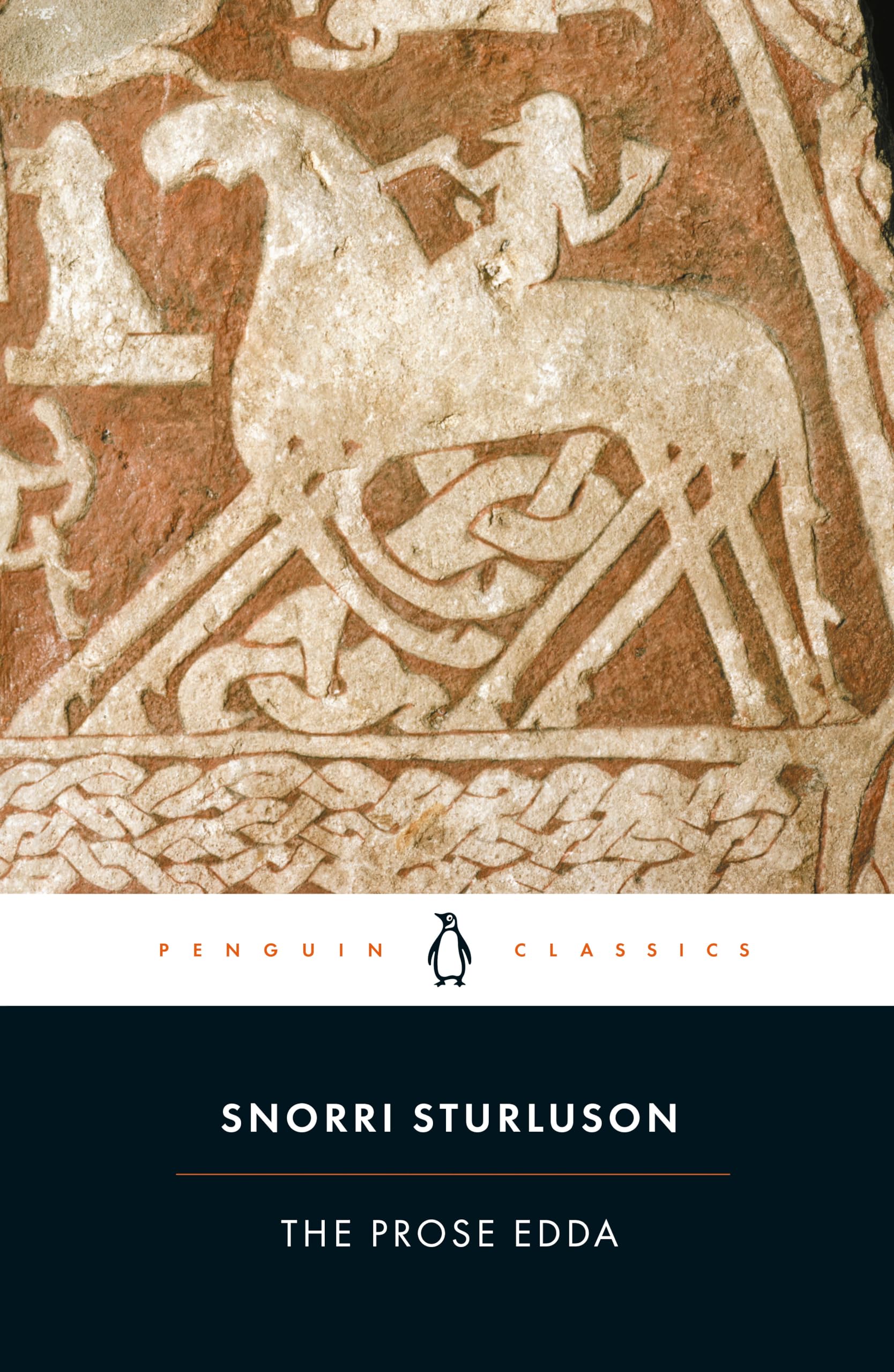
The Prose Edda : Byock, Jesse: desertcart.ae: Books Review: Snorri Sturluson (1179-1241) was a famous Icelandic author, statesman, and one of Iceland's wealthiest men. During Snorri's time Iceland was increasingly dominated by Norway and Norwegian culture. Snorri's Prose Edda was written in response to these new trends as a handbook for those "aspiring Icelandic skalds [poets] who wanted to master the traditional forms of verse and the older stories essential to the imagery of Old Norse Poetry" (xi). The Prose Edda's stories were based on the oral tradition from the Viking Golden Age (800-1000). The Edda is divided into four parts (the Prologue, the Gylfaginning, the Skaldskaparmal, and the List of Meters). Sadly, this volume only includes a sample stanza of the List of Meters due to its dense didactic content. For me the Prologue is by far the most interesting part of the entire Edda. Firstly, Snorri might not have been the author which raises some interesting questions about later additions to his text. Secondly, the Prologue consciously attempts to reconcile Norse myth with Christian beliefs. For example, the Prologue states that after the Fall Norse myth was developed in an attempt to understand the world and that they "understood all matters in an earthly way because they had not been granted no spiritual wisdom (ie. of the Christian God's existence)" (4). Also, Graeco-Roman myths are fitted into the Norse mythology and pantheon for the author states that Odin was descended from the Trojans. The second section, the Gylfaginning, consists of a dialogue between King Gylfi and the Aesir (Mysterious God people). King Gylfi asks questions to the three manifestations of Odin about the All Father, The Primeval Cow Audhumla, the origins of the Gods, Ice Giants, the Birfrost bridge to Heaven, etc. This is the core of the Edda and is a virtual encyclopedia of Norse Mythology. The third section, called the Skaldskaparmal, gives background for references and allusions found in Old Norse verse. This section gives thousands of kennings (words substituted for other words - for example, whale road = ocean). However, this the Skaldskaparmal is not simply a list of kennings for poets but also provides the background and stories from which the kennings come from. For example, the story about the origin of poetry (a mead made from a man created from the spittle of the Gods) introduces tens of kennings created from obscure details of each story. This section is a treasure trove of poetic lore as well as important Norse stories. This Penguin edition is absolutely wonderful (besides the lack of the List of Meters). The introduction covers all pertinent information including the historical background about Iceland and Norway, a brief section on Snorri Sturluson, questions of the Edda's authorship, analysis of each section, and the text's Christian influences. Also included are three illuminating Appendixes (about the Norse Cosmos, Kennings, and the sources of the Gylfaginning), a diagram of the World Tree, and a useful map. Although the Prose Edda often seems to didactic and encyclopedic for easy reading the myths are absolutely fascinating and clearly the Prose Edda is not only "Scandinavia's best known work of literature" but also "the most extensive source for Norse Mythology" (ix). A must buy for anyone interested in Norse Mythology and Medieval Icelandic Literature and history. Review: As this is a primary source, I am only reviewing the edition. Given some excellent other reviews available I see no point in reiterating the basics of what the book is about. It should also be noted that I have no experience with Old Norse, and thus I am unable to comment on the finer points of the translation. While this is a very fun book to read, made all the more so by the readable translation, this book really shines on account of its appendices and notes. Penguin Classics are usually just that - the classic itself. Typically, the support material is rather bare, although this seems to have been changing over the last few years. The recent edition of Anna Komnene's 'Alexiad' is one of these new texts, and so is this one. Some of the earlier texts like Tacitus' 'Annals' and Suetonius 'Twelve Caesars', although revised and given the new black jacket, are still extremely bare bones, and in the case of Tacitus, aren't even equipped with a competent index. This edition is a radical departure for that, and I can do nothing other than praise the material provided within. Even though the Prose Edda is one of the major foundational texts for understanding Norse literature, much lies under the surface and these support materials are absolutely essential for understanding the text. Beyond having good notes, this edition has several excellent appendices on the Norse cosmos, the language of the skalds, and the sources used in the 'Gylfaginning'. There are genealogical tables and a generous glossary that all aid in the understanding of the text. The introduction is excellent and provides a firm basis for reading the Edda. My only complain lies along the lines of the notes. As Penguin inserted them as end notes, there is a lot of constant flipping to the back to see what insights Byoxk has provided. Given how important these are to understanding this text, it was a real nuisance that they were not foot notes. Still, this is a minor complaint for an overall fantastic edition.
| Best Sellers Rank | #87,898 in Books ( See Top 100 in Books ) #60 in Norse & Viking Myth & Legend #83 in Epic Poetry #84 in Greek & Roman Myth & Legend |
| Customer reviews | 4.8 4.8 out of 5 stars (1,996) |
| Dimensions | 19.66 x 13.21 x 1.4 cm |
| Edition | Illustrated |
| ISBN-10 | 0140447555 |
| ISBN-13 | 978-0140447552 |
| Item weight | 173 g |
| Language | English |
| Print length | 224 pages |
| Publication date | 28 July 2005 |
| Publisher | Penguin Classics |
| Reading age | 18 years and up |
B**L
M**S
Snorri Sturluson (1179-1241) was a famous Icelandic author, statesman, and one of Iceland's wealthiest men. During Snorri's time Iceland was increasingly dominated by Norway and Norwegian culture. Snorri's Prose Edda was written in response to these new trends as a handbook for those "aspiring Icelandic skalds [poets] who wanted to master the traditional forms of verse and the older stories essential to the imagery of Old Norse Poetry" (xi). The Prose Edda's stories were based on the oral tradition from the Viking Golden Age (800-1000). The Edda is divided into four parts (the Prologue, the Gylfaginning, the Skaldskaparmal, and the List of Meters). Sadly, this volume only includes a sample stanza of the List of Meters due to its dense didactic content. For me the Prologue is by far the most interesting part of the entire Edda. Firstly, Snorri might not have been the author which raises some interesting questions about later additions to his text. Secondly, the Prologue consciously attempts to reconcile Norse myth with Christian beliefs. For example, the Prologue states that after the Fall Norse myth was developed in an attempt to understand the world and that they "understood all matters in an earthly way because they had not been granted no spiritual wisdom (ie. of the Christian God's existence)" (4). Also, Graeco-Roman myths are fitted into the Norse mythology and pantheon for the author states that Odin was descended from the Trojans. The second section, the Gylfaginning, consists of a dialogue between King Gylfi and the Aesir (Mysterious God people). King Gylfi asks questions to the three manifestations of Odin about the All Father, The Primeval Cow Audhumla, the origins of the Gods, Ice Giants, the Birfrost bridge to Heaven, etc. This is the core of the Edda and is a virtual encyclopedia of Norse Mythology. The third section, called the Skaldskaparmal, gives background for references and allusions found in Old Norse verse. This section gives thousands of kennings (words substituted for other words - for example, whale road = ocean). However, this the Skaldskaparmal is not simply a list of kennings for poets but also provides the background and stories from which the kennings come from. For example, the story about the origin of poetry (a mead made from a man created from the spittle of the Gods) introduces tens of kennings created from obscure details of each story. This section is a treasure trove of poetic lore as well as important Norse stories. This Penguin edition is absolutely wonderful (besides the lack of the List of Meters). The introduction covers all pertinent information including the historical background about Iceland and Norway, a brief section on Snorri Sturluson, questions of the Edda's authorship, analysis of each section, and the text's Christian influences. Also included are three illuminating Appendixes (about the Norse Cosmos, Kennings, and the sources of the Gylfaginning), a diagram of the World Tree, and a useful map. Although the Prose Edda often seems to didactic and encyclopedic for easy reading the myths are absolutely fascinating and clearly the Prose Edda is not only "Scandinavia's best known work of literature" but also "the most extensive source for Norse Mythology" (ix). A must buy for anyone interested in Norse Mythology and Medieval Icelandic Literature and history.
K**X
As this is a primary source, I am only reviewing the edition. Given some excellent other reviews available I see no point in reiterating the basics of what the book is about. It should also be noted that I have no experience with Old Norse, and thus I am unable to comment on the finer points of the translation. While this is a very fun book to read, made all the more so by the readable translation, this book really shines on account of its appendices and notes. Penguin Classics are usually just that - the classic itself. Typically, the support material is rather bare, although this seems to have been changing over the last few years. The recent edition of Anna Komnene's 'Alexiad' is one of these new texts, and so is this one. Some of the earlier texts like Tacitus' 'Annals' and Suetonius 'Twelve Caesars', although revised and given the new black jacket, are still extremely bare bones, and in the case of Tacitus, aren't even equipped with a competent index. This edition is a radical departure for that, and I can do nothing other than praise the material provided within. Even though the Prose Edda is one of the major foundational texts for understanding Norse literature, much lies under the surface and these support materials are absolutely essential for understanding the text. Beyond having good notes, this edition has several excellent appendices on the Norse cosmos, the language of the skalds, and the sources used in the 'Gylfaginning'. There are genealogical tables and a generous glossary that all aid in the understanding of the text. The introduction is excellent and provides a firm basis for reading the Edda. My only complain lies along the lines of the notes. As Penguin inserted them as end notes, there is a lot of constant flipping to the back to see what insights Byoxk has provided. Given how important these are to understanding this text, it was a real nuisance that they were not foot notes. Still, this is a minor complaint for an overall fantastic edition.
B**B
White history , it is gold
K**Y
Really good book...so informative and easy to understand. It mentions Ragnar at the end of the book...I so wanted it to continue!! What a tease!! Ha! Haa!!
Trustpilot
2 days ago
2 weeks ago