We remain fully operational. Our teams are working around the clock to ensure your deliveries continue safely.

DOWNLOAD THE APP


Copyright © 2025 Desertcart Holdings Limited
DOWNLOAD THE APP




Buy anything from 5,000+ international stores. One checkout price. No surprise fees. Join 2M+ shoppers on Desertcart.
Desertcart purchases this item on your behalf and handles shipping, customs, and support to GERMANY.
🍽️ Elevate your kitchen game with the ultimate flavor playbook!
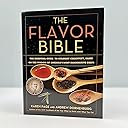
The Flavor Bible is a celebrated culinary reference guide that empowers home cooks and professionals alike to innovate with flavors. Winner of the 2009 James Beard Book Award, it compiles expert recommendations on ingredient pairings, seasonal availability, and cooking techniques, enabling you to create personalized dishes with confidence and creativity.


| Best Sellers Rank | #1,892 in Books ( See Top 100 in Books ) #2 in Professional Cooking (Books) #6 in Cooking Encyclopedias #7 in Cooking, Food & Wine Reference (Books) |
| Customer Reviews | 4.7 4.7 out of 5 stars (9,529) |
| Dimensions | 8.05 x 1.55 x 10.45 inches |
| Edition | 1st |
| ISBN-10 | 0316118400 |
| ISBN-13 | 978-0316118408 |
| Item Weight | 3.15 pounds |
| Language | English |
| Print length | 392 pages |
| Publication date | September 16, 2008 |
| Publisher | Voracious |
O**A
if you buy ONE culinary title, make it this one
First I have to say... don't buy reference books for your Kindle. Ever. There may be exceptions, but i would not look for them. Kindle simply is not a format that lends itself to research reading or reference; not saying it's impossible, but, generally, it doesn't work well. Now that you've been duly warned, please, don't buy and then rate book *content* because they translate poorly into Kindle *format* unless that is it's primary binding. It's not fair to other readers to drive down the rating on a text's usefulness or interest based on one format. Amazon, of course, should separate them out, or give shoppers the option. The first thing I EVER read about Kindle is, don't buy anything you would normally be "leafing" through, using an index, depending on diagrams or graphics etc. (not the case here) or where formatting is otherwise an issue (e.g. tables). Maybe some years down the road it will improve, and I don't use a Kindle Fire, but I stick to this advice and it serves me well. Now as far as The Flavor Bible goes: If you are anything but a recipe-guided cook--for instance, if you are staring into your cupboards or fridge and wondering what will work with what--and like me, you are too inexperienced or genetically underendowed with smell and taste to figure it out on your own - you WANT this book. you NEED this book. This book is the most useful and most used in my kitchen. IMO, aside from basic culinary skills - how to to cook certain cuts of meat, or how to use a steamer, or how to make sauce, or how many courses to serve ,or what order your menu should proceed through, or how to butcher meat - whatever - this is the only book you will ever need. If you don't have basic culinary skills, you can find everything you need to know on the internet. i went from how to cook different meats, to how to make sauces, and up from there, using sites like about dot com. I'm no chef - i'm a basic cook - but my food is GOOD. Since I don't have a well-developed palate, this book is a life-saver. and of course, once you start learning, you can start jumping around. Now i *know* - am i in the mood for a cream based dish? pineapple? potato? thyme? curry? chicken? pork? and what am i going to do with these leftovers? wow - i can plan a week and have EVERYTHING work together! The hardback version is well bound, easily referenced, and contains literally thousands of cross-references and often suggestions on how to combine dishes and seasonings as well, based on a main ingredient, in a way you will never find on the internet. And it's not just about seasoning--you can look up literally almost any seasoning OR basic ingredient and find a long list of compatible ingredients/flavors, in alphabetical order, with advice to let you know what goes the very best, what goes well, and what works but may not be ideal. AND an index. So you can look up a meat, or a vegetable, or a seasoning, or most any ingredient, and get a long list of what you can safely combine (within reason). and of course the hardback props open well. it's a quality bind on a quality text that you can keep forever.
A**E
Hands down the best book for being creative in the kitchen
If you love to cook, love to let your imagination come out to play in the kitchen and love experimenting with new foods, this is the book for you. If on the other hand you feel you must rigidly adhere to recipes, this book is still going to be great but not quite as indispensable. I enjoy cooking. Friends will tell you that I am a gourmet chef but the fact is that I really am not. I am a foodie who loves to experiment with flavors and also likes the challenge of replicating foods and flavors that I've had in a restaurant. My palate isn't all that sophisticated though. When it comes to cooking I will look online for ideas, I will look at recipes and perhaps start with something I see and then embellish and experiment as I go along. That's where the flavor bible comes in. If I'm in the kitchen the F Bible is never far from my side. I hosted a small plates party recently. I used a couple of mainstay dishes that I always cook but I wanted to branch out... baked egg rolls, hmmmm what vegetables and seasonings would work well together (I didn't want to go for the obvious soy and ginger) -- I ended up with garlic, cumin and soy as a base. It was delish. My challenge at this small plate feast was that there were people who couldn't handle any level of spice, a person deathly allergic to mushrooms, and a vegetarian. I needed to find substitutions and I did. It was fun figuring out work arounds for everyday flavors and ingredients There are obvious pairings (garlic and onion) and there are less obvious and more exotic pairings. These folks have so much knowledge. The book is a treasure trove. A great reference for when you want to go with new pairings or if you just have a question about something you'd like to try. You can't imagine the wealth of information packed into this very portable volume. Figs, hmmm what would go well with figs. Crack the book open to page 161 (its arranged alphabetically) and you will find a list of fig info including ways to use it and cook with it.... and then a list of its complementary foods and flavors In this case the fig pairs with; Almonds, anchovies, anise, apples, arugula, bacon, butter, a few cheeses, cherries, chicken, chococate........ All this and I'm only up to the letter C. It goes all the way through to walnuts. BOTTOM LINE.... Honestly, my review here can't begin to do this book justice. it is well worth double its list price. I've owned my copy almost ten years and I am not sure how I got along without it. You can go online and pretty much find any recipe you desire. But the information in this book just isn't available in any sort of comprehensive way online that I have found. This truly is a flavor bible written by religious food fanatics.... they have left very few stones unturned. Though I see now that they have a vegetarian flavor bible. I might have to check that out as well. If you like to be creative in the kitchen this book is a must. Buy it. Honest. You'll thank me.
C**T
An essential reference for anyone who loves to create food.
The difference between a cook and a chef is that a cook knows how to follow a recipe, while a chef understands why. This book is not written for cooks. You will not find a single recipe within the pages of this tome. Instead, you will find hundreds of charts listing ingredients and flavors that pair well together, helping the chef to invent their own recipes. The book also discusses concepts such as taste (sweet, sour, bitter, salty), function (warming or cooling), volume (quiet, loud), and weight (heavy, light). This has become one of my most used references. Whenever I am presented with a new ingredient, I check the Flavor Bible first before consulting a cookbook. Brussels sprouts? What the heck do you do with Brussels sprouts? Just look it up in the Flavor Bible! The taste of Brussels sprouts is bitter, they have a moderate-heavy weight and are moderate-loud in volume. Recommended cooking techniques include boiling, braise, sauté, simmer, steam, stew and stir-fry. There are a couple dozen ingredients that will go well with it, but it goes especially well with bacon, butter, cheese or vinegar. The book also lists several flavor affinities, such as Brussels sprouts + bacon + onions. So I would try frying some chopped bacon to render it, maybe add a little butter or olive oil if I needed more fat, then sautéing halved Brussels sprouts and chopped onions. A little sea salt & fresh ground pepper, and voila!
P**R
It is about food, not recipies.
M**Z
What a great , book to understand how flavor pairing works and fundamentals of cooking. I am a professional bartender and I find this book very useful for not just home use but for bar use as well.
R**M
Every time I have an ingredient I want to mix with something, I open this book. It's so simple to consult. I get ideas about what to make in five minutes and the food is just delicious. Five stars! This is probably not for beginners. Real beginners, like folks who struggle to cook rice of fry eggs. For the rest -- an absolute recommendation.
2**9
Tout est dans le titre. à ma connaissance c'est le seul livre au monde à traiter du sujet du goût et des saveurs. toute les combinaisons possibles et imaginables. des infos inédites et incroyables. c'est pointu et fouillé. avec ce livre vous allez oser des mélanges rares et subtils
F**Y
It is very much an American book and it is noticable when you read it... however, as it is not a recipe book you do not face the usual problem of converting American measurements and temperatures into something a bit more UK friendly. I would encourage you to give this book a try even if an American bias is normally a bit annoying for you. This book offers combinations of more than 2 ingredients, explain how to create winning flavour combinations yourself and provide inspiration in the form of quotes from food writers or cooks. It reminds me of The Flavour Thesaurus, which is certainly a better known book where I am, but I find it to be far more educational and entertaining. It has definitely helped me become a more confident cook.
Trustpilot
4 days ago
2 weeks ago