🎵 Rediscover your vinyl’s true sound—clean smarter, spin louder!
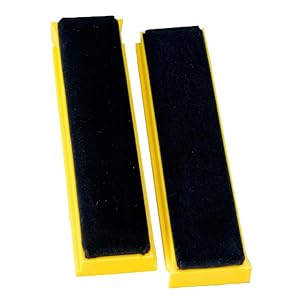
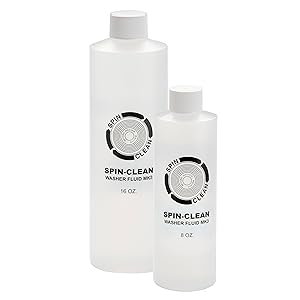
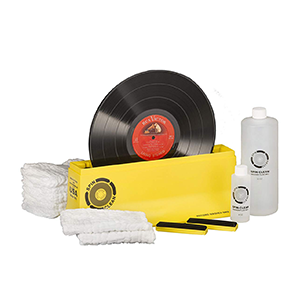
The Spin-Clean Vinyl Record Washer Deluxe Kit offers a quiet, manual dual-sided cleaning system with a proprietary alcohol-free solution, designed for 33, 45, and 78 RPM records. Featuring a stable basin and extra drying cloths, brushes, and fluid, it supports up to 6,300 cleanings. Made in the USA with a limited lifetime warranty, it’s the ultimate tool for audiophiles seeking to revive and preserve their vinyl collections with professional-grade care.


| Best Sellers Rank | #72 in Record Cleaners & Cleaning Supplies |
| Customer Reviews | 4.6 out of 5 stars 1,106 Reviews |
P**R
Does an excellent job when combined with Hudson gel stylus cleaner
I purchased the Disc Cleaner along with the Hudson gel stylus cleaner and I have to say I am blown away with the results. My LPs are clean and look almost new. They sound GREAT too which is the main thing. I am rediscovering my vinyl with this combination. Vocals and instruments sound redefined and vibrant and 'real' now. My Rega deck never sounded better (and they don't recommend cleaning like this! huh?) I was skeptical at first (but encouraged by the Amazon reviews) as with everything audio, it's over priced and usually gimmicky, but with this I am a convert now. Old scratchy records still sound scratchy however, BUT the improved sound quality makes up for quite a bit, and the scratches seem less noticeable. LPs in good condition now sound SUPERB! Quite a noticeable difference in the fidelity of each recording! It was the quality which surprised me. The improvement in audio fidelity and response has been startling. I am now convinced that LPs CAN sound better than CDs! Using the Disc Cleaner is kinda fun. It's very easy too. It WON'T damage your record's label!! (quite a few reviewers were concerned about this) Even if the label gets wet, the fluid easily wipes off and leaves no trace. I found the cloths provided with the unit perfectly satisfactory in removing the fluid from the LP once the cleaning process (3x turns clockwise, then the same anti-clockwise) is over. I will add however that I have found wiping the LP dry in ONE direction is beneficial. Here is my technique:- First, lay one of the cloths flat on a firm surface to act as a base for the operation. This will also absorb a lot of the excess fluid. Fold the other cloth into a third of its width, then fold it to half its length. This is roughly the size of the playing surface of one side. Wipe the vinyl SLOWLY in a clockwise direction (I prefer to a.c.). Don't 'scrub' it. A slow steady movement will get a lot of the liquid off the disc. Then softly wipe again to remove all the residue. You will see the droplets disappear and the record takes on the appearance of a new one. The REASON I fold the cloth so is that now, I use the opposite DRY side to finish off wiping the record. Turn the record over. You will see a mottled effect from the other cloth and it's drying. This wipes off very easily with the now slightly damp side to look just like the first side and again, you can use the dry side to finish the record and - done!! With subsequent cleanings you will find that the 'wiping' cloth starts to dampen quite a bit. THIS is why I fold it, so you can just turn to a drier side for more cleanings. One cloth using this technique can last for at least a dozen cleanings! The cloth on the reverse side helps too, and you can just turn this over when it too starts to get loaded with cleaner. When finished, REMOVE the pads in the unit. Leaving them in the solution will be detrimental to their effectiveness. Common sense really. When you remove them, squeeze them firmly together to get as much cleaner out of them as possible. Rinse under a warm tap and again squeeze to remove the water and then pat them with a cloth and let them air dry for future use. I actually rinse the rollers too because you will notice there is a soft rubbery part in the centre of the plastic roller. I'm not sure how it is affected by the cleaning solution so I rinse them, just in case. I then rinse the cloths in a CLEAN soapy solution and thoroughly rinse them and then dry them in a tumbler dryer. Can't be too careful with vinyl really! When ready for another cleaning, I wet the pads using the existing solution as any dirt residue is now at the bottom of the tank and won't contaminate the pads or the records to be cleaned. I noticed that some LPs were surprisingly hard to spin in the tank. I'm assuming that it's just grit and dirt that makes it so, and I found that STEADY and firm handling did the trick and within two revolutions it was turning quite easily. The same with the other direction. Some LPs are of course dirtier than others and I found that a few were better after 5 or 6 turnings in each direction (two cleanings?) but all were noticeably better in appearance and sound after cleaning. I think the Hudson stylus cleaner helped considerably too and would strongly recommend this be a part of your package as well. I'm so surprised at the difference using these two items has made and am quite prepared to say that it is worth the investment. Whether or not a cleaner costing nearly a grand would be any better, I can't say, but for this amount, these two cleaners have provided great value for money. I am rediscovering my vinyl!! Can't say more than that. Happy spinning! (Did I mention - you have to turn the record manually, but if you keep a steady pressure on it and are sensitive to its resistance, it's no problem)
J**8
Works better than anything I've tried!!!
I am a hobbyist DJ, and recently purchased a dj midi controller. I am in the process of digitizing all my old vinyl, and was looking for an effective and inexpensive way to deep clean my records. Some of my records, that were handed down to me, are older than I am. (30+yrs) I have always cleaned my records with windex and a microfiber cloth. While researching record cleaning machines, I came across other methods of deep clean records. I tried the wood glue method and found it a bit messy! Plus the wait for the glue to dry was too long, in my opinion. I ruined on of my LPs, when I tried to remove the glue. It cracked my vinyl and made it unplayable. Back to the drawing board for me. Then I came across a video on youtube that shows the Spin Clean in action. It looked easy and quite inexpensive.(compared to buying a record cleaning machine with vacuum parts) I decided to give it a try, and I am so glad I did! I didn't realize my records were that dirty, since I clean them periodically with Windex and keep them in thier sleeves. By the time I got done with cleaning about 30 records, the water in the bin was starting to resemble ice tea. I decided to stop and let the particles settle just to see what it looked like. I was astonished at the amount of deposits in the bottom of the bin. This product works!!! Drastically reduced or eliminated my pops and clicks!!! I was curious on seeing if it would remove scratches from records, but the Spin Clean just cleans, and it does a fantastic job. I would recomend this to anyone who is looking to digitize some old records and wants superior sounding digital music. I love what it did to my vinyl collection, hands down the best product I've ever tried!!! Note: you have to manually turn the record 3 times each direction to clean the record.(I would recommend a couple of more cleanings if the record is filthy) Not alot of work, in my opinion, very small price to pay!!! I also purchased a couple of plastic coated metal file folders from home depot to place the cleaned records so they can dry safely. I would recommend the file folders, just to prevent accidental scratches while they are out of thier sleeves.
C**G
An absolutely essential tool for any budding audiophile/collector.
I've washed about a hundred records now using this system and I'd like to offer some thoughts. First, it's a fantastic setup for the beginning turntablist that might not have a cleaning regimen in place. Some folks wash their records at the sink for pennies. Some have thousand dollar machines that enable them to employ cleaning systems with varying degrees of complexity. Both strategies seem to work pretty well, each with pretty vocal exponents. In terms of the value for middle-of-the-roading these two extremes: For the cost, I give this system 5 stars. In terms of sheer performance I'd probably have to knock off one star. Let me allay any fears: This machine works great and using it will far heighten your record playing experience vs not cleaning your vinyl or using a surface cleaner (such as the now borderline useless discwasher system). First some positives: I love the cleaning solution (which seems to draw the most critics). The solution contains a flocculant that weighs any particulate out of the record grooves to the bottom of the tank. It dries clean; works effectively. The brushes are fairly easy to clean (I use a soft bristled toothbrush after 20 or so records, or fewer if they are in bad condition). They can be taken out, cleaned or reinstalled at any point if the results start to seem dubious. Also they are quite durable. The setup as a whole is much easier on my back than standing over a sink. IMO. YMMV ;) The main flaw of this system seems to be the very simple design which makes it so attractive! There are folks who own two, and use a second one just for rinsing the records. I use it as instructed but I've found the main fault to be in the towels- and, in fact the whole concept of hand drying. I've damaged a few records just trying vigorously to get them dry quickly, so as to eliminate as much of the cleaning solution as possible from the surface. It's not ideal. A separate vacuum setup might be useful (though admittedly costly). I've actually heard of folks making their own 'dryers' out of vacuum cleaners to this end. Also the towels shed. Some folks favor microfiber towels for this reason, but I've found that those also shed, just at the micro level- you can't necessarily see the fibers, but they're there. You can certainly hear them and they become that much harder to get out of the grooves, being so small. So, even though occasionally I find towel fibers remaining on freshly cleaned records the problem is usually just superficial (not getting into the whole question of cleaning the towels and cross contamination that could occur with surface contact) and usually goes away with subsequent cleaning and easier drying, or just through actual playing of the records. All of this to say: DRY CAREFULLY. I've also used a terrycloth hand towel for drying with decent results. Overall, this system is a terrific start though- keeping clean records is maybe fundamentally the single best thing one can do to enhance one's listening experience; and, as the vast majority of my own records were once owned by someone else, I've been able, with this setup, to give them an illustrious second life and keep them playing as they should.
R**T
You Get What You Pay For...
While it's not one of these vaccuum power models that do everything but, the dishes...this one will suit your needs if you're not opposed to spinning the record yourself and drying them your self. The brush system and adjustable rollers that accomodate 45's, 78's, 10" Extended Plays or 12" LP's might be simple but, it does the job and really it's all you need! I ordered this one for the extra brushes and cleaning fluid but, you can even make the cleaning fluid yourself, later. But, this really was a pretty good bargain and does a fine job if you're not opposed to doing things manually and you don't mind providing the manpower! P.S. (Update to earlier review from March 2013 - added April 17th, 2013) We found that the records only get as clean as you are willing to put forth the time and effort for. Since we wrote our review, we've seen and used one of the fancy automatic ones and believe me, this one does the job, better, if you're willing to put in the effort, without the over the top price tag. It uses the same cleaning fluid as the expensive motorized ones and does an even better job because you can pay attention to details and especially dirty spots, are cleaned easier with this system. We also use the glue method when a recording is exceptionally dirty. Amazing! Wonder who thought this up? But, it does pull the dirt right out of the grooves! Between this system and the glue method (we use plain old white Elmer's School Glue) you can't get your recordings any cleaner. As SOON as we have a clean record, we play them into our computer, run them through our program to eliminate pops, clicks, and etc... and then download them as MP3 and/or put them on a CD. Then we put the records in a NEW sleeve to keep them clean and put the cover, old sleeve (if it's collectable) and the clean record in a new paper or static free plastic sleeve to store them until they are sold or needed again. If you're going to invest the time and money into old Vinyl, make it worth your while. We also like the fact that you can re-use your fluid more than once and you can keep an eye on it and know when you have to change it. We have a recipe for the fluid but, it's also easily found on YouTube. This is the most economical way to clean vinyl you'll find and it probably does the best job, as well. It seems now that Vinyl is seeing a resurgence now that these youngsters have found that MP3's are not the sound sensation they were led to believe they were! Some vinyl, no matter how popular, due to copyright laws and problems, will never see a new vinyl groove or cd pressed of them so we need preserve as much original vinyl as possible. This is the best way to do it at present! One note, be careful NOT to wet the record labels. We do quarter turns and wait for excess to run off before turning again, but, you experiment and see what you come up with. If you find better ways, we'd love to hear about them!
R**N
The best product I've used in years, and I've tried 'em all!
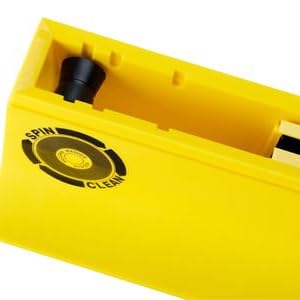
There are a number of terrific reviews here, but as a 37 year audio nut, I thought I'd add my two cents. Let me first say this is the best record cleaning system I've used bar none. Not only is it effective, it's down right addictive! I've done as many as 60 in one session, to as few as five. Prior to obtaining this, I had developed my own wet system with two PVC caps that clamped over the labels, a sink full of soapy water, and a painters pad combined with elbow grease. It worked great! There were two problems. 1) It took forever. 2) It was hard to keep the record from flexing while scrubbing it, especially if it had mildew or a stubborn stain. It convinced me however that a wet cleaning system was superior even to a vacuum. You cannot duplicate the scrubbing action of a wet system by running a brush around a record on a platter. If you could, we'd all be using discwasher brushes for everything. With the Spin Clean I've taken albums that were so dirty or mildewed that I might not normally purchase them even if they were cheap, and turned some of them into near perfect copies. Let me emphasize that a scratched record will always be a scratched record no matter how clean you get it. I've taken records that were covered in dust, dirt, mildew, nicotine, and what looked like soda stains and achieved remarkable results. Here are some tips I've learned. Always start with cleaner records first. You can easily get 50 done per batch if you start with clean ones and work your way toward the dirtiest at the end. If the record has only light dust with a few fingerprints, I give it two spins in each direction. I then set the album in the slot behind the record brushes, and allow it to drain for a minute or so into the reservior. I then lay the album on a (very important) micro-fiber towel, and wipe it down with a micro-fiber cloth. The cloth works better after you clean the first record or two and becomes a little damp. You can even rub at a stubborn finger print or mark with the cloth. I then put the record on a clean towel to air dry a bit more before placing it in a new sleeve. (A record or dish rack would work even better for drying) If you are cleaning relatively clean records, the fluid will last a long time provided you remove the brushes and put the top over the Spin Clean. I increase the number of turns based on how dirty the record is, but never need more than six turns in each direction. I also use the supplied towels to gently wipe dust, lint or pet hair off of the really dirty records before I clean them. On the really filthy ones I like to end with one extra turn in the reverse direction, the theory being that some of the lint pulled from the grooves that has not dislodged will do so when pushed to the opposite direction one more time. Let the record dry a bit, and it there is a stubborn spot or two, set it back in the Spin Clean and go back and forth just in that area. If that doesn't get it (and it ususally will), don't be afraid to bear down on it with your micro cloth! The best judge of when to change the fluid is the "sniff test". I've found when the water gets too dirty it developes a certain unpleasant odor. Of course if it looks dirty you should change it regardless. To Spin Clean's credit however, just like they say the cleaning solution bonds to the dirt and takes it to the bottom of the reservior. You can continue to use it with no risk of stirring it up. When it's time to clean it, carry it to a sink that has a flexible water nozzel and spray it out until clean with WARM water. I've experimented with different ways to clean the brushes, and the nozzel works best for them as well. Don't forget to squeeze the excess moisture out of the pads! I'd also recommend cleaning the pads every 25 records or so, or every 10 if they are very dirty. Why risk it when it's so easy?! As much as I love my machine, it does have a fault. The rollers sometimes have a tendency to ride up or pop out of the spin clean if the record is slightly out of round or has a rough edge. Go slow if this happens, because I had it happen once and it launched the record out of my hands as well! Usually this effect can be minimized by experimenting with different pressure and hand placement. I do wish Spin Clean would come out with a model featuring attached wheels that would solve this minor problem. One could probably also modify an existing unit in a way that would correct it, although I've not felt the urge to do so. Dispite this minor problem, I can't say enough good things about the Spin Clean! I like to buy jazz albums from garage sales, Goodwills, flea markets, and clearance sections of record stores. I had accumulated so many that were too filthy to play that I began setting them aside in a "do not play" pile. Some of these now play better than new, and I don't even blink at buying a dirty record now as long as it appears relatively scratch free. The best part of cleaning them? Listening to them while you work!! Bravo Spin Clean! Thanks for making my life easier without charging a fortune!
J**H
Good for Bulk Cleaning
I am getting back to my vinyl after having in storage for a handful of years. I reconnected my turntable, picked up a new stylus, and pulled out my albums - only to realize that they hadn't been cleaned in years. After looking at the options I went with the Spin Clean for several reasons - been around a while, decent reviews, the yellow (vs black) container, etc. It was a little more expensive than some of the other options, but a lot cheaper than some of the ultrasonic cleaners (I like vinyl, but not enough to spend $1000 just to clean them). It is a fair amount of setup for use (and each time you use it) and each record takes a bit of time to clean and dry. This is certainly not an option for cleaning records each time you play them. So I recommend doing what I did - I cleaned about 24 albums in a row while having the TV or music on. I did 2 at a time - cleaned and dried each one and let them air dry for a bit while I did the next 2, wiped off the album covers, and examined the inner sleeves (replacing if needed), and put the covers in outer sleeves if not already in one. Then put the first 2 away, cleaned the next 2, and continued the cycle - always having 2 doing the final air dry while cleaning the next 2. I saved the solution for the next day and did it again - topping off the solution since some gets used up in the cleaning process. After the 2nd day I put dumped the solution (was getting a touch dirty) and put everything away. I repeated this again the next weekend and did about 100 albums over 2 weekends. I still have some more to go, maybe next month. Overall it was fairly straightforward to use. the drying cloths seem to work well (follow the recommendation to wash before using) and the solution cleans with no alcohol. Is it as good as a high end ultrasonic cleaner? No. But for people like me with a mid-range setup and a smaller collection of about 200 albums where I play 6 or 7 each week, it is a good solution for the occasional deeper clean. I will probably do this on an annual basis. And I have a simpler option for cleaning prior to playing.
J**D
The only choice under $350.00 !!
The Spin-Clean system has been around since 1975 the literature says. I really, really wish I had known of it in 1977 when I got my first decent turntable (..a Dual 504 I worked all summer for). At that time the wooden-handled "Discwasher" with its D3 fluid were sold as "must-have" items. They did a decent job for daily cleaning. The new, RCA-made Discwasher RCA RD-1006 Discwasher Vinyl Record Care System is awful as it replaces the micro-fiber directional pad to...get ready, folks, corduroy!! The Spin-Clean is not for everyday cleaning. It is for cleaning any old OR NEW disc you have or will have. I recently bought a number of 180 gram vinyl re-issues and was ready to give vinyl up! HOW could it be compared to digital with all of the noise, even on new disks? I began to read on the problem, which led me to the Spin-Clean. Back when it was all we had, the music is what mattered. A few pops and clicks were expected and we lived with them, reducing them as much as possible. In the 1970's the quality of raw vinyl dropped and prices for raw vinyl so high that RCA and others began melting and recycling old vinyl without decent quality-control. Pops and clicks were stamped into these from "birth". But I always wondered how record stations ever kept vinyl sounding as good as they did. CLEAN RECORDS are the answer to all of the "dirt" on enjoying records. The truth is they MUST be washed, somehow. Super-strong vacuum systems do very well but even they usually use a wet component in their system. These are self-motorized, semi-automated machines usually from $500 to $1500.00 . Great for the college library. At home, however, the Spin-Clean works just fine. YES, you have to use your arms and hands to spin the record through the brushes. It works...a motor to do it would drive up the cost and degrade the simple reliability of the unit. There is nothing to go wrong, really. Drying the records is the weak link in the process but if the record is washed properly and the drying cloths are clean it works great. The drying cloths are lint-free natural cloth and should be cared for well. They are important. That is why I recommend the deluxe kit. It has plenty of drying cloths and fluid plus extra brushes. I have found that if a record is very old, molded, stained, etc. it will need extra cleaning...even turning the record a quarter-turn, letting it soak. It loosens up some things that a quick three spins will not. If you have albums, 78's or 45's and want to hear them as they should be get this. Get this before you get a turntable! It is that good. It is not fancy but it works. The difference is in the SOUND. The biggest upgrade you can make to a vinyl playback system. A must-have. Along with items like Audio Technica AT6012 Record Care Kit - Includes Record Care Solution, Brush Pad, Storage Base and Adhesive Tape and a stylus cleaner.
J**Y
Great Product
I have gotten back into vinyl in the past year. I have a great vinyl store in my neighborhood and a near infinite supply of used LPs at my finger tips. I have been experimenting with hand cleaning techniques while secretly lusting after a vacuum record cleaning machine. But with basic models starting at more than $400 I decided to give the Spin-Clean a try. Based on my experience of cleaning over 100 records by hand the idea of cleaning in an immersion tank made sense to me. What I couldn't know without trying it was what the quality of the brushes would be and how effectively the cleaning solution would work. After cleaning a dozen discs I am very impressed. This is so much quicker and easier than my hand cleaning method. It is also much more effective. The brushes are are very of a high quality fine velvet like fabric that are comparable to high end hand cleaners. The solution is much morer effective than my home made water-isopropyl-Dawn-Armor All mixture. I read the review by the user who ruined some records. Based on my experience I believe his brushes or rags must have had some contamination on them. Anytime you clean a record it is possible to damage the surface if you have any contamination. Following directions exactly including washing the supplied lint free cloths and tumble drying without fabric softener are critical prior to use. I used Woolite with an extra rinse cycle. The benefits of this cleaning method are impressive. A lot of the surface noise is removed and the sound really does open up dramatically. I am still curious about a vacuum RCM but no longer feel a need to get one any time soon. Thanks Spin-Clean!
Trustpilot
2 months ago
3 weeks ago