
DOWNLOAD THE APP


Customer Services
Copyright © 2025 Desertcart Holdings Limited
DOWNLOAD THE APP
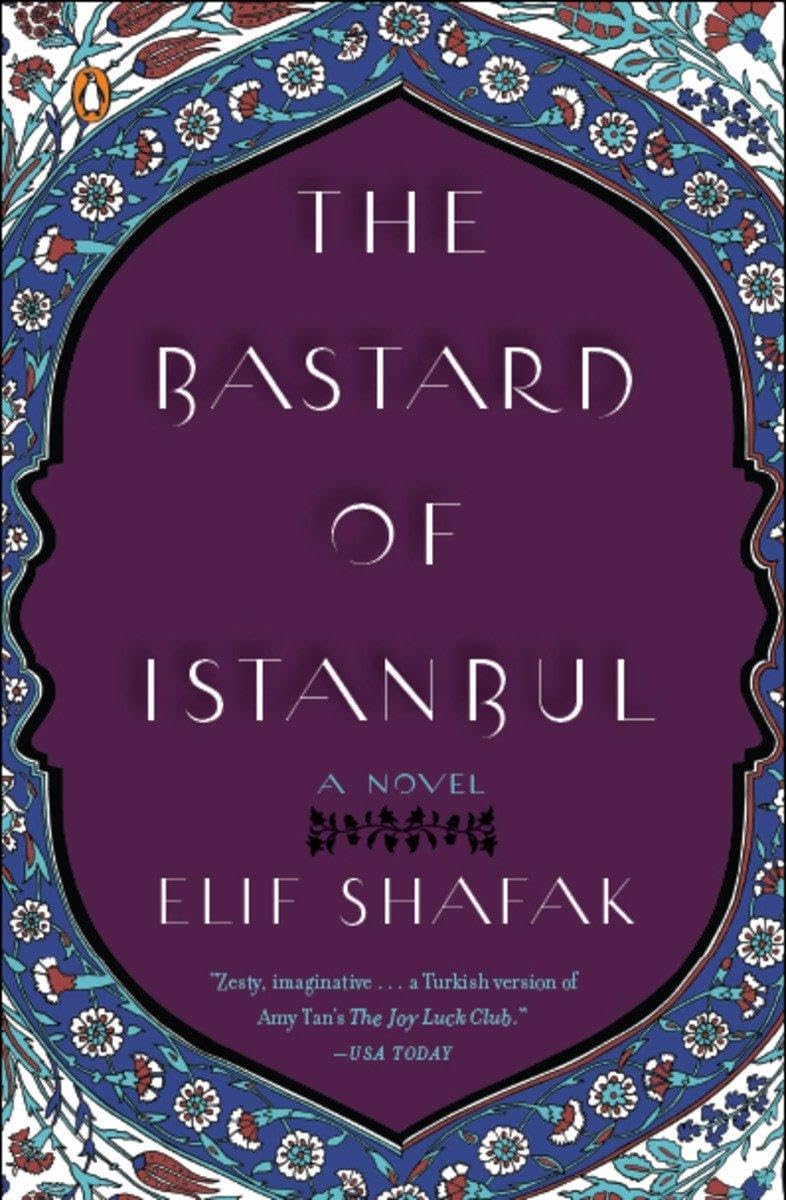
desertcart.com: The Bastard of Istanbul: 9780143112716: Shafak, Elif: Books Review: Bridges the gap between Turkish and Armenian-American points of view - Turkish writer Elif Shafak sure knows how to tell a great story. So great, in fact, that she nearly wound up in jail for "denigrating Turkishness" because some of her fictional characters in this 2007 novel dared to give their viewpoint of the 1915 Armenian deportation horror. And yet, this is a book that bridges the gap between the various points of views and winds up creating a bridge of understanding. This is all done with fine writing, nuanced perspectives, interesting characters and a complex plot that eventually ties up all the loose ends. Basically, it is the story of two large families. One is Turkish and consists four generations of females, the men having all died with the exception of one son who is living in America. The other is Armenian-American with a sad history of persecution. The "bastard" in this story Asya, a rebellious 19 year old Turkish girl whose mother is herself rebellious, dresses provocatively, is agnostic and runs a tattoo parlor. Her counterpart is an Armanoush, also 19, whose parents are divorced and whose American mother and Armenian extended family make her question her identity. She has discovered an Armenian-American internet chat room where she can share some of her thoughts about her heritage with other people and travels to Istanbul to try to understand her background. The book is like a puzzle and there's a new piece to put in place on practically every page. Each character is fully developed and then, just when you think you know where the story is going, there is a another twist to the plot. There is unhappiness of course, but there is also a lot of humor and I often found myself laughing out loud. I loved the portrayals of the places - Istanbul, Arizona, San Francisco. I felt I could hear the sounds, smell the various aromas. This was especially true of the food and the cooking and my taste buds came alive as I read these descriptions. I loved this book. Couldn't put it down. Don't miss it. It is a real treat. Review: Colourful and exotic ... Istanbul and one of it's families spring to life - This is a great read ... Full of colourful characters and wonderful descriptions of Istanbul itself ( which is so well described it's actually like another character itself ) ... Despite the fact that it is set in a traditional muslim city this family are not a run of the mill family .... For a start all the men are dead ( by 51 !!) Each sister , their mother and their grandmother are fantastic characters , full of interesting , and often hilarious ,quirks ... The story line is simple enough , the story of several generations of a family but the interest of the reader is sustained by the fabulously colourful descriptions of the people in this family and the interconnections between them , finally despite the exotic location it turns out teenagers are the same the world over ! ... Read this and you'll see what I mean ...
| Best Sellers Rank | #93,012 in Books ( See Top 100 in Books ) #140 in Cultural Heritage Fiction #684 in Contemporary Literature & Fiction #2,223 in Literary Fiction (Books) |
| Customer Reviews | 4.1 4.1 out of 5 stars (5,025) |
| Dimensions | 8.3 x 5.5 x 0.7 inches |
| Edition | Reprint |
| ISBN-10 | 0143112716 |
| ISBN-13 | 978-0143112716 |
| Item Weight | 11.8 ounces |
| Language | English |
| Print length | 360 pages |
| Publication date | January 29, 2008 |
| Publisher | Penguin Books |
| Reading age | 18 years and up |
L**C
Bridges the gap between Turkish and Armenian-American points of view
Turkish writer Elif Shafak sure knows how to tell a great story. So great, in fact, that she nearly wound up in jail for "denigrating Turkishness" because some of her fictional characters in this 2007 novel dared to give their viewpoint of the 1915 Armenian deportation horror. And yet, this is a book that bridges the gap between the various points of views and winds up creating a bridge of understanding. This is all done with fine writing, nuanced perspectives, interesting characters and a complex plot that eventually ties up all the loose ends. Basically, it is the story of two large families. One is Turkish and consists four generations of females, the men having all died with the exception of one son who is living in America. The other is Armenian-American with a sad history of persecution. The "bastard" in this story Asya, a rebellious 19 year old Turkish girl whose mother is herself rebellious, dresses provocatively, is agnostic and runs a tattoo parlor. Her counterpart is an Armanoush, also 19, whose parents are divorced and whose American mother and Armenian extended family make her question her identity. She has discovered an Armenian-American internet chat room where she can share some of her thoughts about her heritage with other people and travels to Istanbul to try to understand her background. The book is like a puzzle and there's a new piece to put in place on practically every page. Each character is fully developed and then, just when you think you know where the story is going, there is a another twist to the plot. There is unhappiness of course, but there is also a lot of humor and I often found myself laughing out loud. I loved the portrayals of the places - Istanbul, Arizona, San Francisco. I felt I could hear the sounds, smell the various aromas. This was especially true of the food and the cooking and my taste buds came alive as I read these descriptions. I loved this book. Couldn't put it down. Don't miss it. It is a real treat.
O**B
Colourful and exotic ... Istanbul and one of it's families spring to life
This is a great read ... Full of colourful characters and wonderful descriptions of Istanbul itself ( which is so well described it's actually like another character itself ) ... Despite the fact that it is set in a traditional muslim city this family are not a run of the mill family .... For a start all the men are dead ( by 51 !!) Each sister , their mother and their grandmother are fantastic characters , full of interesting , and often hilarious ,quirks ... The story line is simple enough , the story of several generations of a family but the interest of the reader is sustained by the fabulously colourful descriptions of the people in this family and the interconnections between them , finally despite the exotic location it turns out teenagers are the same the world over ! ... Read this and you'll see what I mean ...
G**X
A dialogue of spirits of Turks and Armenians
A 19-year-old Turkish Istanbuli girl oblivious to the past and nearly suffocated by her overdevoted relatives, meets a 19-year-old Armenian-American girl obsessed by the past and nearly suffocated by her own overdevoted relatives; the first discovers a past that has been suppressed, and the second learns to partially free herself from the past and savor the present. This is an artfully constructed book with two contrary agendas, both essential, but not entirely comfortable with one another. First, the literary agenda: The quirks, foibles and virtues of a large number of complex characters, understandable even when not exactly lovable, are described in rich and vivid language, their personal dramas interwoven and mostly resolving in surprising and satisfying ways. The literary ambition is signaled in the opening chapter -- the sounds and sensations of rush hour in Istanbul in a rainstorm, and the furious and impious thoughts of young Zeliha as she hurries through the broken streets to a critical appointment, are delightful, frightening and hilarious, and will be unforgettable. And then we meet the other badly split family of the Armenian American girl, and then back to Zeliha and her three sisters, each eccentric in a different way, and her mother and grandmother living in sweet but comical confusion. But there is another agenda, political and didactic: Elif Shafak wants us to face a terrible tragedy -- the killings and deportations of Armenians in 1915 -- and to help all of us, but especially Armenians and Turks, to come to mutual comprehension and forgiveness today. The contemporary Turks of the novel (and, I think, in reality) have no problem whatever with their Armenian compatriots. None of Zeliha's friends thinks it remarkable that her lover, Arman, is Armenian; for them, "Armenian" is just another variety of Turk. But when Zeliha's now 19-year-old daughter Asya introduces her new friend Amy -- or Armanoush -- to her friends in the bar as an Armenian American, they are suddenly on the alert. "Now the word Armenian wouldn't surprise anyone at Café Kundera, but Armenian American was a different story. Armenian Armenian was no problem -- similar culture, similar problems -- but Armenian American meant someone who despised the Turks." As Asya begins to tell the tragedy of Armanoush's Istanbulite family, the execution of her great grandfather because he was an intellectual, one of the drinkers at the table blurts out, "That didn't happen." The problem is that Armenians in the diaspora cannot forget their terrible history, while Turks cannot remember it or, if they have even thought about it, accept a version where both sides did awful things and nobody now is to blame -- 1915 was a long before they were born, Turkey was a different country, and none of that has anything to do with them. But Shafak insists that it does have to do with them, because until Turks recognize and acknowledge the pain of the Armenians they are in effect accomplices of a massive cover-up. But on the other side, would Armenians in the diaspora ever accept any reasonable concessions or admissions by the Turks? When Armanoush gets Asya to take part in an on-line forum of Armenian Americans, one of them immediately demands that she as a Turk recognize the genocide. The young but well-read Asya writes back, "Genocide is a heavily loaded term... It implies a systematic, well-organized, and philosophized extermination. Honestly, I am not sure the Ottoman state at the time was of such a nature. But I do recognize the injustice that was done to the Armenians. I am not a historian. My knowledge is limited and tainted, but so is yours." And then she asks, "Tell me, what can I as an ordinary Turk in this day and age do to ease your pain?" And the Armenian Americans, never before confronted by such a question, have no plausible answer. Apologize, says one after a long pause. For something she had no part of? Get the Turkish state to apologize, demands another. But how could she get the Turkish state to do anything? But then another Armenian American forum member joins in, one who calls himself "Baron Baghdassarian" and whom we have been taught to expect to be wiser than the others, and surprises everyone by typing: "Well, the truth is... some among the Armenians in the diaspora would never want the Turks to recognize the genocide. If they do so, they'll pull the rug out from under our feet and take the strongest bond that unites us. Just like the Turks have been in the habit of denying their wrongdoing, the Armenians have been in the habit of savoring the cocoon of victimhood. Apparently, there are some old habits tht need to be changed on both sides." And whether or not you believe that a real Armenian American might write that in an on-line forum, it is clearly the opinion of Elif Shafak. The on-line forum allows Shafak to introduce political discourse by characters who have no existence beyond their cyber presence. And to describe events for which there is no human testimony, an ancient djinni who has been magically enslaved by Zeliha's eldest sister, the clairvoyant Banu, gives his eye-witness account. In this literary tale all the decisive actors (actresses) are women and the men, whether comical, sympathetic or pathetic, are necessary but secondary figures like Poins or Bardolph in Henry IV, useful for displaying some aspect of the more complex (and always female) protagonists. That for me was one of the pleasures of the book, allowing me to enter the consciousness of so many and such complex girls and women. The blatantly political segments interrupt the flow of the other, literary story, sometimes jarring the reader's willingness to believe. But they enable Shafak to describe that terrible history. The book is charming, sometimes stunningly beautiful, often outrageously funny, sometimes deeply sad. And because of its political content, it is also a very brave book. Elif Shafak knew she was taking a major risk when she published the original version in Turkish, that she would offend powerful members of the state and risk imprisonment. And I imagine that her version of events will also greatly offend members of the Armenian diaspora, for the very reason "Baron Baghdassarian" expounded. And for all these reasons, it's a book we need to read.
C**Y
Not as good as I thought it would be
I liked the writing style and descriptions but the story was disjunct and I had trouble following it sometimes. It seemed the writer was trying to be clever but wasn’t so good at it in my opinion. It wasn’t as good as I thought it would be. The story was just too tangled up in itself.
D**I
Für mich war es ein Ausflug in fremde Kulturen und fremde Herzen. Doch die Last und Freude der Menschen ist weltumspannend. Ein Dankeschön an die Autorin.
タ**ミ
物語はイスタンブールで始まります。雨の降るイスタンブール、中絶のために病院に向かう19歳のゼリハ。病院に到着し、これから手術という時に、ゼリハは無意識に泣きわめき、手術は中止に。 ゼリハの家族、カザンツィ家は女性ばかり。というのも、カザンツィ家の男は皆若くして亡くなってしまうのです。5人の子供たちの中でただ一人の男、ムスタファは、カザンツィ家の男のジンクスを逃れるために、アメリカへと送り出されたのでした。 アメリカに渡ったムスタファが出会ったのは、アルメニア人のバルサムと離婚したばかりで、その結婚で生まれた子供アルマヌシュを連れたローズ。アルメニアと歴史的確執のあるトルコ人と付き合うことで、バルサムとの結婚生活に悉く首を突っ込んできたアルメニア人家族に、そしてバルサムにささやかな復讐をしてやろうというのです。 アルメニア人の血をひきながら、トルコ人の継父ムスタファを持ち、実父バルサムのアルメニア人家族にも定期的に会うアルマヌシュ。大学生になった彼女はある日、自らのルーツを知るために、誰にも秘密でイスタンブールに向かい、ムスタファの家族を訪ねます。そこで彼女は、ゼリハの娘、アスヤに出会うのでした。 トルコとアルメニアの確執の歴史、アスヤの家族、アルマヌシュを取り囲む二つの家族、それぞれの過去、そして最後に明かされるアスヤの父親。たくさんのストーリーが少しずつ明らかになっていきます。読んでいくほどに、いつの間にか頭の中で出来上がっていく一人一人の登場人物のイメージ。読むほどに、どのように物語が進んでいくのかが知りたくてしょうがなくなる。そんな、小説を読むことの喜びがぎっしり詰まっていることは間違いないです。(このような幼稚なことしか書けないのは私の読書経験が未熟だからであって、この本が楽しくて陽気なだけの本だというわけではないです) 歴史問題、ジェンダー、アイデンティティ、文学的技巧など色々な視点から批評することはできるのでしょうが、あいにく私はそういうものには興味はありません。もしそういう点からこの本を批評もしくは批判して、その視点のためにこの本に否定的な評価を下すような人がいるのであれば、大変もったいないことだと個人的には思います。 この本はシャファクさんが英語で執筆した2つ目の小説のようです。英語はとても読みやすく、思考をなぞるように丁寧かつ流れるような文体になっています。ところどころに出てくるトルコ語やアルメニア語(のラテンアルファベット転写)は、やはりシャファクさんならではのものです(そのため、今さらですが、上のあらすじで書いたカタカナの人名は、音がそれで合っているのか確証はありません)。やや難しい単語も出てきますので、フラストレーションにならない程度に辞書を引きながら読むことになると思います。一つだけこの作品に注文をつけられるとすれば、登場人物が出尽くすまでの最初の部分が結構長く、しかも情景描写や心理描写等がこの最初の部分に特に多いので、読者が作品に惹きこまれてページがどんどん進むようになるまで、若干のエネルギーが必要だということです。 総評としては、読んでいる時の惹きこまれ方や読了感はすさまじいです。そういう書き方がされています。登場人物のキャラクターの豊かさ、いくつものストーリーが少しずつ紡がれていく様は見事です。日本人にとっての英語の読み物としては、上級者向けだとは思いますが、難解な文章ではないので多くの方がチャレンジする価値があると思います。なかなかの大作です、気になった方は是非読んでみてください!
G**H
The Bastard of Istanbul is a beautifully written novel, characterised by rich language and emotional depth. The story is layered and thought-provoking, blending family drama with historical memory. The book itself is of good print quality, with a striking cover. A powerful and engaging read from start to finish.
M**D
Knowing who you are, where you come from is essential to know where you're going to, even if you' re disappointed or hurt by what you discover.
P**I
I found the first 20 pages difficult and thought, ohh, really not liking it.. and then whoooooooooosh got swept into Istanbul, the food, the women, the various characters in the book. I wish it had ended differently, and if i ever meet the author I will ask her why the plot twisted the way it did.. Would it have been a fairy tale had it not?
Trustpilot
2 months ago
4 days ago