
Full description not available
N**R
This book is still my favorite Marvel "event book" of all time!
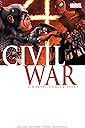
This book collects one of Marvel's most-loved, most famous, and best-selling "event" comics of all time - Civil War. In the main story, a super hero registration act is passed by the US government and all crime fighters and persons with special abilities and powers must register with the government and reveal their secret identities. Some heroes (primarily those who are already publicly known) have no issue with this and comply. Many heroes, though, are strongly opposed to this idea and the threats it would bring against their loved ones and family if their identities were public knowledge. With two coalitions of heroes forming on both sides of the issue and one forced into making the other side comply with the new law, a civil war among the heroes ensues.This book is chock-full of shocking scenes and climactic battles - all gorgeously rendered by the talented hand of Steve McNiven -one of the best pencillers in the biz. Steve gives his illustrations a very life-like and realistic appearance. His characters have a powerful presence on the page, and (I know this sounds strange, but it's true!) the clothing and costumes they wear look more credible and true-to-life than any I've seen drawn by any other comic book artist! He's very, very good at what he does, and the colorists on the book just knock it out of the park, too.This book is a fun story to read, is beautiful to look at, and has long-lasting repercussions that affect the entire Marvel universe in hige ways for the next several years that followed this event. This is an excellent book to read (a must-read for comic fans), and this particular format is the best available. The hardcover edition comes with many reprinted bonuses, including a cover gallery, sketches, a press release surrounding the event, and a script of the story. I am very happy to own this book and I never hesitate to recommend this to friends of mine that enjoy comic book stories. It is one of my all-time favorite Marvel books, and I strongly suggest you check it out some time!
C**N
An original. A True Comic Book Classic.
In this seven issue series humans have become fearful of super powered types even seeking legislation to get them under control. When a young group of heroes destroys a school and kills many civilians while trying to save them all hell breaks loose. The government issues the "Superhuman Registration Act" a law forcing all super humans, heroes and villains, to reveal their true identities to the government and basically become employees of the U.S. military or else go to jail.The act splits the superhuman community down the middle with Captain America leading the heroes against the act and Iron Man leading the heroes that support it. The main arguments are that the heroes against the act feel that revealing who they are will put their loved ones in danger. While the heroes in support of it promise the identities will only be made available to the government.So the government tasks Iron Man and the supporters of the act to work with SHIELD, the governments' top military branch to bring those that don't support the act to justice. Those that don't abide the new law must go to a top secret prison built by Iron Man and Mr. Fantastic of the Fantastic Four that's tucked away in another dimension.Not only do we get some beautifully drawn art, but we get stories and interactions never before seen in the marvel universe. The story is built to parallel our own current situation in the United States and is ultimately an integral part of comic history.The ending is beautifully handled by Mark Millar. It does not end with fancy explosions or scenes of glory and triumph that most comic fans are used to. It really gets you thinking.
D**A
Primer for the MCU's Captain America: Civil War
Civil War should serve as a primer for the upcoming Marvel Cinematic Universe's Captain America 3: Civil War, with all the appropriate changes reflecting the differences between the Marvel Comics and Marvel Studios films. Time will tell to see which story beats make the cut and which (The New Warriors' reality TV publicity stunt) will be ignored.As a disclaimer, I must state that I haven't been a regular reader of Marvel comics since the late 90s/early 00s so all the the shifts and changes over the last decade to the Marvel Universe are new material to me. Like the majority of the casual MCU audience, my interest in the Marvel Universe centers around the films, which present a unified, coherent collection of related characters, films and story arcs.Civil War at times felt as though it belonged to the What if? series of Marvel comics thanks to the flexibility the comic medium provides (no Marvel Universe character ever stays dead unless said character is irrelevant/obsolete), but the story arc did have lasting effects on the Marvel Universe, with the notable backtracking of the subsequent death of Steve Rogers, who reappeared alive and well so that he could lose his Super Serum, become a senior citizen and pass the mantle of Captain America to Sam Wilson. I did not read the explanation for how Steve Rogers was brought back after being assassinated; I only read Civil War as a primer for the upcoming film.But the underlying conflict of ideology between personal freedom, represented by Steve Rogers and national security, represented by Tony Stark appears to remain the central focus of Civil War, with Peter Parker in moral conflict over which side to support.The heroes representing the US Federal Government eventually resort to recruiting super villains out of a morally dubious inter dimensional super vault with Lo Jacks installed in them to keep them from running or reneging on their agreement to arrest (yes, super powered criminals tasked with the apprehension of super powered heroes turned vigilantes) the renegade heroes, removing some of the moral grey area of the original concept.Eventually, Civil War regresses into a basic two super teams conducting a slugfest brawl in public (Manhattan, NYC), right at home in any comic book, and ends with a time out called by Captain America speaking as the voice of reason when he realizes the fight over the argument for personal freedom has become nothing more than heroes fighting, resulting in massive collateral damage and distrust and fear by the ordinary people they are supposedly fighting to protect.Civil War brings up similar themes to what was previously explored both in the Marvel Comics and in Marvel films (not the MCU) with the Mutant Registration Act from the X-Men, with the key difference being that "Hero Registration" is presented as a prerequisite for being a super hero, whereas mutant registration amounts to racial profiling. In this sense, Civil War has more in common with DC's Watchmen and the Keene Act that effectively outlawed costumed adventurers/vigilantes barring those who made their identities public and became agents of the Federal Government.Well worth reading for those who like to have some background knowledge of upcoming MCU films.
Trustpilot
3 weeks ago
3 weeks ago