

Desertcart purchases this item on your behalf and handles shipping, customs, and support to GERMANY.
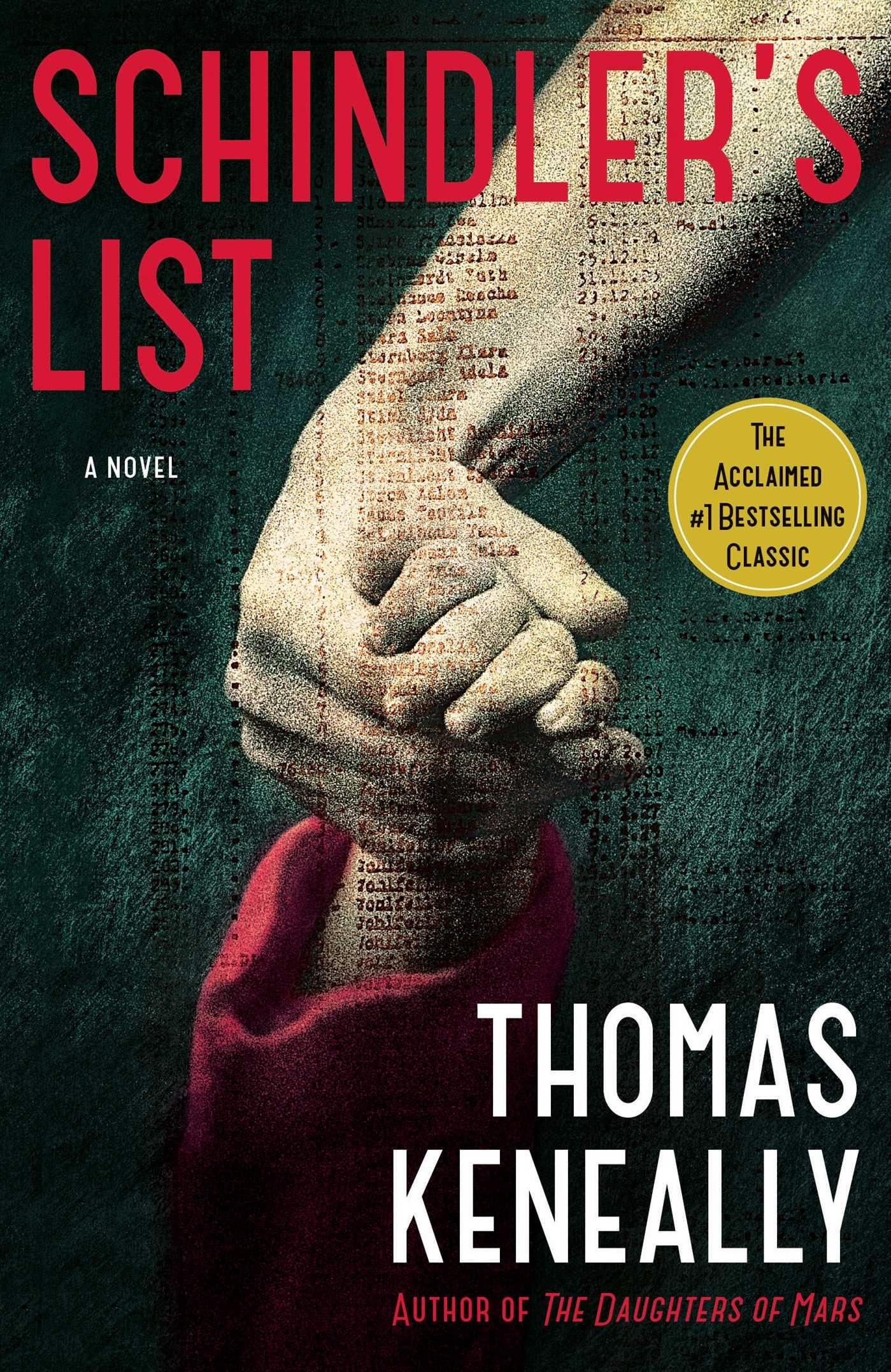
The acclaimed bestselling classic of Holocaust literature, winner of the Booker Prize and the Los Angeles Times Book Award for Fiction, and the inspiration for the classic filmโโa masterful account of the growth of the human soulโ ( Los Angeles Times Book Review ). A stunning novel based on the true story of how German war profiteer and factory director Oskar Schindler came to save more Jews from the gas chambers than any other single person during World War II. In this milestone of Holocaust literature, Thomas Keneally, author of Daughter of Mars , uses the actual testimony of the Schindlerjuden โSchindlerโs Jewsโto brilliantly portray the courage and cunning of a good man in the midst of unspeakable evil.
| Dimensions | 5.5 x 0.8 x 8.44 inches |
| Edition | 1st Pritning |
| Isbn 10 | 0671880314 |
| Isbn 13 | 978-0671880316 |
| Item Weight | 12.8 ounces |
| Language | English |
| Print Length | 400 pages |
| Publication Date | December 1, 1993 |
| Publisher | Atria Books |
User
An astounding history of Oskar Schindler
Thomas Keneally's Man Booker Prize winning novel about how Oscar Schindler saved around 1,200 Jews from the Holocaust is one of the most astounding factual historical stories I have read. Many of you will have seen Spielberg's excellent film of "Schindlers' List". The novel on which it is based gives the reader a better understanding of Schindler than can be conveyed in a 3 hour movie.Keneally was inspired to write the book when he met Poldek Pfefferberg, a Holocaust survivor, who had extensive files about Schindler. Before writing the book Keneally had discussions with survivors (mostly "Schindlerjuden" - Schindler Jews) in many countries, including Australia, Israel, West Germany, Austria, the United States, Argentina, and Brazil. Keneally uses the devices of a novel to describe the enigmatic and ambiguous character of Schindler and how he risked his own life to help many Jews and eventually to save some of them from the death camps. Keneally dedicated the book to Pfefferberg: "who by zeal and persistence caused this book to be written."Oskar Schindler was born in Austria but moved to Cracow in Poland just before the war. There he acted as a model German as a member of a party affiliated to the Nazis and wore a Swastika lapel badge. Oskar was a salesman and a dealer by temperament who knew that at that time when you went in to a German company manager wearing the badge, you got the order. Through his many contacts Schindler profited from the Jewish demise, gaining a large apartment and acquiring an enamel factory making cooking and eating utensils in great demand by the military. He employs many Jews in his factory at low wages who are being forced by the SS to live in the cramped and increasingly dangerous Cracow ghetto.Schindler is an enigmatic character, an entrepreneur and salesman, a womaniser, a boozer, a black marketeer, and a manipulator who is never afraid to use any form of bribery to get what he wants. His social and drinking circle includes most of the senior SS in the region many of whom are violent sociopaths involved with the ultimate solution to the "Jewish problem". Even when he gets permission to set up his own camp next to his factory and provides extra food for the prisoners at his expense from the black market he was still socialising with SS officers in charge of death camps. His womanising continues and he was even spotted by his staff when he was skinny dipping in a water tank with an attractive, and frequently brutal, female SS guard.Why did Schindler finish up risking his life to help and save so many Jews? You will have to read this meticulously researched book to attempt an answer. One suggestion in the book is that one day Schindler saw the SS expelling Jews from the Cracow ghetto, and executing those who didn't comply. He experienced an epiphany so that "Beyond this day," he would claim, "no thinking person could fail to see what would happen. I was now resolved to do everything in my power to defeat the system."This is a fascinating, memorable but frequently brutal masterpiece of a book. It is a an inside story of one of the most terrible times in human history. Keneally tells the story in a somewhat dispassionate way that allows the reader to try to understand what really happened. It is also a good news story - for the few Schindlerjuden - and is emotionally heartwarming as they supported Schindler after the war. Many of the the Schindlerjuden became successful in business, qualified as doctors and lawyers, and became Judges and influential members of their adopted countries. Israel acknowledged what Schindler did and his final resting place is in a Catholic cemetery in Jerusalem.
User
An Unlikely Hero
An Unlikely Hero: On Schindlerโs List by Thomas KeneallySlavery is perhaps the most debasing system in human civilization. It degrades human beings to the status of property. Slaves are bought and sold like objects. They are forced to work for free or for flimsy compensation, often in grueling and inhumane conditions. Sometimes they are raped and beaten by their owners. Slaves are deprived of all human rights and of their dignity. With the exception of the Holocaust, I donโt know of any other period in human history when slavery was desired by the slaves themselves and when forced labor became a saving grace for the victims. In such a dark epoch, when everything conspired to wipe the Jewish people of the face of the Earth, enslaving over a thousand of them in an enamel factory became an act of courage and heroism.As incredible as this topsy-turvy perspective may seem to contemporary readers, this is the story of Thomas Keneallyโs great historical novel, Schindlerโs List. The novel is based upon the eyewitness accounts of several of the Jewish survivors saved by the German industrialist Oskar Schindler. It is a biographical fiction in the strict sense of the term. In fact, Keneally states, โmost exchanges and conversations, and all events, are based on the detailed recollections of the Schindlerjuden (Schindler Jews), of Schindler himself, and of other witnesses to Oskarโs acts of outrageous rescueโ. (New York: Touchstone, Schindlerโs List, 1982, Authorโs Note, 10)Oskar Schindler is, by the authorโs own account, an unlikely hero. As Keneally acknowledges in the Prologue, Oskar Schindler โwas not a virtuous man in the customary sense of the termโ. (Schindlerโs List, 14) We tend to think of heroes as virtuous individuals: people with extraordinary character and moral fortitude. Yet Oskar Schindler was an average man, with ordinary human foibles. He was a sensualist and an honest womanizer: if thatโs not a contradiction in terms. He openly cheated on his virtuous wife, Emilie, with both long-term mistresses and countless casual lovers. He loved carousing with his friends, business partners, acquaintances and escorts. Worse yet, he was a member of the Nazi party, initially joining its ranks out of genuine political conviction, of his own free will.Though quickly disillusioned by the Nazis, Schindler nonetheless hopes to profit financially from the new regime. An ethnic German from the Sudetenland, he moves to Krakow Poland to set up an enamelware factory that will employ the slave labor of local Jews. The large Jewish community in Krakow was isolated from the rest of the population by the Nazis in a ghetto, which was formally established in March 1941 in the Podgorze district. Schindler witnesses the incredible cruelty manifested by the SS towards the 15,000 helpless Jewish civilians as well as the random acts of violence of his sociopathic country mate, Amos Goeth, who regards the captive Jews as his personal property and prey.This biographical novel presents a slice of history and a study of contrasts: between times of normalcy and the mass insanity of the Nazi era; between the humane actions of Oskar Schindler and the savage inhumanity of Amon Goeth. Without the dark figure of Goeth, it would be more difficult to appreciate Schindlerโs heroism and humanity.Amos Goeth, the SS Second Lieutenant in charge of liquidating the Krakow ghetto and of overseeing the Plaszow concentration and labor camp, is a malicious sadist. He savagely beats his Jewish servant, Helen Hirsch, and kills Jewish inmates, randomly, just for sport. As the narrator states, โNo one knew Amonโs precise reason for settling on that prisonerโAmon certainly did not have to document his motives. With one blast from the doorstep, the man was plucked from the group of pushing and pulling captives and hurled sideways in the roadโ (192).By way of contrast to Goethโs predatory cat and mouse games, Schindler exhibits compassion, courage and character. He uses all his connections, resourcefulness and wealth to save as many Jews as possible during the Holocaust. Threatened by the advance of the Russian army on the Eastern front, the Nazis dismantle the Plaszow labor and concentration camp. When he finds out about their plans to send most of the prisoners to their deaths in Auschwitz, Schindler promises those who worked for him that he would save them. He sets up a small munitions factory in his hometown of Brinnlitz, Czechoslovakia, where he eventually manages to bring over 1500 Jews. In these horrific times, slavery becomes the Jewsโ only salvation. โOskarโs list, in the mind of some, was already more than a mere fabulation. It was a List. It was a sweet chariot which might swing lowโ (277).The Nazi regimes brought out the worst in many people throughout Germany and occupied Europe: at best, a cruel indifference to the enslavement and massacre of Jews; at worst, various degrees of collusion with the local Nazi administrations. Yet these evil times also brought out the best in some, like Oskar Schindler. His acts of courage and resourcefulness have inspired the blockbuster movie, Schindlerโs List (1993), directed by Steven Spielberg. Perhaps this is why we still know of Oskar Schindler to this day. But the greatest homage to this ordinary man who did his best to protect fellow human beings from the Nazi savagery remains that he will be forever remembered and honored by generations of Jews as an extraordinary hero.Claudia Moscovici, Holocaust Memory
User
For the ages
Imagine a well dressed industriliast that likes to drink, and make money, but with a heart of gold, that basically despises the state of things during World War 2, but knows how to get things done, and treat those that can help him which are the brutal members of the nazi regime, with a velvet glove, making it possible for him to save countless lives of Jewish people otherwise destined for a short and bleak future.The subject matter is inspiring, the writing a little on the convoluted side, but done in a very incisive way, by a talented Mr. thomas Keneally. Is it a surprise that the movie version differs from the book? I do not think so, for Hollywood, even when producing serious tragic movies like this one, has a way to add the panache. Either way, book and movie, are something special, and Schindler's List is a powerful story about an extra ordinary human being, that instead of washing his hands and pretend nothing was wrong, took matters into his own hands and safe enough lives that never stopped being thankful to him, and honor his memory to this day. Enough said of the tragic faith of the Jewish during the nazi reign of power, it is in annals of a shameful history, but stories like these ones are just an example that amidst the chaos and tragedy, there are willing souls that do not hesitate to assist those in need, regardless of their nationality or creed. Powerful book, certainly well worth reading if any of what happened not too long ago is of interest. 4.5 Stars.
User
What Can one Say?
No matter the ethical background of a student, the lesson that true good and true evil exist in the world is invaluable. This can be a difficult concept to convey without controversy. The concept of what is good and what is evil is not constant. This changes from person to person based on belief. There is, however, an area of absolutes that ought to be discussed so that students can know where and when to take a stand and for what cause. There are a few examples from history that can be used to have this discussion productively. One such example is the Nazi Holocaust. This terrifying case has absolutes that do not change. Thus persons and events from World War II can be used as examples of good and evil, and therefore can lead to productive discussions of ethics. A very good text to use in order to encourage this discussion is Schindlerโs List by Thomas Keneally.Keneallyโs novel is not the same as most novels. First it is a novel that deals with historical events. This is not too uncommon, though it is less common than non-historical fiction. What makes Schindlerโs List special is its absolute accuracy. Keneally studiously sifted through all of the documents regarding Oskar Schindler and those he rescued, as well as interviewed many of those he rescued. The result is a nuanced portrait of Schindler that is imminently readable for any audience. His skill as a novelist allows Keneally to portray the horror of Goethโs road paved with Jewish gravestones in a way that a strict historian could not. Where Keneallyuses imagination instead of simple fact it is to imaginatively enter a scene that factually took place and present information unavailable in the historical record. This includes things like metaphors about how a person or a location appeared.The bookโs existence as something of a quasi-novel/biography serves the needs of Young Adult Readers in two very important ways. First, it makes factual accounts accessible and exciting. Rather than dispassionately seek the stark facts of The Holocaust and those who resisted it, readers are able to pathetically experience the suffering and moral conflict. Thus the faculties of imagination and empiricism are both equally engaged. This can lead to more exciting and productive discussions. Second, the reliability of this kind of novel in representing fact portrays the ethical difficulties inherent in The Holocaust. We Goeth as the monstrous sadist and mass murderer, but also as the companion, connoisseur, and host. We see Schindler as the philanthropist, but also as the womanizer and profiteer. The net result is that a Young Adult is presented with an ethical reality in which there are absolutes being encountered by fallible people, people who are not absolute.Discussing moral absolutes is effective in a classroom to encourage critical thinking and to help students develop a chosen, rather than an indoctrinated, moral ideology for themselves. Schindlerโs List is particularly effective here since it presents readers with two ethical questions that in fact have right and a wrong answers: was it ethically moral for the Nazis to attempt to eliminate ethnic Jewry, and was it ethical for Oskar Schindler to resist this attempt? The lesson here is that there are moral absolutes despite oneโs political or religious background. The lesson becomes even more effective when the follow up question: were Goeth and Schindler moral men is asked.
User
Schindler's Ark
Not that long ago, I wrote a review and talked about how I feel like I might be too hard on some of the books I read. I give a lot of books four stars, but I find it rare to want to give a book five stars. This realization made me relax my standards and give a few more books that fifth star. Then I read a book like this and Iโm brought back to the reason I was so selective about which book got that fifth star. This book is one of the best books I have ever read. Iโve finished off thousands of books, and I can count on one hand the number of them that have stuck with me; that have turned into the list of my all-time favorite books. This book is now on that list.One day in 1980, an Australian man walked into a luggage store in Beverly Hills, California. Had Thomas Keneally not been in need of an inexpensive briefcase, the world might not have been on the receiving end of this story. I am not planning on rehashing Schindlerโs history here, if youโre not familiar, the movie is genuinely excellent. Until recently, I didnโt even know it was based on a book (Iโm not sure why it didnโt occur to me that somebody wrote the book first). Now that Iโve read said book, Iโm even more impressed at the movie adaptation. I stayed true to the print version and was exceptionally well-done. Kudos to Spielberg.Thomas Keneally didnโt get to meet Oskar Schindler, but he did get to meet quite a few of the Schindler Jews and their families. Through the journals they kept and the stories they told, a picture of a complicated man was painted. Schindler was not Mother Teresa, I didnโt get the impression that he set out to be the benevolent savior that he eventually became. He came across as an opportunist, looking for ways to make money in every nook and cranny of war-torn Poland. Schindler enjoyed women and booze, and it seemed like he spend a lot of the early part of the war trying to prove his worth to his father. It was clear he was not a fan of the โparty,โ but he courted members of the SS to further his own interests.Slowly, and what felt like unintentionally, Schindler managed to amass a workforce of Jewish slaves. As the book progressed, Schindler went from being a less-than-savvy businessman, to a shrewd negotiator on a mission to save lives. Had this story been in the hands of somebody else, the progression of Oskar Schindler might have been more concise, but maybe less involved, less researched. Keneally put me in the room with Schindler. He made me feel what it might have been like to work in Schindlerโs factory, or to be in line waiting to hear your name get called to get into the Schindler line. I was at the table during one of his dinner parties. I could smell the room. Keneally poured every ounce of his heart into this book, and it was masterfully done.I have read quite a few books based on historical figures, and I find most of them to be clinical and bland. This book has legs that danced across every page. It is genuinely one of the best books I have ever read. I highly recommend it.
User
This book is heartbreaking with touches of hope and resilience
I watched this movie middle school and it traumatized me forever. People think of WW 2 and think Holocaust. But it didn't start there that's where in lead. In this political climate I think its very important that people remember that. This book can get get confusing at times because there are so many stories being told at once but the devastation is on every page. But also the resilience of people was so uplifting in this dark period of time.
User
A tremendous book!
I loved this book! I have not seen the movie, but as a student of literature and history, read a lot of Holocaust literature, and honestly had little interest in returning to the inhuman cruelty and sickening minds that devised and managed the camps during the war. A full decade passed when I simply couldn't read anymore or torture myself with the horrifying events of the Holocaust as intimately as literature and poetry force you to.After owning it for years, though, I finally picked up this book and was astounded by the quality of the writing first, which is breathtakingly insightful, articulate and beautiful. The tone is not one of deep despair and tragedy, although those live insistently on the edge of the story, but of triumph over and over again. The narrator speaks directly to the reader often, and makes some side comments that draw you in and make you one of the omniscient judges of this flawed, but amazing, bigger-than-life personality. The history and research are superb, and the author recreates private conversations in the most credible, natural way possible. The flamboyant, heroic main character is sometimes overwhelming, and I often couldn't stop my stomach muscles from clenching in fear for him as he walked a wire far too thin to support him and his Jewish family of thousands. The other "characters" of the novel help you maintain some sense of stability, though, and every time they appear sanity returns for a time, so that you can face the next psychotic SS officer that appears and watch as Schindler audaciously starts down the wire again....
User
Love this book
A beautifully written novel. The writing style is elegant and engaging. I recommend for an audience of 16+, since it can be a bit hard to get into at times.
User
A comment of the Amazon customer for this book ,Schindler's List.
Whenever I read this book,I find something new.This book is very useful to inprove both my english and my knoledge of cruelty of the war.Now I can read this bok by the Kindle device,very easy to handle.Thank you.
User
As I could hope for.
As I could hope for. Simple as that.
User
Oskar explained
Excellent book. Critical and deeply moving at the same time. Trustworthy tone.
User
Excellent service and excellent quality
User
The Amazing Mr Schindler
I had put off reading this book for many years given what happened to the Jewish and other peoples in Poland during the second world war but despite the horror found it to be inspiring. Oscar Schindler, despite his many faults was an amazing man who without hesitation regularly put himself in mortal danger to save "his Jews". Thomas Keneally clearly deserved the Booker prize for this book.
Trustpilot
2 months ago
2 days ago