
Buy anything from 5,000+ international stores. One checkout price. No surprise fees. Join 2M+ shoppers on Desertcart.
Desertcart purchases this item on your behalf and handles shipping, customs, and support to GERMANY.
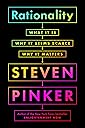
NEW YORK TIMES BESTSELLER “In our uncertain age, which can so often feel so dark and disturbing, Steven Pinker has distinguished himself as a voice of positivity.” – New York Times Can reading a book make you more rational? Can it help us understand why there is so much irrationality in the world? Steven Pinker, author of Enlightenment Now (Bill Gates’s "new favorite book of all time”) answers all the questions here Today humanity is reaching new heights of scientific understanding--and also appears to be losing its mind. How can a species that developed vaccines for Covid-19 in less than a year produce so much fake news, medical quackery, and conspiracy theorizing? Pinker rejects the cynical cliché that humans are simply irrational--cavemen out of time saddled with biases, fallacies, and illusions. After all, we discovered the laws of nature, lengthened and enriched our lives, and set out the benchmarks for rationality itself. We actually think in ways that are sensible in the low-tech contexts in which we spend most of our lives, but fail to take advantage of the powerful tools of reasoning we’ve discovered over the millennia: logic, critical thinking, probability, correlation and causation, and optimal ways to update beliefs and commit to choices individually and with others. These tools are not a standard part of our education, and have never been presented clearly and entertainingly in a single book--until now. Rationality also explores its opposite: how the rational pursuit of self-interest, sectarian solidarity, and uplifting mythology can add up to crippling irrationality in a society. Collective rationality depends on norms that are explicitly designed to promote objectivity and truth. Rationality matters. It leads to better choices in our lives and in the public sphere, and is the ultimate driver of social justice and moral progress. Brimming with Pinker’s customary insight and humor, Rationality will enlighten, inspire, and empower. Review: Excellent book, everyone should read this even if you don't like Pinker - Rationality by Steven Pinker is one of those must-read books that is as relevant today as it was 10 years ago and will be 10 years from now. It talk about principles that every adult should know but unfortunately they don't get taught at school in an organized manner. This book shouldn't be viewed as a "liberal" book which I'm afraid happens too much these days, even books are polarized for some reason. It's a book about how we should aim to think if we want to live a reasonable life. I would frame the book as the next step to the much-loved and appreciated book "Thinking Fast and Slow" by Daniel Kahneman, one of my favourite living scientists. His book changed how we think about human thinking and this books develops on it. It covers a broader range of concepts that we use in daily life from Probability vs Propensity, Randomness, Risk vs Reward, exponential growth, utility theory, game theory, correlation vs causation, rationality in Social Justice and so on. I must say it's an impressive range of ideas in one book but it makes sense to read about all this in one place as these topics are very linked but we often only read about discreet pieces as they cut through a broad range of science fields. He starts by arguing that human beings are not simply "irrational" by evolution. It goes into details on what Rationality means, how it's different and more ecological than from logic or theoretical reason, how our common sense in-built into us through millenia of living with other people relies on rationality and how important it is to our daily lives beyond our divides and cliques. I think what's good about Pinker's books is that he is not afraid to take a stance and it means he is ok with critics talking about what he might've got wrong, he doesn't claim to get it all right, the book says on several occasions that rationality in the end is an unreachable ideal but the more people work collectively towards it, the better chance society has to find it. I'm sure religious people will have objections to this book as Pinker is a staunch atheist and has come across as too hard-headed on this topic in his previous books talking about religion's history with violence. Again, the idea is to keep an open mind and use the book as a tool to expand our understanding of the world. Five stars! Review: Rejoice ... our world is better than ever ... and getting better. - Can't add more value to the trove of positive reviews posted. Merely meriting 5 stars to further boost its deserved ranking among the better books of its ilk. Enjoy!


| Best Sellers Rank | #43,694 in Books ( See Top 100 in Books ) #23 in Sociology of Social Theory #100 in Popular Social Psychology & Interactions #102 in History & Philosophy of Science (Books) |
| Customer Reviews | 4.4 out of 5 stars 2,081 Reviews |
N**L
Excellent book, everyone should read this even if you don't like Pinker
Rationality by Steven Pinker is one of those must-read books that is as relevant today as it was 10 years ago and will be 10 years from now. It talk about principles that every adult should know but unfortunately they don't get taught at school in an organized manner. This book shouldn't be viewed as a "liberal" book which I'm afraid happens too much these days, even books are polarized for some reason. It's a book about how we should aim to think if we want to live a reasonable life. I would frame the book as the next step to the much-loved and appreciated book "Thinking Fast and Slow" by Daniel Kahneman, one of my favourite living scientists. His book changed how we think about human thinking and this books develops on it. It covers a broader range of concepts that we use in daily life from Probability vs Propensity, Randomness, Risk vs Reward, exponential growth, utility theory, game theory, correlation vs causation, rationality in Social Justice and so on. I must say it's an impressive range of ideas in one book but it makes sense to read about all this in one place as these topics are very linked but we often only read about discreet pieces as they cut through a broad range of science fields. He starts by arguing that human beings are not simply "irrational" by evolution. It goes into details on what Rationality means, how it's different and more ecological than from logic or theoretical reason, how our common sense in-built into us through millenia of living with other people relies on rationality and how important it is to our daily lives beyond our divides and cliques. I think what's good about Pinker's books is that he is not afraid to take a stance and it means he is ok with critics talking about what he might've got wrong, he doesn't claim to get it all right, the book says on several occasions that rationality in the end is an unreachable ideal but the more people work collectively towards it, the better chance society has to find it. I'm sure religious people will have objections to this book as Pinker is a staunch atheist and has come across as too hard-headed on this topic in his previous books talking about religion's history with violence. Again, the idea is to keep an open mind and use the book as a tool to expand our understanding of the world. Five stars!
M**L
Rejoice ... our world is better than ever ... and getting better.
Can't add more value to the trove of positive reviews posted. Merely meriting 5 stars to further boost its deserved ranking among the better books of its ilk. Enjoy!
B**Y
Rational Thinking and Why it is so Important
Rationality, the use of reason, and the thought processes that relate to them seem to be in short supply. With advances in science and other breakthroughs, rational thinking should be at an all- time high, but it is not. The problems with human thinking and bias and the different reasons why rationality is not used as much as it should is the basis of this book, Rationality: What It Is, Why It Seems Scarce, Why It Matters. This book covers many pieces of the rational thinking puzzle, explaining what it is, what it is not, and why it is so seemingly difficult for some people to grasp. Sections of the book discuss such topics as critical thinking, logic, correlation and causation, game theory, and much more. Probably the most valuable parts of this book are the ones on risk/reward and the section that covers the understanding and interpretation of probabilities. With risk and reward, one doesn’t have to look around or search for very long to see all the ways that humans behave irrationally. One example the book mentions is the tendency of people to purchase costly extended warranties that will likely never be used or, if they are used, will not be worth the price paid. Another is the understanding of percentage chance and what it really means. How many people do you know who think if the weather forecast is 51% or better chance for rain that it absolutely will rain, or 49% or worse that it won’t rain? These interpretations, and others like them, are irrational yet we see and hear them regularly. My personal favorite part of the book is the section that discusses probabilities. Humans have a very poor understanding of how probabilities work and this makes it easy for politicians, business leaders, and others to manipulate data. My only issue with this part of the book is that it doesn’t offer enough examples. Getting people to understand how probability works isn’t easy and some of the book’s explanations, while accurate, will not make sense to most readers. Direct, illustrated examples would have made this part of the book even better. Why people behave the way they do and resist rational thinking is touched on in the last section of the book. Whether it’s personal bias, religious beliefs, loyalty to one’s political affiliation, or something else, there are a myriad of reasons why people behave irrationally. Moving the people of the world in a more rational direction isn’t going to be easy, as such a high percentage of us have these personal biases and refuse to let them go. Rational thinking is important. As a society, we would all be better off if people made more rational decisions. Steven Pinker’s book is a good primer on rationality and why it’s so important. There are a few small changes I would make, but this is otherwise an important and valuable book that will benefit most anyone who reads it.
A**N
A Deep Dive into the Nature and Importance of Rationality
In this enlightening book, Steven Pinker explores the concept of rationality, delving into why it is crucial for personal and societal progress and why it often appears to be lacking in modern discourse. Pinker draws on a wide range of examples from science, history, and current events to illustrate how rational thinking can help us navigate the complexities of the world. He also addresses the factors that contribute to irrationality and the consequences of neglecting reason. The most appealing part of this book was Pinker’s ability to make complex ideas accessible and engaging. He not only provides a thorough understanding of rationality but also offers practical insights into how we can cultivate more rational thinking in our lives and societies. Rationality is a must-read for anyone interested in improving their critical thinking, understanding human behavior, and navigating the challenges of an increasingly complex world.
A**J
worth reading
I love Pinker. That said, this book was a bit of a slog for me. It's a good and useful review of my old (very old) college logic classes. Everyone should have a working knowledge of that. The chapter on "What's wrong with people?" did not disappoint. It's worth reading.
F**Z
Only 3 stars, but worth reading
First, this is important book, and if the principles and mental models described in the book were applied by everyone, what a wonderful world it would be. My biggest issue with the book is that the author makes modestly complex tools or principles vastly more difficult to understand than they need be. Take for example his discussion of Bayesian reasoning and the theorem of the same name. I know Bayes' theorem, I have used Bayes' theorem, and I could not follow his explanation for the life of me. Other concepts were similarly unnecessarily dense. I think the problem is the author both introduces a concept or equation while at the same time also trying to prove it. It is like teaching an intro to algebra class the Pythagorean theorem (A^2 + B^2 = C^2), and before you let the class get comfortable with the concept of even do an example, you walk them through Euclid's geometric proof (here's a link, ugh http://cut-the-knot.org/pythagoras/Proof1.shtml). A better method is: - here's the theorem - here's an example with numbers we can step through together - when you think about it, it makes sense because of (reference to concept reader is already familiar with) - if you REALLY want to be confident this is true, see the appendix for a more thorough explanation or proof It is a shame he did not have a more forceful editor, because it may stop people from reading through to payoff pitch in the final 2 chapters. I also found myself resenting his repeated allusions that those who believe in a God are not rational. Most pointedly so on page 311, when he compares the belief in a personal God to that of the Loch Ness monster, astrology, and the denial of man's role in climate change. To put my reaction in perspective, my personal belief is that all organized religion at best fiction, at worst a tool of oppression, and I find the idea that there is a God and the idea there is not a God to be equally implausible. I don't sleep much. To address his contention directly, if one is irrational for believing in a God, then there must be overwhelming objective evidence that no God exists. That evidence is lacking, so therefore implying the faithful are irrational is, to turn Mr. Pinker's words against him, his "myside bias." To be clear, he does not devote much ink to his barely concealed disdain for the belief in a deity, but if it was enough to bother someone like myself who might best be described as agnostic, it will really turn off people of faith. Mr. Pinker's very thoughtful treatise on the importance of thinking rationally asks that we exercise discipline to do the required critical thinking and avoid easy answers. Why risk alienating people - and give them an excuse to dismiss you entirely and skip the hard work - to make a point that not only does not add to your argument, but detracts from it? Not very rational.
P**L
Interesting reading. I’m hooked.
I’m not into this very far, but I am already hooked. Interesting reading. I’m glad I bought a couple more of his books.
S**E
Pinker: Good, Frustrating and Provocative
I feel a mix of understanding and confusion when I read Pinker. His topics are engaging and rich. His messaging is on a spectrum of profound and overwhelming. I feel I love the messages in his thoughts that come through in the topics he writes about. I feel I dislike his complex style of communicating some points. Mostly because I have to admit it's above my understanding. I found the beginning and end engaging, and the middle overly hard to understand because it's laden with logic and statistics as well as words such as 'laden' used when a simpler word like 'common' works the same. This book inspired me to invite Jasmine Crockett to speak about rationality on Juneteenth because of the message, the need for appropriate spokespeople, and the current assault on truth by the current US administration. I loved the content about progress. Please read this book if this review resonates with you.
し**ん
どっから届いたんやろ?🤔
普通の古本。綺麗めなので良かった☺️ 父親が読みたいと言う事で注文したけど喜んで貰えて良かった。ペーパーバックは大きな書店とかbookoffとかじゃないと数が少ないので…。
R**N
Mind blowing 😀
Well.... If you want to be a thinker and a really good one not the bogus one...... Get it, don't think twice.
G**Y
semplicemente geniale
Uno di quei libri che ti cambiano la prospettiva sulla vita.
F**.
Great book!!
One of Pinker's best books.
K**T
Produit endommagé a cause du Amazon
Amazon a envoyé ce livre dans le même colis que du terreau de 6 litres. A cause de cela, mon livre, qui était sensé d'être un cadeau de Noël, n'est pas présentable. Je pars en avion pour Noël alors je n'ai pas le temps de l'échanger avant. Je suis très déçu. Cinq étoiles car j'adore Pinker et son livre est excellent.
Trustpilot
3 weeks ago
3 weeks ago