
Desertcart purchases this item on your behalf and handles shipping, customs, and support to GERMANY.
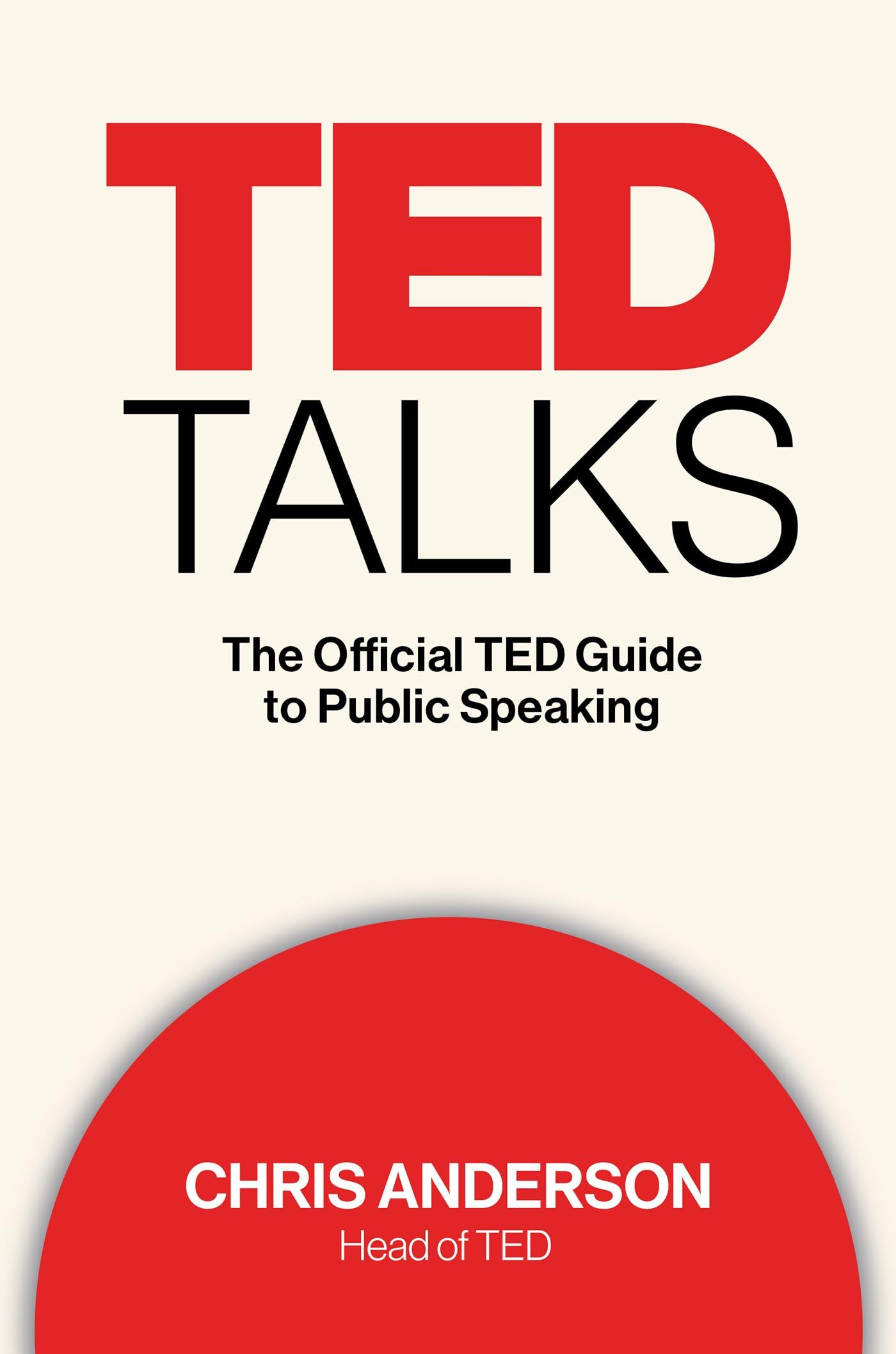
A New York Times Bestseller For anyone who has ever been inspired by a TED talk… ...this is an insider’s guide to creating talks that are unforgettable. Since taking over TED in the early 2000s, Chris Anderson has shown how carefully crafted short talks can be the key to unlocking empathy, stirring excitement, spreading knowledge, and promoting a shared dream. Done right, a talk can electrify a room and transform an audience’s worldview. Done right, a talk is more powerful than anything in written form. This book explains how the miracle of powerful public speaking is achieved, and equips you to give it your best shot. There is no set formula; no two talks should be the same. The goal is for you to give the talk that only you can give. But don’t be intimidated. You may find it more natural than you think. Chris Anderson has worked behind the scenes with all the TED speakers who have inspired us the most, and here he shares insights from such favorites as Sir Ken Robinson, Amy Cuddy, Bill Gates, Elizabeth Gilbert, Salman Khan, Dan Gilbert, Mary Roach, Matt Ridley, and dozens more — everything from how to craft your talk’s content to how you can be most effective on stage. This is the 21st-century’s new manual for truly effective communication and it is a must-read for anyone who is ready to create impact with their ideas. Review: Destined to Become a Ubiquitous Guide - TED Talks are a unique and marvelous gift to the world. They have transformed the public speaking landscape; they have certainly upgraded my world-view. It is therefore easy to predict that a book authored by the most visible face of, and the driving force behind TED Talks is destined to become a ubiquitous guide book—perhaps eventually become a classic. I have studied many books on public speaking. I pre-ordered this one the moment I heard of it. It has been one of the most satisfying reads on the subject yet. I recommend that if you get only one book on public speaking, let it be this one. I further recommend that no matter how many other books you have on public speaking, if you are a serious student of this engaging art, then get this book. The Official TED Guide to Public Speaking is beautifully and thoughtfully put together. It is detailed and thorough, yet not difficult or dry. It has five sections (Foundation, Talk Tools, Preparation Process, On Stage, & Reflection). It is simultaneously pragmatic and inspiring—can’t put it down. I badly want to highlight, make notes, visit links etc., & yet I don’t because I can’t get myself to stop reading—even though very little is new to me! For sure, I will have to read this book repeatedly! The first four sections are excellent, but it is the last section, “Reflections” that takes the book to another level. Here the author exquisitely shares his stories; how he first got exposed to TED, and his subsequent voyage to the present. It is a magical TED Talk like experience. It is the best part of the book. Only after completing this section did I get a fuller understanding of why TED has become the phenomenon it has. If you are already knowledgeable about public speaking, I recommend you start out by reading this section first. Here are some of my highlights • I wish to persuade you of something: That however much public speaking skills matter today, they’re going to matter even more in the future. • There was an exhilaration in learning how many different types of expertise there were in the world. • On day three, something really strange happened. My overstimulated brain began sparking like a lightning storm. Every time a new speaker got up and spoke, it felt like a new thunderbolt of wisdom. Ideas from one talk would connect in a thrilling way with something shared by others two days earlier. • For my entire entrepreneurial life, my mantra has been to follow the passion. Not my passion—other people’s. • Passion was a proxy for potential. • We must distinguish knowledge from understanding. The key to understanding anything was to understand the context in which it sat … It is only by looking at that larger pattern that you gain actual understanding. • So actually what made TED work was not really just the synergy between technology, entertainment, and design. It was actually the connectedness of all knowledge. • In the years since then, I’ve become evermore convinced of the significance of the connectedness of knowledge. • A deeper understanding of our own humanity comes not from listening to your parents or your friends, nor to psychologists, neuroscientists, historians, evolutionary biologists, anthropologists, or spiritual teachers. It comes from listening to all of them. • We’re entering an era where we all need to spend a lot more time learning from each other. • The revolution in public speaking is something everyone can be part of. If we can find a way to truly listen to each other, to learn from each other, the future glitters with promise. In the first 4 sections, (Foundation, Talk Tools, Preparation Process, & On Stage) the author treats the material with even-handed erudition. He discusses common traps. His explanation and evangelization of “the throughline” is excellent, and solidified with examples from TED talks. He conveys the idea of a talk being a journey compellingly. He provides a checklist. He discusses five core tools—connection, narration, explanation, persuasion, and revelation—very well. The author shines through as wise, thorough, and helpful; committed to sharing everything without holding back, without taking sides, or being preachy or superior. I will cover one chapter in detail to show that this is so. Chapter 11 discusses scripting vs. not scripting, and memorizing vs. reading. Here the author shares lessons learned from the past and how they found it best not to be too rigid in rules on talk delivery, even though the rules generally make sense. He talks about a phase in preparation called the “Uncanny Valley” where everything is super-close to seeming real but is not quite there. Here are some of my highlights: • There are many ways to prepare for and deliver a TED talk, and it’s important to find the one that’s right for you. • More than anything else, what matters is that speakers are comfortable and confident, giving the talk in a way that best allows them to focus on what they’re passionate about. • Today we don’t have set rules. We just have suggestions for helping speakers find the mode of delivery that will be most powerful for them. • So what I’d say to speakers planning to memorize their talks is this: “That’s great. You’re giving yourself the best chance for a huge hit. But it is absolutely essential to take yourself through the Uncanny Valley and don’t get stuck there. If you’re not willing to commit to do that, do not memorize!” • There’s a lot to be said for going unscripted. It can sound fresh, alive, real, like your thinking out loud … But it is important to distinguish between unscripted and unprepared. In an important talk there’s no excuse for the latter. • Frankly the old-fashioned method of a set of punchy notes handwritten on cards is still a decent way to keep yourself on track. • TED speakers have widely different opinions, by the way, on whether a memorized script or a prepared talk-in-the-moment is the better way to go. • Dan Gilbert—A great talk is both scripted and improvisational. It is precisely like a great jazz performance. • Rehearse your impromptu remarks … If everything in a talk leads in perfect lockstep fashion towards its conclusion, it wins points for logic but can leave the audience feeling as though they have been on a forced march rather than a pleasant, companionable walk. • The majority of TED speakers do in fact script their whole talk and memorize it, and do their best to avoid letting it sound memorized. Every chapter is equally strong. I repeat, this is a book absolutely worth owning. It is an excellent Go-To Guide book and a source of inspiration. The author is also refreshingly blunt on occasion: • If you’ve picked up this book because you love the idea of strutting the stage and being a TED Talk star, inspiring audiences with your charisma, please, put it down right now … Style without substance is awful. • If you have dreams of being a rock-star public speaker, pumping your audience as you stride the stage and proclaim your brilliance, I beg you to reconsider … Inspiration can’t be performed. It’s an audience response to authenticity, courage, selfless work and genuine wisdom. On occasion the author passes the baton to an expert colleague—to cover a subject—and then takes it back and continues. It’s a nice touch. • Tom Rielly tells us, in his own words, about visuals and graphics—in all its technical glory. • Kelly Stoetzel tells us, in her own words, on how to handle wardrobe stress—the last thing we need. These lines jumped out and stuck with me: • Done right, a talk is more powerful then anything in written form. • Today in the connected era, we should resurrect the noble art and make it education’s fourth R: reading, ’riting, ’rithmetic … and rhetoric. • Once people have been primed, it’s much easier to make your main argument. And how do you do that? By using the most noble tool of them all, a tool that can wield the most impact over the very long term. And its named using an old-fashioned philosophical word that I love: Reason. • Most people are capable of being convinced by logic, but they aren’t always energized by it. And without being energized, they may quickly forget the argument and move on. • Not every talk that is reason based will see immediate success. These talks are generally harder to process than some others, and they may not be the most popular. But I believe they are amongst the most important talks on our site, because reason is the best way of building wisdom for the long term. • The Pinker/Goldstein dialogue may be the single most important argument contained in a TED talk, yet as of 2015 it has fewer than 1 million views. Reason is not a fast-growing weed but a slow-growing oak tree. • At TED, most of our talks are told in more conversational language. But the ability to paint a compelling picture of the future is truly one of the greatest gifts a speaker can bring. • Having no slides at all is better than bad slides. • We’re planning to introduce more debate to future TED events. On one occasion I found myself disagreeing a bit with the author. Given that Mr. Chris Anderson is the world’s foremost subject matter expert, I’m probably wrong, but I thought I’d mention it anyway. The author appears to be more accepting of the use of notes than he is of teleprompters or confidence monitors. I find this a little puzzling because the same principle should apply for all three. The golden rule when using notes is “Don’t read and speak at the same time.” I struggle to see why this cannot be applied to confidence monitors and teleprompters too. What has alternately been called “power reading / see-stop-say technique / Churchill-Roosevelt-Reagan method” goes like this: 1. Look at the line you are about to read (from notes, computer monitor, confidence monitor or teleprompter) and take an imaginary snapshot of them. 2. Bring your head up and/or face the audience 3. Pause. 4. Look at an audience member, establish connection, and conversationally deliver the words, as if speaking to only one person. 5. Look down at the next chunk of words and take the next snapshot 6. Repeat There is no fake eye contact or inauthenticity if this is done well. It also requires that reading notes be made differently. The main idea is “never let words come out of your mouth when your eyes are on your notes, or the teleprompter, or the computer/confidence monitor.” If interested, more details can be seen in chapter 12 of the James Humes’ book Speak Like Churchill, Stand like Lincoln. I hope you enjoy this book as much as I did. I am certain that you can get as much value from it as I did. I thank the author for giving yet another gift to the world. Review: An intensely useful book on being more persuasive that I will be recommending to my students ... - Some books are easy to imagine exploding into narrative form from an Author's lifetime of work. Then there are the books that probably took years of cajoling from well intentioned friends before they finally come to fruition. This book seems like the latter. In a quiet signature style, TED founder Chris Anderson takes readers behind the scenes of some of the most well known moments from the iconic TED stage and what it took for those speakers to get there. Before TED Talks, the idea of a 17 minute non-fiction talk going "viral" with millions of views would have been unheard of. The point this book makes over and over again is that this is the real power of a great talk in the right moment. It can turn companies around and inspire people like nothing else. The premise of delivering an actual TED talk may seem like the most intimidating way to try and improve your speaking skills. The vaunted position TED talks take in our consciousness could make it seem like an unapproachable ideal. Yet reading this book, the one belief that comes through loud and clear is that being a powerful speaker is a skill that is within reach for anyone. Rather than sharing a secret formula for an ideal TED talk, Anderson offers tips and techniques that TED speakers use, but which could be applied for anyone. Aside from having delivered 2 TEDx talks myself, I also currently teach storytelling and speaking at Georgetown University. I will be recommending this book to my students - and I highly recommend it to anyone seeking an actionable and entertaining book on becoming a more persuasive speaker as well.
| Best Sellers Rank | #263,801 in Books ( See Top 100 in Books ) #15 in Public Speaking Reference #1,030 in Business & Money (Books) #1,869 in Self-Esteem (Books) |
| Customer Reviews | 4.5 out of 5 stars 3,484 Reviews |
R**A
Destined to Become a Ubiquitous Guide
TED Talks are a unique and marvelous gift to the world. They have transformed the public speaking landscape; they have certainly upgraded my world-view. It is therefore easy to predict that a book authored by the most visible face of, and the driving force behind TED Talks is destined to become a ubiquitous guide book—perhaps eventually become a classic. I have studied many books on public speaking. I pre-ordered this one the moment I heard of it. It has been one of the most satisfying reads on the subject yet. I recommend that if you get only one book on public speaking, let it be this one. I further recommend that no matter how many other books you have on public speaking, if you are a serious student of this engaging art, then get this book. The Official TED Guide to Public Speaking is beautifully and thoughtfully put together. It is detailed and thorough, yet not difficult or dry. It has five sections (Foundation, Talk Tools, Preparation Process, On Stage, & Reflection). It is simultaneously pragmatic and inspiring—can’t put it down. I badly want to highlight, make notes, visit links etc., & yet I don’t because I can’t get myself to stop reading—even though very little is new to me! For sure, I will have to read this book repeatedly! The first four sections are excellent, but it is the last section, “Reflections” that takes the book to another level. Here the author exquisitely shares his stories; how he first got exposed to TED, and his subsequent voyage to the present. It is a magical TED Talk like experience. It is the best part of the book. Only after completing this section did I get a fuller understanding of why TED has become the phenomenon it has. If you are already knowledgeable about public speaking, I recommend you start out by reading this section first. Here are some of my highlights • I wish to persuade you of something: That however much public speaking skills matter today, they’re going to matter even more in the future. • There was an exhilaration in learning how many different types of expertise there were in the world. • On day three, something really strange happened. My overstimulated brain began sparking like a lightning storm. Every time a new speaker got up and spoke, it felt like a new thunderbolt of wisdom. Ideas from one talk would connect in a thrilling way with something shared by others two days earlier. • For my entire entrepreneurial life, my mantra has been to follow the passion. Not my passion—other people’s. • Passion was a proxy for potential. • We must distinguish knowledge from understanding. The key to understanding anything was to understand the context in which it sat … It is only by looking at that larger pattern that you gain actual understanding. • So actually what made TED work was not really just the synergy between technology, entertainment, and design. It was actually the connectedness of all knowledge. • In the years since then, I’ve become evermore convinced of the significance of the connectedness of knowledge. • A deeper understanding of our own humanity comes not from listening to your parents or your friends, nor to psychologists, neuroscientists, historians, evolutionary biologists, anthropologists, or spiritual teachers. It comes from listening to all of them. • We’re entering an era where we all need to spend a lot more time learning from each other. • The revolution in public speaking is something everyone can be part of. If we can find a way to truly listen to each other, to learn from each other, the future glitters with promise. In the first 4 sections, (Foundation, Talk Tools, Preparation Process, & On Stage) the author treats the material with even-handed erudition. He discusses common traps. His explanation and evangelization of “the throughline” is excellent, and solidified with examples from TED talks. He conveys the idea of a talk being a journey compellingly. He provides a checklist. He discusses five core tools—connection, narration, explanation, persuasion, and revelation—very well. The author shines through as wise, thorough, and helpful; committed to sharing everything without holding back, without taking sides, or being preachy or superior. I will cover one chapter in detail to show that this is so. Chapter 11 discusses scripting vs. not scripting, and memorizing vs. reading. Here the author shares lessons learned from the past and how they found it best not to be too rigid in rules on talk delivery, even though the rules generally make sense. He talks about a phase in preparation called the “Uncanny Valley” where everything is super-close to seeming real but is not quite there. Here are some of my highlights: • There are many ways to prepare for and deliver a TED talk, and it’s important to find the one that’s right for you. • More than anything else, what matters is that speakers are comfortable and confident, giving the talk in a way that best allows them to focus on what they’re passionate about. • Today we don’t have set rules. We just have suggestions for helping speakers find the mode of delivery that will be most powerful for them. • So what I’d say to speakers planning to memorize their talks is this: “That’s great. You’re giving yourself the best chance for a huge hit. But it is absolutely essential to take yourself through the Uncanny Valley and don’t get stuck there. If you’re not willing to commit to do that, do not memorize!” • There’s a lot to be said for going unscripted. It can sound fresh, alive, real, like your thinking out loud … But it is important to distinguish between unscripted and unprepared. In an important talk there’s no excuse for the latter. • Frankly the old-fashioned method of a set of punchy notes handwritten on cards is still a decent way to keep yourself on track. • TED speakers have widely different opinions, by the way, on whether a memorized script or a prepared talk-in-the-moment is the better way to go. • Dan Gilbert—A great talk is both scripted and improvisational. It is precisely like a great jazz performance. • Rehearse your impromptu remarks … If everything in a talk leads in perfect lockstep fashion towards its conclusion, it wins points for logic but can leave the audience feeling as though they have been on a forced march rather than a pleasant, companionable walk. • The majority of TED speakers do in fact script their whole talk and memorize it, and do their best to avoid letting it sound memorized. Every chapter is equally strong. I repeat, this is a book absolutely worth owning. It is an excellent Go-To Guide book and a source of inspiration. The author is also refreshingly blunt on occasion: • If you’ve picked up this book because you love the idea of strutting the stage and being a TED Talk star, inspiring audiences with your charisma, please, put it down right now … Style without substance is awful. • If you have dreams of being a rock-star public speaker, pumping your audience as you stride the stage and proclaim your brilliance, I beg you to reconsider … Inspiration can’t be performed. It’s an audience response to authenticity, courage, selfless work and genuine wisdom. On occasion the author passes the baton to an expert colleague—to cover a subject—and then takes it back and continues. It’s a nice touch. • Tom Rielly tells us, in his own words, about visuals and graphics—in all its technical glory. • Kelly Stoetzel tells us, in her own words, on how to handle wardrobe stress—the last thing we need. These lines jumped out and stuck with me: • Done right, a talk is more powerful then anything in written form. • Today in the connected era, we should resurrect the noble art and make it education’s fourth R: reading, ’riting, ’rithmetic … and rhetoric. • Once people have been primed, it’s much easier to make your main argument. And how do you do that? By using the most noble tool of them all, a tool that can wield the most impact over the very long term. And its named using an old-fashioned philosophical word that I love: Reason. • Most people are capable of being convinced by logic, but they aren’t always energized by it. And without being energized, they may quickly forget the argument and move on. • Not every talk that is reason based will see immediate success. These talks are generally harder to process than some others, and they may not be the most popular. But I believe they are amongst the most important talks on our site, because reason is the best way of building wisdom for the long term. • The Pinker/Goldstein dialogue may be the single most important argument contained in a TED talk, yet as of 2015 it has fewer than 1 million views. Reason is not a fast-growing weed but a slow-growing oak tree. • At TED, most of our talks are told in more conversational language. But the ability to paint a compelling picture of the future is truly one of the greatest gifts a speaker can bring. • Having no slides at all is better than bad slides. • We’re planning to introduce more debate to future TED events. On one occasion I found myself disagreeing a bit with the author. Given that Mr. Chris Anderson is the world’s foremost subject matter expert, I’m probably wrong, but I thought I’d mention it anyway. The author appears to be more accepting of the use of notes than he is of teleprompters or confidence monitors. I find this a little puzzling because the same principle should apply for all three. The golden rule when using notes is “Don’t read and speak at the same time.” I struggle to see why this cannot be applied to confidence monitors and teleprompters too. What has alternately been called “power reading / see-stop-say technique / Churchill-Roosevelt-Reagan method” goes like this: 1. Look at the line you are about to read (from notes, computer monitor, confidence monitor or teleprompter) and take an imaginary snapshot of them. 2. Bring your head up and/or face the audience 3. Pause. 4. Look at an audience member, establish connection, and conversationally deliver the words, as if speaking to only one person. 5. Look down at the next chunk of words and take the next snapshot 6. Repeat There is no fake eye contact or inauthenticity if this is done well. It also requires that reading notes be made differently. The main idea is “never let words come out of your mouth when your eyes are on your notes, or the teleprompter, or the computer/confidence monitor.” If interested, more details can be seen in chapter 12 of the James Humes’ book Speak Like Churchill, Stand like Lincoln. I hope you enjoy this book as much as I did. I am certain that you can get as much value from it as I did. I thank the author for giving yet another gift to the world.
R**R
An intensely useful book on being more persuasive that I will be recommending to my students ...
Some books are easy to imagine exploding into narrative form from an Author's lifetime of work. Then there are the books that probably took years of cajoling from well intentioned friends before they finally come to fruition. This book seems like the latter. In a quiet signature style, TED founder Chris Anderson takes readers behind the scenes of some of the most well known moments from the iconic TED stage and what it took for those speakers to get there. Before TED Talks, the idea of a 17 minute non-fiction talk going "viral" with millions of views would have been unheard of. The point this book makes over and over again is that this is the real power of a great talk in the right moment. It can turn companies around and inspire people like nothing else. The premise of delivering an actual TED talk may seem like the most intimidating way to try and improve your speaking skills. The vaunted position TED talks take in our consciousness could make it seem like an unapproachable ideal. Yet reading this book, the one belief that comes through loud and clear is that being a powerful speaker is a skill that is within reach for anyone. Rather than sharing a secret formula for an ideal TED talk, Anderson offers tips and techniques that TED speakers use, but which could be applied for anyone. Aside from having delivered 2 TEDx talks myself, I also currently teach storytelling and speaking at Georgetown University. I will be recommending this book to my students - and I highly recommend it to anyone seeking an actionable and entertaining book on becoming a more persuasive speaker as well.
B**T
It will change your life
Ever dreamed of polishing your verbal communication skills? Or somehow choose the correct set of words almost as in a formula, to impact those who are listening to you? Well look no further, Chris Anderson's "TED Talks: The Official Guide to Public Speaking" is wonderfully written. Simple and straight to the point Anderson encourages readers of all walks in life to how to effectively convey a message to our listeners. Almost as a how to, Anderson includes do's and don't's in a logical fashion to understand why certain methods don't work. I ordered this book because I am a Communication graduate, I felt compelled to brush up on presenting ideas better to my audience. No matter where we are in life, we will always be interacting with others. In my short work experience, those opportunities where dealing with public and how do I communicate an idea to them was always present in my life. I am glad I purchased this book, and will be one of those books you always keep around. I do suggest however as another reviewer mentioned to start reading from chapter 19 first, then proceed to the first chapters. I highly recommend this book, for personal gain or as a gift to someone. You might never know and end up as a TED speaker!
D**R
An authoritative guide to effective speaking in the internet age
A friend told me about this book as I was in the midst of preparing for a TEDx talk. I picked it up with the same enthusiasm a 5th grader has for homework: "Guess we have to do this now, siiiigh." It turned out to be a compelling enough read to have me blaze through it in one sitting, way past my bedtime. As head of TED, not only has Chris Anderson seen a lot of extraordinary speakers, but also a lot of terrible ones. So he knows the ingredients of both great and mediocre speaking, and how to transform the latter into the former. He presents a highly structured framework useful for beginners all the way to seasoned professionals: • Foundation: presentation literacy; idea building; common traps to avoid; and the all-important throughline • Talk Tools: connection; narration; explanation; persuasion; revelation • Preparation: visuals; scripting; run-throughs; the open and the close • On Stage: wardrobe; mental prep; setup; voice and presence. Anderson does a particularly deft job of explaining the throughline concept and emphasizing its importance. So many talks and pitches miss this point, consequently making only a fraction of their potential impact. What holds together the disparate elements of the talk? Without a clear throughline, listeners may never take any of your lovely ideas home with them. The advice in this book ranges from the lofty and overarching -- e.g. a show of vulnerability brings the audience to your side -- to the technical and specific -- e.g. busy patterns on shirts come out looking funny on video. You may want to speak your talk and transcribe *that* instead of writing it out first. As a professional speaker and speaking coach, I really appreciate how Anderson has compiled many trade secrets that are understood unconsciously but haven't necessarily been articulated all in one spot. And the illustrative examples drawn from all-time greatest TED talks -- Sir Ken Robinson, Elizabeth Gilbert, Jill Bolte-Taylor -- are alone worth the price of admission. If you are a professional speaker or an aspiring one, this is a supremely useful reference. I applaud that one of the main themes of the book is to *serve your audience*. If you only do that, all your talks can only improve. And special thanks to Chris, for being kind enough to release this book just in time for my 3rd TEDx talk :) -- Ali Binazir, M.D., M.Phil., Speaking Coach & Pitch Doctor, KNP Communications; author, The Tao of Dating: The Smart Woman's Guide to Being Absolutely Irresistible , the highest-rated dating book on Amazon for 4+ years
A**R
Great reference for any kind of Public Speaking!
I gave a presentation to my Toastmasters club recently about TED talks to encourage them to consider the possibilities. To research before my talk, I picked up several books from the library. This book was the best book! Beyond my initial need for information to give that short Toastmasters presentation, I was fascinated to continue reading. The examples, tips, and advice are written out in an easy way for anyone to understand and relate to, whether that person wants to give a TED talk or any other type of presentation. I kept renewing my library copy to go over points, and decided it was worth the investment to buy and keep my own copy. Now I can use this book as a reference and refresher while preparing ANY speech (for Toastmasters, for a client, or maybe one day to give a TED talk)!
R**S
How to take “something you really care about and rebuild it inside the minds” of those with whom you share it
How to take “something you really care about and rebuild it inside the minds” of those with whom you share it I cannot think of another person who has made more or better contributions to knowledge leadership in recent years than has Chris Anderson, a bestselling author of TED Talks: The Official TED Guide to Public Speaking, Makers: The New Industrial Revolution, Free: How Today’s Smartest Businesses Profit by Giving Something for Nothing, and The Long Tail: Why the Future of Business is Selling Less of More. Also, Anderson purchased the TED organization from Richard (“Ricky”) Wurman in 2001 and now serves as its president and curator. TED is a global community — and so is its staff. It is headquartered in New York and Vancouver, but the collaborative and global nature of its work means that TED has staffers, advisors and volunteers worldwide. Under his leadership, TED has thrived by welcoming people from every discipline and culture who seek a deeper understanding of the world. TED’s leaders believe passionately in the power of ideas to change attitudes, lives and, ultimately, the world. Perhaps you are already familiar with TED Talks. Although much of the material in Anderson’s book is based on the Official TED Guide for public speaking, it would be a mistake to assume that the value of the material ends there. Its core principles have almost unlimited applications in all manner of speeches, talks, and presentations that include (of course) a TED Talk but also a public introduction of a major new product or service, a startup proposal to obtain VC funding, a keynote or wrap-up at a conference, or the results of as team’s due diligence on an M&A candidate. However different the nature and extent of presentations may be, Anderson asserts: “Your number-one mission as a speaker is to take something that matters deeply to you and rebuild it inside the minds of your listeners.” He suggests five specific components on which to focus. For example, Frame Your Story: “When I think about compelling presentations, I think about taking an audience on a journey. A successful talk is a little miracle — people see the world differently afterward. If you frame the talk as a journey, the biggest decisions are figuring out where to start and where to end. To find the right place to start, consider what people in your audience already know about your subject — and how much they care about it…The most engaging speakers do a superb job of very quickly introducing the topic, explaining why they care so deeply about it, and convincing the audience members that they should, too.” He also explains how to Develop Stage Presence, Plan the Multimedia, and Putting It All Together. These are among the dozens of passages of greatest interest and value to me, also listed to suggest the scope of Anderson’s coverage: o Connections with audience (Pages x-xi, 48-49, 53-59, 227-233, and 242-245) o Chris Anderson (6-8, 37-39, 231-233) o Body language (19-20, 48-50, and 206-207) o Throughlines (33-35, 39-41, 42-43, and 78-79) o Elizabeth Gilbert (42-43, 88-89, and 143-144) o Vulnerability (50-53 and 186-187) o Humor (53-57) o Effective narration (59-60, 65-66, and 68-70) o Ken Robinson (69-70 and 145-146) o Persuasion (86-89) o Naturalness and authenticity (130-131 and 136-139) o Closing (168-171 and 174-175) As I worked my way through Anderson’s thoughtful and thought-provoking material, I was reminded of the research on peak performance that Anders Ericsson and his associates at Florida State continue to conduct. Regrettably, careless reading of his key insights has resulted in substantial misunderstanding of what continues to be referred to as “The 10-000 Hour Rule.” With regard to TED, the misunderstanding would suggest that (on average) 10,000 hours must be committed to an outstanding TED Talk. Anderson leaves no doubt that the best TED Talks, this that have been the most popular — such as Ken Robinson’s “Do schools kill creativity?” and Amy Cuddy’s “Your body language shapes who you are” — required rigorous development and refinement. There can be no question about that. However, presumably Anderson agrees with Ericsson: "“Not all practice makes perfect. You need a particular kind of practice — deliberate practice — to develop expertise. When most people practice, they focus on the things they already know how to do. Deliberate practice is different. It entails considerable, specific, and sustained efforts to do something you can’t do well — or even at all. Research across domains shows that it is only by working at what you can’t do that you turn into the expert you want to become.” It is also imperative to conduct deliberate practice under expert supervision. Hence the importance of the information, insights, and counsel that Chris Anderson provides. Here are his concluding thoughts: “In the end, it’s quite simple. We are physically connected to each other like never before. Which means that our ability to share our best ideas with each other matters more than it ever has. The single greatest lesson I have learned from listening to TED Talks is this: “[begin italics] The future is not yet written. We are all collectively, in the process of writing it. [end italics] There’s an open page — and an empty page — waiting for your contribution.”
K**R
Good book for those speaking at a TED event
I originally picked this book up as I thought it would help with public speaking in general. I did get some tips, but the book was geared more towards speaking at a TED event. I misunderstood the title. Putting that aside, the book was good and talked about how to make your TED talk the best it could be. It also opened me up a little more to TED events, as I only knew little about TED before, so while I didnt fully get what I (misunderstood) wanted from this book, it was still a good book that gave me other insight. The only negative is that I felt it relied too much on examples and could have used less.
T**M
Good but a bit dated
Good general concepts that I think would apply across the spectrum (e.g., the throughline) but it’s a little dated in 2025 as there’s a reason people started to dislike TED talks and as the name implies, it’s trying to format your speaking style to that genre. Also you’ll need to tone it down a little bit if you’re trying to give presentations in a business/corporate setting. You’re not trying to fill the audience with awe or wonder for example but still trying to present an idea organized in a logical coherent manner that’s still interesting.
E**N
Not just for TEDTalks
Excellent book for whoever wants to excel in public speaking whether it be a TEDTalk or a school project. A must-have!
J**O
Un no-recetario sobre cómo hablar en público
Cómo hablar en público se ha convertido en una temática que cuenta con un apreciable número de título. Muchos de esos libros ofrecen vagos consejos al lector sobre cómo debe preparar su presentación al público. Otros, por el contrario, incurren en la pedantería de referirse a los principios aristotélicos de la retórica; lo cual no está más, pero el lector medio necesita algo más concreto, y sobre todo práctico. En este libro, Anderson comenta, describe, interpreta y presenta las principales recomendaciones que ofrecen a los conferenciantes que participan en las conferencias TED. Para ello, recurre a numerosos ejemplos, tomados de las propias conferencias. Posiblemente, si queremos preparar nuestra propia conferencia, no se adaptará al formato TED. Sin embargo, nos serán de enorme utilidad la mayoría de las ideas que el autor recoge en sus páginas. A su utilidad le añadiría que está redactado con un estilo sencillo y ameno. Por esa razón, es fácil leerlo en pocas horas. Aunque más bien creo que no es un libro de lectura, sino más bien de consulta para todo el que quiera mejorar su competencia para convencer, animar o implicar a un auditorio, hablando en público.
V**A
Good to have this
Good content based on real TED Talk experiences. Excellent for people who wants to deliver their talks in front of a group.
S**O
Required reading for anyone either producing TEDx events or wanting to give a talk, TED or otherwise
Chris Anderson has gathered insights from the experience of good, great and very bad speakers across the world and boiled them down to this very engaging book. This is required reading for anyone either producing TEDx events or wanting to give a talk, TED or otherwise. Having curated two TEDx events, I know how much work goes into developing a TED talk and how the relationship between speaker and curator is so important. TED works because people follow its rules, based on experience and best practice, but these are much more flexible than you think and the model is evolving all the time. This was an aspect of the book I found particularly interesting. The beauty of TED is that it motivates speakers to a powerful performance in order to reach out a wide, international audience. TED Talks provides a wealth of useful tips and guidance to enable them to do that.
Z**M
Short, to the point, excellent advice on public speaking
I curate a TEDx stage and give this book to every speaker we select, every year. It's a great book, not just for understanding what makes TED talks powerful but in general if you want to have impact as a speaker - get this book.
Trustpilot
2 months ago
2 weeks ago