
Laden Sie die App herunter


Kundendienst
Copyright © 2025 Desertcart Holdings Limited
Laden Sie die App herunter
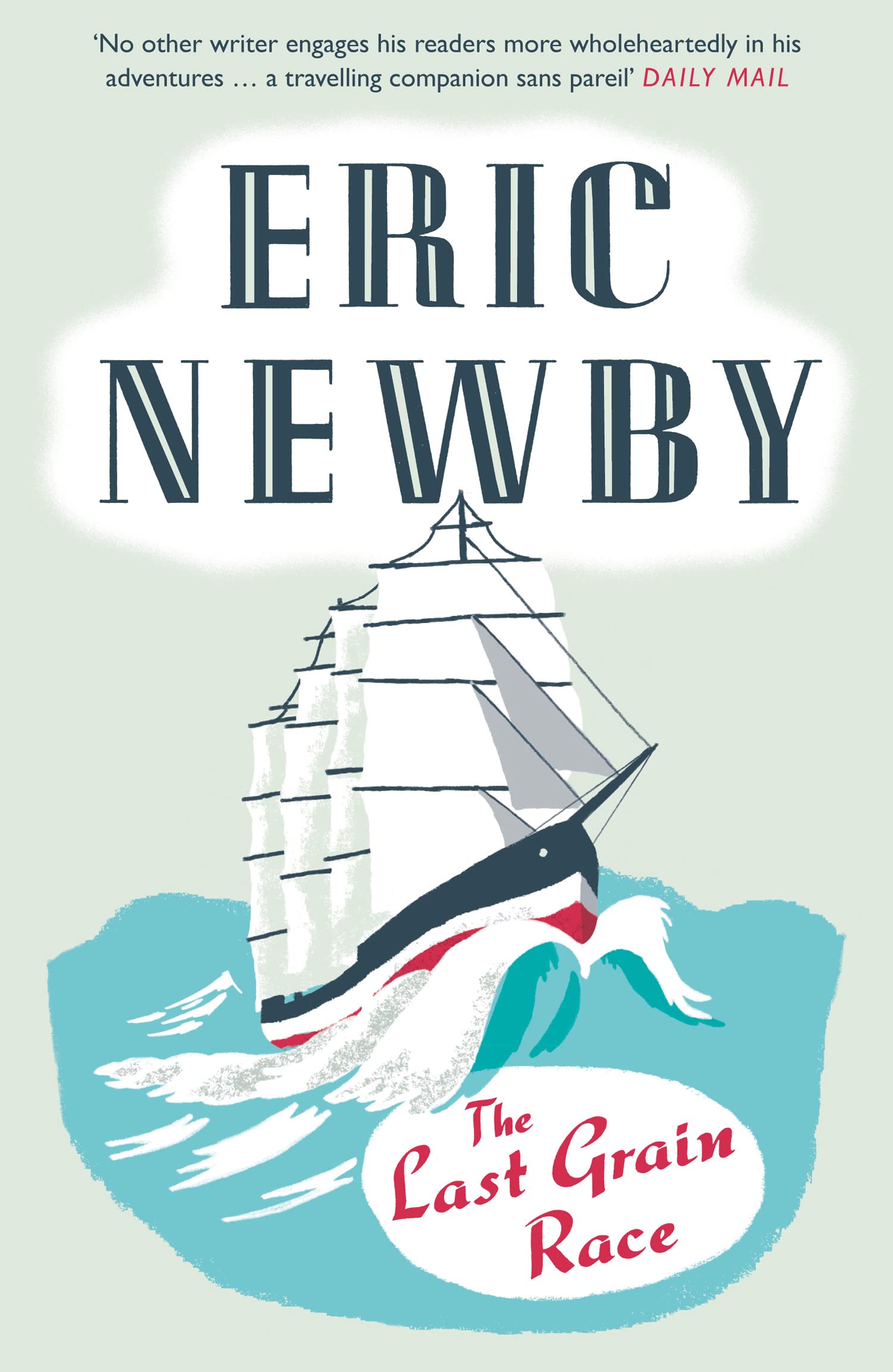
⛵ Sail into history with the ultimate grain race adventure!
The Last Grain Race by Eric Newby is a highly acclaimed, well-written memoir chronicling the 1939-40 voyage of the Moshulu, the largest working barque of its time. Combining rich nautical detail with humor and bravery, it offers an immersive look at life aboard a historic sailing ship during its final grain race before WWII. With over 600 reviews and a 4.5-star rating, this book is a must-read for sailing enthusiasts and history buffs alike.


| Best Sellers Rank | 105,092 in Books ( See Top 100 in Books ) 20 in Historical Oceania Biographies 64 in Sailing (Books) 156 in Maritime History & Piracy (Books) |
| Customer Reviews | 4.5 out of 5 stars 618 Reviews |
H**R
A really fabulous book, well written, infomative, and important
This is a splendid book. I've read numerous books about sailing and sailing ships, of all sizes, and especially about the great sailing ships on the tea, nitrate and grain trades, etc etc, and I reckon this is the most enjoyable, well written and informative books of any of them. Newby writes very well, and with great humour and self-deprecation, about all aspects of life aboard Moshulu, the biggest working barque of the time. After an initial chapter describing Newby's pre-Moshulu life ashore, the remainder of the book concerns the voyage out to Australia (from Belfast) in ballast; then the few months in Australia,loading; then the voyage home again, to Queenstown (Cobh) for orders, and then to Glasgow. Along the way, we get a really detailed description of things like the deck layout, the watchkeeping system, daily life on board, the rigging and sail-handling, etc etc. Poor Moshulu, after this glorious part of her working life, she was seized by the Germans. Her rigging was removed and put into storage, and was subsequently destroyed by bombing raids. Moshulu spent a long time then as a floating grain store/warehouse, before eventually crossing the Atlantic and being put to use as a museum ship and (I think) as a restaurant, from 1970, in New York and then Philadelphia. But this was all long after her great last grain race glory-days of 1939/1940. If you're interested in sailing ships, or if you just like a well-written book, this is for you. Very highly recommended.
M**L
How to grow up very quickly.
The late Eric Newby established a fine reputation as a travel writer, but he was much more than that. Born into a comfortably wealthy family, he could not tolerate life "in the city" and as an 18 year old signed up as a junior crew member on a 4 masted, square rigged sailing ship which took grain between the UK and Australia just before the second world war. The last grain race describes his experiences in raw, and sometimes terrifying detail. Quite apart from the fact that most of the crew did not speak English and initially treated him with disdain, he was frequently given the most horrible of duties and had to learn to climb to the top of 120 foot masts to either store or release the massive sails. By the end of the return voyage he has proved himself more than capable of handling everything that was thrown at him - including climbing the mast in a force 10 gale as the ship rounded Cape Horn in order to get a good photograph! The book is full of vivid descriptions though may include a little too much technical detail in places. Newby's subsequent adventures, including an attempt to climb K2 proved what a tough and brave man he was. Toughness and bravery shine through the pages of the excellent book.
J**N
An experience of the past
This book, that I read many years ago, is such a classic that I bought this one for my son. Although this was a used issue it came in its cardboard holder and was in excellent condition. As the book's title is "The Last Grain Race" it is self evident what it is about. Eric Newby joined the vessel as an inexperienced deck hand in 1949 and it's the story of his journey from Australia to Scotland on one of the great sailing ships. It is a lucid picture of times long past and the good number of photographs are a window into an experience never to be repeated.
M**D
Fine writing: a memoir of life on a working sailing vessel
A first edition in good condition. I was very pleased with the service from this seller. A replacement volume for a copy lent and not returned. This is the account of Eric Newby's experiences as an apprentice on one of the last 4 masted sailing barques, on a round trip to Australia just before the 2nd World War. It is very well written, and a foretaste of his illustrious travel writing career. It is a direct and vivid link to the harsh world of life on a large working sailing vessel, manned by very few sailors, and passing through some of the most inhospitable seas of the Southern Ocean. It makes today's gap year experiences rather trivial. It is well illustrated by Newby's own photograph, and as a tailpiece carries a sail and rigging plan of his ship, the Moshulu. I thoroughly recommend it to anyone interested in the sea, sailing vessels, and/or the work of Eric Newby, one of the finest travel writers of his generation.
E**E
One of the two best accounts of life at sea that you will ever read.
A remarkable tale, beautifully told, and illustrated with Newby's own excellent photographs, although they're a bit small here. If you like looking at the pictures buy yourself a copy of "Learning the Ropes" as that is essentially all the pics from this book, plus a load more, all reproduced at a decent size. I read this immediately after Alan Villiers "By Way of Cape Horn" which is another account of a similar (and similarly punishing) voyage a few years beforehand, and found both very difficult to put down.
B**S
Decent Read
Decent read if you want an insight into the closed community of a ship and its crew
S**T
It has been a delight to rediscover his dry wit and engaging writing style
It has been many years since I ready Newby. It has been a delight to rediscover his dry wit and engaging writing style. A piece of history and hard to believe he is talking about a time only sixty odd years ago. Some of his technical descriptions of the ship, it's sails and how they are trimmed may overwhelm non-sailors but the human story is timeless and easily understood. Excellent
N**L
Only for sailors, obviously
Eric Newby is an excellent story teller and this book shows off his talent. The definition of sailing being boring when it is not terrifying is nicely illustrated in this adventure. However, perhaps inevitably, the book is bogged down in the technicalities of sails and ropes and rigging. You have to constantly refer to the sketch at the beginning of the book to understand what sail has just broken free or what rope he is pulling. Probably fascinating for sailors of more modest vessels, but too repetitive and obscure for me.
TrustPilot
vor 2 Monaten
vor 2 Wochen