We remain fully operational. Our teams are working around the clock to ensure your deliveries continue safely.

Laden Sie die App herunter


Kundendienst
Copyright © 2025 Desertcart Holdings Limited
Laden Sie die App herunter
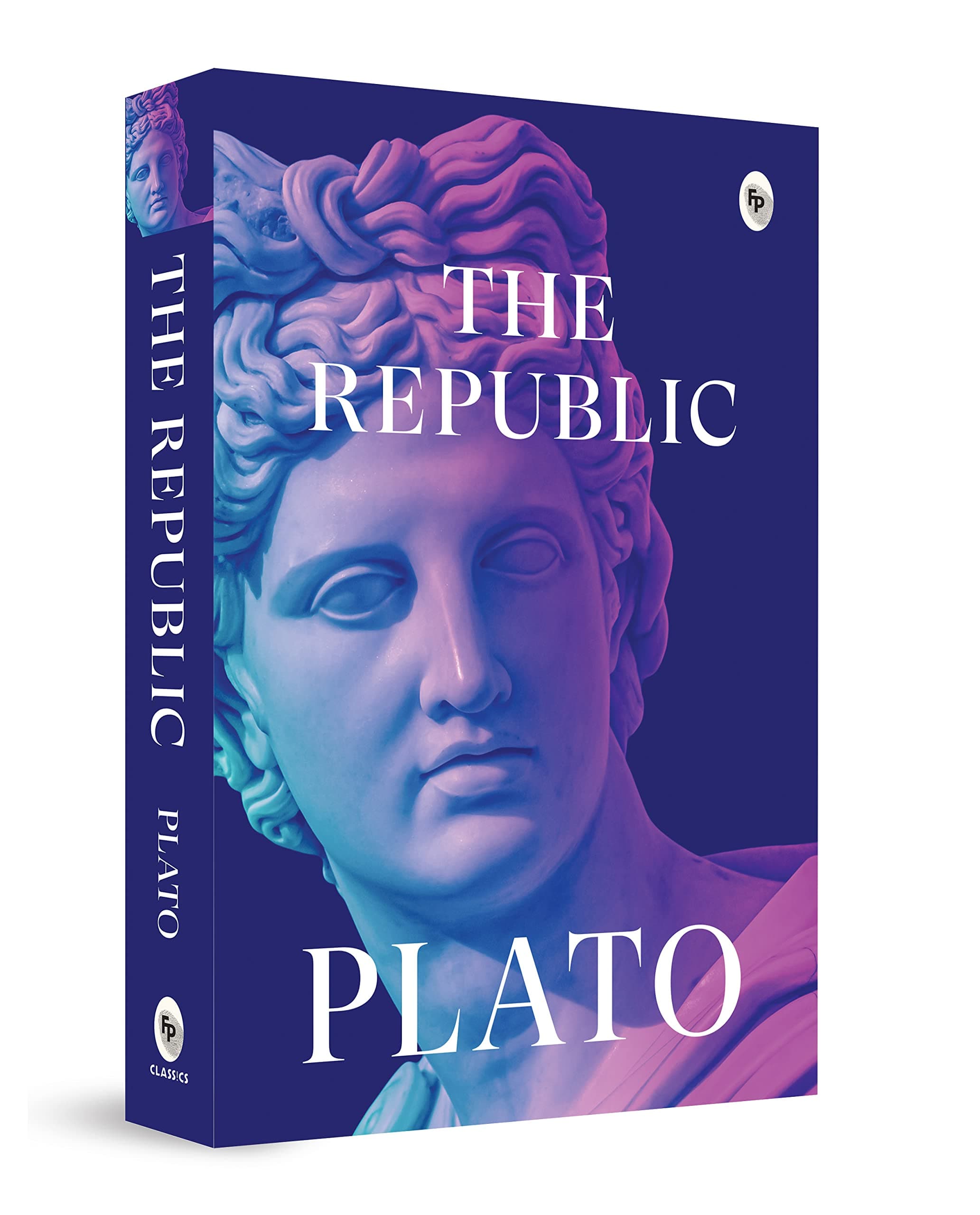



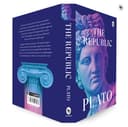


Republic - Classics , The (Fingerprint Classics) [Plato] on desertcart.com. *FREE* shipping on qualifying offers. Republic - Classics , The (Fingerprint Classics) Review: Paradigm-shattering - Plato's Republic is quite possibly the most paradigm-shattering book I've ever read, second to the Bible. Some will even claim,"If you've gone through college and you haven't had at least an introduction to Plato, you've been cheated..." What I do know is that once you've read The Republic you can never look at the world the same again. Influential It's hard to overstate its influence: Augustine, Anselm, Boethius, Justin Martyr, Eusebius, (most of the church fathers), the Puritans, Jonathan Edwards, and C.S. Lewis were all deeply and profoundly influenced by Plato. Of all the Great Works of Western Civilization that came after Plato, some might ask, "Which works were influenced by Plato?" The better question is, "Which works were not influenced by Plato?" Misunderstood It is a general truth that the greatest works are often the most misunderstood. The Bible is the prime example of this, but second to that is The Republic. The primary error in interpreting this colossal dialogue, as C.S. Lewis would say, is being "concerned [more with] altering our own opinions than in entering fully into the opinion of others." So it is with the The Bible, and all other great works of literature. The Cave Many people have heard of the "cave analogy", but I'll go out on a limb and claim that even if you've heard of the cave, you might not understand it to its full extent. The reason is the testimony of a person that truly understands the cave is the one that lives free from "the shadows". The Shadows Now that we're getting into deep waters, what are "the shadows"? The shadows are those illusory "images" on the cave wall or "copies" that resemble actual objects but are not the real thing. Like a photograph they are the pixelated representation of something of "substance", but they are not the "substance" itself. They merely "suggest" or "point to" the real thing, and are, in a sense, metaphors that are "like" the objects in representation, but are not in themselves the objects, and are thus "shadows" of no real "substance". The Forms Here's where it gets heady. Plato, by use of analogy, claims that the world is, at it's essence, a "Shadow" of the "True Form". Anything physical that we can see, hear, touch, smell, or taste is a "representation" of "substance" because they all point to the "True Form". Justice This is where the discussion on Justice comes in. Plato wants to figure out what Justice is. So, in platonic style, he uses another set of analogies. The Republic The Republic is often perceived, sadly even by academics, as Plato's view of how ideal government should work, and that's all. That is true, but I'm sorry to say, that is completely missing the point. The point is that Plato's "Republic", his view of how ideal government should work, is itself an analogy for the soul. Plato could care less about an ideal government, save for the fact that he cares in so far as it will tell him about the soul. The Republic is made up of three groups of citizens: The Guardians, The Auxiliaries, and the Money-makers. They represent the three parts of the soul: The Logical, The Spirited, and The Appetitive. Justice in government, according to Plato, is when the three groups of citizens each play their proper role and no group becomes too powerful. Justice in the soul, according to Plato, is when the three parts of the soul each play their proper role and no part becomes too powerful. The Just Life This is where Plato shines in practice. Aside from speculating if there really are three parts to the soul, we do know, at least, that in our lives when wisdom becomes king, when honor becomes king, and especially when the appetite becomes king that is the foreground to an immoral life. If the Good Life is letting each part of the soul play its role, the Bad Life is letting one part of the soul reign over the other two. The gravest life is the one that is controlled by the appetite, and lives by impulses and, more descriptively "erotic love". Freedom One of my favorite points of The Republic was in Plato's description of true freedom. Most, he points out, believe that the tyrant who controls everything, and thus is able to do whatever he wishes is most free. On the contrary, he argues, the tyrant is the most enslaved of them all, namely to his own, lusts, passions, and as Plato puts it, "erotic love". True freedom, as the Bible puts it, is not the ability to do whatever you want, rather it is the power to not to. Christianity While Plato's Republic is undoubtedly the best philosophy book of all time, like all philosophies, it is incomplete, and Plato knew that. He longed to understand the substance of the True Forms and to get free of this world of Shadows, but he did not know "what" or better yet "who" was behind the True Forms. Not surprisingly Augustine picked up on this missing link, and realized, that Christianity, namely the Trinitarian God of the Bible was the One behind it all. All justice points to the Justice of God, all beauty points to the Beauty of God, all love points to the Love of God, all the Shadows of this world point to the true form of God. Some say heaven will be more "real" than this world, and the reason is, I think, that we will come face-to-face with the Substance behind the Shadows. It will be the difference between seeing someone's shadow and seeing them face to face, or seeing the imperfect form of beauty in the sunset, and meeting Beauty face-to-face. Imagine meeting Beauty or Goodness face to face. Like the apostle John, and the prophet Isaiah, I could only fall down flat on my face in worship. Why worship? Consider the happiness we find in all the temporal shadows of beauty, goodness, and truth, and then consider the true joy we will find in meeting Beauty, Goodness, and Truth face-to-face. Review: Wisdom - Plato's Republic is of course one of the foundational texts of Western philosophy. It is a dialogue between Socrates and several interlocutors concerning, broadly speaking, the ideal city. Beginning with a discussion of the nature of justice, the dialogue turns into a thought experiment where Socrates builds the ideal city from the ground up. What are the basic needs of the people? Given these basic needs, what kinds of jobs will people in the city have? Given these jobs, what other jobs will citizens have? What kind of protection do the citizens need? How do we ensure that the next generation is adequately prepared for whatever we decide they will need in the future? etc. During the discussion, we see many of the ideas that Plato is known for, such as his theory of the forms via the allegory of the cave. This book is required reading for anyone who wishes to consider himself an educated human being. The ideas in this text have been commented on, expounded upon, refuted, defended, or extended by every philosopher who is worth studying. In particular, as an Aristotelian-Thomist, understanding Plato's views is essential to place in context his student's views. Although the book as a whole is excellent, there are nevertheless some grave errors. Less well known about Plato is the fact that there are some extremely disturbing ideas put forth in Book V. These ideas include an acceptance of infanticide and "breeding" the best possible humans, the later of which being justified in order to "make marriage as sacred as possible." Some would also argue that the city Plato allocates for is quite socialist or even communist. I do not know much about these systems, and I cannot comment on it other than to say that from what little I know and my reading of the text, such claims do not seem to me to be unjustified. I don't know much about different translations, but I can certainly say that this particular translation was easy to read. Each Book contained a few paragraphs introducing the main ideas that are found in the Book. The footnotes are plentiful but not overwhelming. They mostly give a citation for a quote, which more often than not is from Homer's Iliad or Odyssey. It should be noted that unlike some Platonic dialogues (and possibly some translations of The Republic), the author has chosen to NOT include the names of who is speaking (presumably this is more true to the original Greek). This can sometimes be a bit annoying if you don't keep careful track of who is speaking. Grube's version is a readable and helpful translation of The Republic. I would recommend this version to anyone who hasn't read The Republic yet.


| Best Sellers Rank | #88,424 in Books ( See Top 100 in Books ) #44 in Ancient Greek & Roman Philosophy #65 in Individual Philosophers (Books) #696 in Classic Literature & Fiction |
| Customer Reviews | 4.5 4.5 out of 5 stars (6,810) |
| Dimensions | 7.87 x 4.92 x 0.39 inches |
| ISBN-10 | 8175993065 |
| ISBN-13 | 978-8175993068 |
| Item Weight | 10.6 ounces |
| Language | English |
| Print length | 400 pages |
| Publication date | August 1, 2015 |
| Publisher | Fingerprint |
S**R
Paradigm-shattering
Plato's Republic is quite possibly the most paradigm-shattering book I've ever read, second to the Bible. Some will even claim,"If you've gone through college and you haven't had at least an introduction to Plato, you've been cheated..." What I do know is that once you've read The Republic you can never look at the world the same again. Influential It's hard to overstate its influence: Augustine, Anselm, Boethius, Justin Martyr, Eusebius, (most of the church fathers), the Puritans, Jonathan Edwards, and C.S. Lewis were all deeply and profoundly influenced by Plato. Of all the Great Works of Western Civilization that came after Plato, some might ask, "Which works were influenced by Plato?" The better question is, "Which works were not influenced by Plato?" Misunderstood It is a general truth that the greatest works are often the most misunderstood. The Bible is the prime example of this, but second to that is The Republic. The primary error in interpreting this colossal dialogue, as C.S. Lewis would say, is being "concerned [more with] altering our own opinions than in entering fully into the opinion of others." So it is with the The Bible, and all other great works of literature. The Cave Many people have heard of the "cave analogy", but I'll go out on a limb and claim that even if you've heard of the cave, you might not understand it to its full extent. The reason is the testimony of a person that truly understands the cave is the one that lives free from "the shadows". The Shadows Now that we're getting into deep waters, what are "the shadows"? The shadows are those illusory "images" on the cave wall or "copies" that resemble actual objects but are not the real thing. Like a photograph they are the pixelated representation of something of "substance", but they are not the "substance" itself. They merely "suggest" or "point to" the real thing, and are, in a sense, metaphors that are "like" the objects in representation, but are not in themselves the objects, and are thus "shadows" of no real "substance". The Forms Here's where it gets heady. Plato, by use of analogy, claims that the world is, at it's essence, a "Shadow" of the "True Form". Anything physical that we can see, hear, touch, smell, or taste is a "representation" of "substance" because they all point to the "True Form". Justice This is where the discussion on Justice comes in. Plato wants to figure out what Justice is. So, in platonic style, he uses another set of analogies. The Republic The Republic is often perceived, sadly even by academics, as Plato's view of how ideal government should work, and that's all. That is true, but I'm sorry to say, that is completely missing the point. The point is that Plato's "Republic", his view of how ideal government should work, is itself an analogy for the soul. Plato could care less about an ideal government, save for the fact that he cares in so far as it will tell him about the soul. The Republic is made up of three groups of citizens: The Guardians, The Auxiliaries, and the Money-makers. They represent the three parts of the soul: The Logical, The Spirited, and The Appetitive. Justice in government, according to Plato, is when the three groups of citizens each play their proper role and no group becomes too powerful. Justice in the soul, according to Plato, is when the three parts of the soul each play their proper role and no part becomes too powerful. The Just Life This is where Plato shines in practice. Aside from speculating if there really are three parts to the soul, we do know, at least, that in our lives when wisdom becomes king, when honor becomes king, and especially when the appetite becomes king that is the foreground to an immoral life. If the Good Life is letting each part of the soul play its role, the Bad Life is letting one part of the soul reign over the other two. The gravest life is the one that is controlled by the appetite, and lives by impulses and, more descriptively "erotic love". Freedom One of my favorite points of The Republic was in Plato's description of true freedom. Most, he points out, believe that the tyrant who controls everything, and thus is able to do whatever he wishes is most free. On the contrary, he argues, the tyrant is the most enslaved of them all, namely to his own, lusts, passions, and as Plato puts it, "erotic love". True freedom, as the Bible puts it, is not the ability to do whatever you want, rather it is the power to not to. Christianity While Plato's Republic is undoubtedly the best philosophy book of all time, like all philosophies, it is incomplete, and Plato knew that. He longed to understand the substance of the True Forms and to get free of this world of Shadows, but he did not know "what" or better yet "who" was behind the True Forms. Not surprisingly Augustine picked up on this missing link, and realized, that Christianity, namely the Trinitarian God of the Bible was the One behind it all. All justice points to the Justice of God, all beauty points to the Beauty of God, all love points to the Love of God, all the Shadows of this world point to the true form of God. Some say heaven will be more "real" than this world, and the reason is, I think, that we will come face-to-face with the Substance behind the Shadows. It will be the difference between seeing someone's shadow and seeing them face to face, or seeing the imperfect form of beauty in the sunset, and meeting Beauty face-to-face. Imagine meeting Beauty or Goodness face to face. Like the apostle John, and the prophet Isaiah, I could only fall down flat on my face in worship. Why worship? Consider the happiness we find in all the temporal shadows of beauty, goodness, and truth, and then consider the true joy we will find in meeting Beauty, Goodness, and Truth face-to-face.
B**O
Wisdom
Plato's Republic is of course one of the foundational texts of Western philosophy. It is a dialogue between Socrates and several interlocutors concerning, broadly speaking, the ideal city. Beginning with a discussion of the nature of justice, the dialogue turns into a thought experiment where Socrates builds the ideal city from the ground up. What are the basic needs of the people? Given these basic needs, what kinds of jobs will people in the city have? Given these jobs, what other jobs will citizens have? What kind of protection do the citizens need? How do we ensure that the next generation is adequately prepared for whatever we decide they will need in the future? etc. During the discussion, we see many of the ideas that Plato is known for, such as his theory of the forms via the allegory of the cave. This book is required reading for anyone who wishes to consider himself an educated human being. The ideas in this text have been commented on, expounded upon, refuted, defended, or extended by every philosopher who is worth studying. In particular, as an Aristotelian-Thomist, understanding Plato's views is essential to place in context his student's views. Although the book as a whole is excellent, there are nevertheless some grave errors. Less well known about Plato is the fact that there are some extremely disturbing ideas put forth in Book V. These ideas include an acceptance of infanticide and "breeding" the best possible humans, the later of which being justified in order to "make marriage as sacred as possible." Some would also argue that the city Plato allocates for is quite socialist or even communist. I do not know much about these systems, and I cannot comment on it other than to say that from what little I know and my reading of the text, such claims do not seem to me to be unjustified. I don't know much about different translations, but I can certainly say that this particular translation was easy to read. Each Book contained a few paragraphs introducing the main ideas that are found in the Book. The footnotes are plentiful but not overwhelming. They mostly give a citation for a quote, which more often than not is from Homer's Iliad or Odyssey. It should be noted that unlike some Platonic dialogues (and possibly some translations of The Republic), the author has chosen to NOT include the names of who is speaking (presumably this is more true to the original Greek). This can sometimes be a bit annoying if you don't keep careful track of who is speaking. Grube's version is a readable and helpful translation of The Republic. I would recommend this version to anyone who hasn't read The Republic yet.
M**D
Translation excellent
Great, concise translation of Plato 's Republic 👌. Great deal.
J**E
Essential Philosophical Reading
Bought the hardcover, it's wrapped in nice pliable leather or faux-leather, the design you see in the product image is stamped into the front. The pages are not cut to length so you get the bumps where the groups of pages are bound. Overall surprisingly nice construction for the price. The translation is fine as long as you're capable of reading older Bible translations or similarly dated texts, I would personally prefer it this way rather than an overly simplified translation that loses the prose of the original. As far as Plato's own writing is concerned, I found his style of argumentation unconvincing, often relying on chains of equivalencies to prove his points, in many cases the end point has little or nothing to do with the beginning. With that said, I did find myself agreeing with a great deal of what he said, just not because of the way he argued the points. The influence of his work is obvious, I found that I was already subconsciously familiar with most of the concepts he presents through my time debating and reading essays written by my peers. To call this work "essential reading" would be a gross understatement, it has as much influence on modern thought as the Gospel or other well known works.
N**Y
古くて新しい共和国。一読の要あると思うが、かなりの基礎教養ないとわけ分からん。ごめんなさい。
N**S
The Republic is one of the most influential books of human history. It forms not just the basis of individual rights and responsibilities, but also, through its method of examination, sets out the structure of contemporary governance of states. The premise of the Republic is an examination of whether it is better to be just or unjust, which at the time, and even now, is not a given. Plato uses the state as a vehicle to examine the advantage of one over the other. Many different human constructions have claimed the legitimacy of their cause through their interpretation of the Republic. Hitler and the Nazi's used the examination of the virtuous state to justify their view, whilst most modern leaders also refer to its supporting theirs. It is therefore a devilishly difficult book to truly understand because of the sheer breadth of topics and issues that Plato introduces over the course of the dialogue. Readers must make sense not only of those issues in their own right but they must also understand them in relation to the larger themes and arguments of the work. For me the true value of the Republic is found in Books Five and Eight. In Five we see an analogous treatment of character or what Plato calls the soul. According to Plato the soul has three functions that correspond to the three parts of the soul: to rule oneself, to defend oneself, and to provide for one's bodily needs. Two virtues -- wisdom and courage -- follow directly from the functions of ruling and defending oneself. The other two virtues -- temperance and justice -- are holistic and enable the soul to perform all of its functions well. Plato uses the different functions that we would find in a city or state to demonstrate his point. What appealed to the Nazi's was Plato's focus on what we now call eugenics to make his point. He correctly states that each of us have a particular function, and service to the state. He states that only a very few have the capacity to rule a city or state, but not by birth, but rather through education and self-control. He therefore makes it clear that being born in a particular segment of society does not make a person just or virtuous, but rather their ability to rule themselves (porten sui). In Book Eight Plato examines the natures of different forms of government, and the nature of people that make up those governments (states). His examination of democracy is cutting, with thoughts such as "he grandly does democracy trample all the fine notions of virtue... and promoting to honour any one who professes to be the people's friend (think Trump, populism). Further, "These and other characteristics are proper to democracy, which is a charming form of government, full of variety and disorder, and dispensing a sort of equality to equals and unequals alike." And then he outlines what the individual in a democracy looks like "If any one says to him that some pleasures are the satisfactions of good and noble desires, and others of evil desires, and that he ought to use and honour some and chastise and master the others, whenever this is repeated to him he shakes his head and says that they are all alike, and that one is as good as another." This is what we now term equality, not understanding that things are not equal, but rather that some things are good and some are bad, saying that all things are equal and must be respected. "And above all, see how sensitive the citizens become, they chafe impatiently at the least touch of authority, and at length they cease to care even for the laws, written or unwritten, they will have no one over them". "And so tyranny naturally arises out of democracy, and the most aggravated form of tyranny and slavery out of the most extreme form of liberty." It is uncanny how Plato knew, in 325bc, what our democracies would look like, and what type of leader would arise. What is really frightening though is that he identifies that the next stage after democracy is tyranny. It is a very difficult book to fully understand, or in some cases to agree with, and I don't claim that I do, but there is much for us to learn from the attempt.
C**N
The Republic by Plato is a foundational work in Western philosophy that explores the nature of justice, the ideal society, and the philosopher's role within it. Plato envisions an ideal city-state governed by philosopher-kings, where people are divided into three classes: rulers, warriors, and producers. Each class has a specific role, and justice is achieved when each performs its function without interference. The work also introduces the allegory of the cave, which illustrates the difference between the world of appearances and the world of true knowledge.
G**Z
Great purchase well made and pages of good quality
G**A
Looking forward to read it...
TrustPilot
vor 1 Tag
vor 1 Monat