We remain fully operational. Our teams are working around the clock to ensure your deliveries continue safely.

Laden Sie die App herunter


Kundendienst
Copyright © 2025 Desertcart Holdings Limited
Laden Sie die App herunter


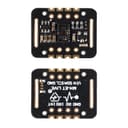


❤️ Elevate your DIY health tech game with precision pulse sensing!
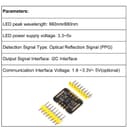
The MAX30102 Heart Rate Sensor Module is a dual-LED optical biosensor designed for accurate heart rate and blood oxygen monitoring. Featuring red and infrared LEDs at 660nm and 880nm wavelengths, it uses an I2C interface for easy integration with popular microcontrollers like Arduino and ESP32. Its ultra-low standby current ensures energy efficiency, making it ideal for wearable health devices. This pack includes two modules, perfect for prototyping or backup, empowering makers to build reliable biometric monitoring solutions.


| ASIN | B094JC48HQ |
| Best Sellers Rank | #151,703 in Industrial & Scientific ( See Top 100 in Industrial & Scientific ) #36 in Sensor Blocks |
| Brand | ATNSINC |
| Brand Name | ATNSINC |
| Color | Black |
| Connector Type | Solder |
| Customer Reviews | 3.6 out of 5 stars 6 Reviews |
| Manufacturer | Atnsinc |
| Material | oxygen |
| Material Type | oxygen |
| Model | MAX30102 |
| Mounting Type | PCB Mount |
| Number Of Contacts | 5 |
| Number Of Poles | 2 |
| Number of Positions | 1 |
| Part Number | 19146 |
| Specification Met | ATEX, CE, CQC, CSA, CSTB, DNV GL, EAC, Energy Rating, FCC, IEC, IECEE CB, ISO 9000, ISO 9001, KEMA-KEUR, LR, MIL-SPEC, RoHS, SAE, SGS, UL, VDE, cUL |
| UPC | 701715460423 |
| Voltage | 5 Volts |
H**̠
Reliable Pulse and Blood Oxygen Sensors
These MAX30102 modules are excellent for adding biometric sensing to electronics projects. They use the standard I2C interface, which makes them very easy to wire up to an Arduino or ESP32. There are plenty of libraries available, so getting code running to read heart rate and blood oxygen levels is straightforward. I found the readings to be consistent and accurate enough for my wearable prototype. Getting two sensors in the pack is a nice value, allowing for a backup or a second project. A solid choice for health-monitoring DIY builds.
I**0
Capable heart-rate sensor for skilled tinkerers
This MAX30102 sensor set delivers excellent value, and users with some moderate skills with electronics will find it a strong platform for experimentation. It arrives with both straight and right-angle 2.54-pitch header pins, and the board exposes eight total pins—though only four are required for typical use (VCC at 3.3V, GND, SDA, and SCL). The other four remain available for advanced functions I didn’t need for my project. Soldering the headers is part of the required setup, and the board’s open design makes that step straightforward for anyone equipped with a basic iron and magnifier. To support a prototype biofeedback device for someone with POTS, I wired the sensor to an Arduino Uno and added two 5 kΩ pullup resistors from 3.3V to SDA and SCL. The MAX30102 will not communicate without external pullup resistors, and once those were in place, communication worked immediately. With a simple sketch (ChatGPT assisted), the sensor produced a steady flow of readings with some occasional spike errors which I filtered out with the sketch. The onboard red LED provides clear confirmation that the module is active, and after a few seconds of finger contact, the sensor settles into consistent output. Occasional spikes are normal for optical sensors at this price point and can be easily filtered in software. At $8.99 for two sensors, this is a strong value and provides a spare for future projects. It’s not a plug-and-play classroom module, but a well-designed component meant for makers, and it performs exactly as expected once set up correctly. I look forward to using these to build a heart-rate alert system that can notify my partner and a Bluetooth receiver when her pulse rises above a threshold. The potential applications are wide-open for anyone comfortable with a bit of hands-on work.
TrustPilot
vor 4 Tagen
vor 3 Wochen