
Laden Sie die App herunter


Kundendienst
Copyright © 2025 Desertcart Holdings Limited
Laden Sie die App herunter


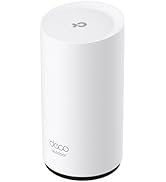
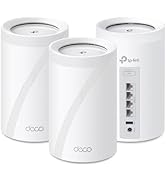
🚀 Elevate your network game with TP-Link EAP660 HD — where speed meets smart control!
The TP-Link EAP660 HD is a high-density WiFi 6 AX3600 access point designed for enterprise and demanding home environments. It delivers ultra-fast dual-band speeds up to 3550 Mbps, supports 8 spatial streams, and boosts network capacity by 4× using OFDMA and MU-MIMO. Featuring a 2.5G Ethernet port with PoE+ for easy installation, it integrates seamlessly with Omada SDN for centralized cloud management and remote control via the Omada app. Backed by a limited lifetime warranty and 24/7 support, it’s engineered for reliable, scalable, and secure wireless performance.











| ASIN | B08PW34WPX |
| Best Sellers Rank | #355 in Computer Networking Wireless Access Points |
| Brand | TP-Link |
| Color | white |
| Customer Reviews | 4.6 4.6 out of 5 stars (358) |
| Date First Available | December 9, 2020 |
| Item Dimensions LxWxH | 9.59 x 9.59 x 2.5 inches |
| Item Weight | 1.94 pounds |
| Item model number | EAP660 HD |
| Manufacturer | TP-Link |
| National Stock Number | 0 |
| Operating System | Omada SDN |
| Product Dimensions | 9.59 x 9.59 x 2.5 inches |
| Series | EAP660 HD |
| Wireless Type | 802.11ac, 802.11ax, 802.11b, 802.11g, 802.11n |
A**.
Excellent wireless coverage,1800 sq ft home
I recently upgraded my home WiFi network with the TP-Link EAP660 HD and have been blown away by the improved speed and coverage. The WiFi 6 technology provides faster speeds and greater capacity than my previous router, and the range extender function allows me to reach areas of my home that previously had weak signals. The setup process was straightforward and the Omada app made it easy to configure and customize my network settings. The app also allows me to remotely monitor and manage my network, which is convenient when I'm away from home. The design of the TP-Link EAP660 HD is sleek and modern, and the LED indicator lights provide a helpful visual guide for diagnosing any issues with the router. The EAP660 HD also features advanced security features, including WPA3 encryption and a guest network, which gives me peace of mind when it comes to protecting my personal data. In terms of performance, I've noticed a significant improvement in both download and upload speeds, especially when multiple devices are connected to the network at once. The signal strength is also impressive, with minimal signal dropouts or interruptions. Overall, I highly recommend the TP-Link EAP660 HD for anyone looking for a high-performance, secure, and easy-to-use WiFi 6 router. It's been a game-changer for my home network!
S**R
EAP660 HD tested against Ubiquiti U6-LR
The EAP660 HD has been rock solid and has performed better than the Ubiquiti U6-LR in my testing. I performed a handful of tests to compare the two. The EAP660 HD is running firmware 1.0.6 (supposedly better than the latest for mobile devices), and the U6-LR is running the latest according to UniFi. They have been setup using the same channels, channel widths, and antenna power levels. During testing I had my nominal 28 clients connected to the AP, most of which are connected to the 2.4 ghz channel; two of these are IP cameras that continuously upload video to a (hardwired) NAS. - iperf3 on my iPhone 13 Pro in various rooms throughout our house. The performance was very similar between the two APs. It ranged between 400 and 800 mbps with an average of 650. Both achieved > 900 mbps steady when connected to my wifi6 Dell laptop and I think also my 2015 MacBook Pro. - testing ping with wifiman against google, my local nas, and the gateway (router) - both were excellent. Fluctuated between 2 and 6 ms on local devices. - bufferbloat testing via waveform’s web app - both were good. I seem to remember Bs, As, and an A+ but might not remember correctly. FYI that I’m using a Ubiquiti ER-4 as a router with smart qos enabled. This is connected to a Verizon fios 1gb symmetrical internet plan. This setup has resulted in consistent A+ scores on hardwired devices. - stability of 2 ip security cameras (and a doorbell camera) - both very solid - 3 devices doing iperf at once - this is where things got interesting. The U6-LR did a decent job of evenly distributing bandwidth between two devices. When the third was introduced it seemed to choke. The third device’s speed was very slow. The EAP660 HD handled the traffic effortlessly. - PS remote play (multiple 30-45 min sessions) - both were excellent. There were occasional blips with both, but they were few and far between, and they lasted a very short time. On one occasion with the EAP660 HD it seemed like the quality (resolution) decreased. Force quitting and restarting the app restored it to normal. - 5 devices running iperf with bandwidth limiting (25 or 50 mbps…I forget which), then playing PS remote play from my phone to my hardwired PS5 - the EAP660 HD resulted in a very playable experience. There were small hiccups here and there but overall it was good. The U6-LR on the other hand performed poorly. The remote play app wouldn’t even establish a connection to the PS5 to start remote play. It returned an error saying the connection wasn’t strong or fast enough. I also seem to recall issues even executing iperf with all 5 devices on the Ubiquiti AP, so the remote play issue may have surfaced with even less than 5. The Omada management web app isn’t as good as Unifi imo; the UX just isn’t as good, and there are some features missing. But it’s close enough. Overall I’m very impressed with the EAP660 HD. Time will tell what sort of uptime I can expect before issues arise, but Omada supports scheduled reboots, so there’s always that to fall back on.
A**R
EAP660 HD in the home
I hate that these reviews get grouped together for vastly different products, so that’s why I put the model in the subject I am not a business, and I am not using this “business grade” access point in a business setting. I am using the EAP660 HD in an oddly-shaped, second floor apartment. I am coming from the perspective of a consumer, where consumer grade equipment is often over-priced, under-spec’d, and ugly. This access point is not that. This access point is pretty big overall, but is smaller and much less offensive than my previous router-turned-access-point. Functionally, this access point is great. WPA3, WiFi 6, and the 2.5G port were all big selling points for me. The user-interface is perfectly simple, and the installation was super easy. With or without POE, this access point is as close to plug-and-play as I think you can get, with a lot of flexibility and advanced features. An access point is NOT a router. If you’re interested in my network: CM1000 -> PFSense -> Access Point. This means I have at-max, 1GB download. I pay for 900M, and when wired I normally get ~860 or so. Wireless I used to get 550Mb/s through my Asus Ac3200 to my iPhone 11. Now I get a (much more reliable) 670Mb/s to the same device. (I know, super scientific) While I have asymmetric bandwidth through my ISP, the 2.5Gb networking is great for when I want to upgrade, making this purchase a longer-term solution and less of an incremental upgrade. Also if I had any network attached storage, 2.5G to the wireless access point could be useful there too. I am not tied into the Omada ecosystem, and this just lives by itself with a 1Gb POE switch powering it. When multi-gig switches gain popularity and lower price, perhaps then I will upgrade. Only time will tell for reliability, but at this time I have zero complaints. Super solid. If I observe any issues with reliability, I will update here.
M**.
I’ve tried way too many routers and wireless access points to improve on my BT home hub 2 and all have been a failure and not lived up to the hype of the advertising resulting in poor network reach and speed. I finally gave this one a go. Turned off my home hub 2 Wi-Fi but kept the router and plugged this in via Ethernet. Very easy to set up and configure. It has 8 internal aerials and runs at a good output. I now have great Wi-Fi coverage across the house on 2 floors running 2.4ghz on n-only I get 600mbps. No need to turn on the 5ghz and no need to turn in the Wi-Fi 6 as I don’t need it yet. Been running faultlessly with no drop outs and with the capacity to run hundreds of clients it copes seamlessly with the 30 or so devices in the house. Be careful which you buy - the 660hd has the best aerial configuration even compared to higher Tp link models. You can check out the full specs on the TP Link website. I’m happy with this. No more rumblings from the family about the Wi-Fi - it just works.
S**M
This EAP660 HD blows my old 2x2 EnGenius EWS357AP out of the water. I get my the full speed of my connection at two bars when my old one was half the speed at three bars. It took all of three minutes to setup, granted I had previously created an account. My only issue is that it is massive
W**D
This would have been a 5 star review if it wasn't for the challenge of the initial adoption of this device. It is best to connect to the router via ethernet when you are adopting and provisioning this device. Thank you to a post on a popular platform that showed me the way to get this setup. I was pretty mad initially with pairing challenges, almost returned this AP. Now that I have worked around the initial setup, this is superior to my Ubiquiti AC Pro in every way. Internet speed is improved by 4-10% on all devices, my newest iPhone absolutely screams on the Wifi 6 platform. Well done TP Link (Just update ypur documentation for inital pairing/provisioning)
J**N
Working good but, It was AED 660 when I purchased it in October last year.
R**A
I purchased the TP-Link Omada WiFi 6 AX3600 based on a recommendation from a tech-savvy friend, expecting a high-performance, enterprise-level access point. Unfortunately, it failed to meet my expectations after just two weeks of use. First, a word of caution: this product is not plug-and-play. Unless you’re highly technical or experienced with enterprise networking, setup can be quite frustrating. I had to buy an additional compatible router to get the system up and running, and even then, the configuration process was far more complex than I anticipated. The user interface isn’t very intuitive, and documentation is geared toward network administrators. Once I finally got it working, I was hoping for strong, stable, high-speed connectivity, but what I got instead was inconsistent performance. The device would periodically drop connections, and devices in my home office frequently had trouble maintaining a stable signal—far from the premium WiFi 6 experience I expected. I usually hold TP-Link in high regard for their affordable and reliable networking equipment, but this model was a letdown. If you’re not an IT professional or don’t have one on hand, I’d recommend proceeding with caution. This is not a beginner-friendly product, and unfortunately, it didn’t deliver on its promises for me.
TrustPilot
vor 3 Wochen
vor 1 Tag