
Laden Sie die App herunter


Kundendienst
Copyright © 2025 Desertcart Holdings Limited
Laden Sie die App herunter
📖 Unlock Aristotle’s wisdom—because your mind deserves the classics.
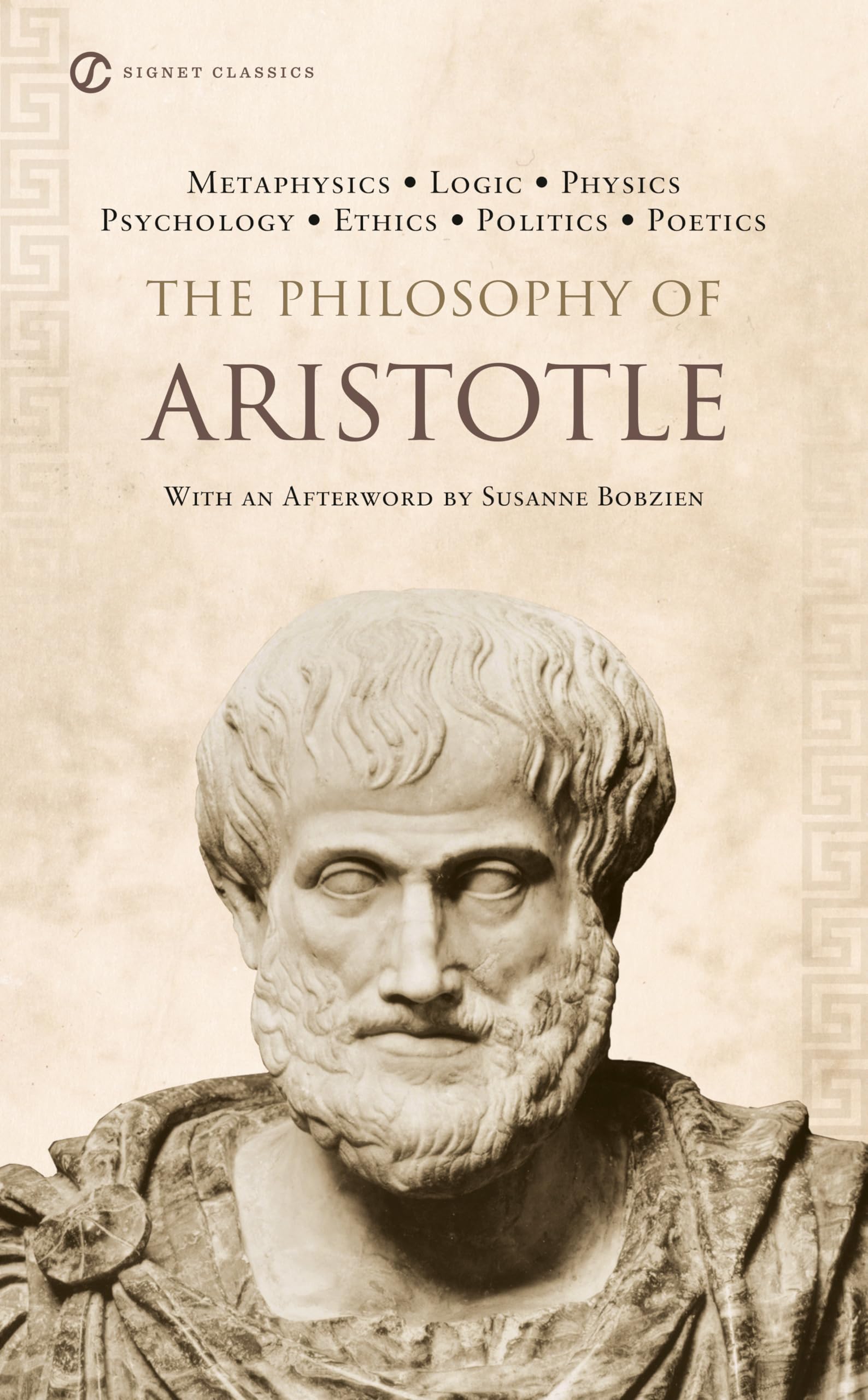
The Philosophy of Aristotle is a 501-page English-language print book published by Signet Book, highly rated (4.4/5) by 291 readers. It ranks within the top 200 in Ethics & Morality and Western Philosophy categories, making it a must-have for professionals eager to engage with foundational philosophical ideas.

| Best Sellers Rank | #49,893 in Books ( See Top 100 in Books ) #118 in Ethics & Morality #142 in Western Philosophy #231 in Philosophy Movements |
| Customer reviews | 4.4 4.4 out of 5 stars (291) |
| Dimensions | 10.8 x 2.16 x 17.27 cm |
| Edition | Reissue |
| ISBN-10 | 0451531752 |
| ISBN-13 | 978-0451531759 |
| Item weight | 249 g |
| Language | English |
| Print length | 544 pages |
| Publication date | 4 January 2011 |
| Publisher | Signet |
| Reading age | 18 years and up |
J**N
Not recommended at all
Text is so small. SENTENCE Is vague as if the author didn't know how to put sentences together so he just copied vage text from dictionary. Hard read hard to understand hard to see and not nice at all to read.
D**Z
Excelente resumen!!
D**S
I have four translations now, of some of Aristotle's work. Two of those are Nicomachean Ethics only (which is included in this translation, but importantly not Books V, VIII, and IX). The two Nicomachean Ethics translations have translational definitions and footnotes(1) galore. Those notes on how words were translated(2), and footnotes with historical information(3), are helpful(4), but also liable(5), imo, to contain "translator's philosophy", although perhaps unintentionally so. I really can't read past the notes and footnotes without some feeling of guilt that I might be missing something, but when I get into reading them, I find so much "interpretation and opinion and added information" that it seems to dilute and even reduce Aristotle(6). I like Creed and Wardman's translation because I can READ it, without getting distracted by a lot of extraneous "thoughts". I've never translated anything, and I'm not an authority by any means, but I find I can read this book and get Aristotle's meaning and also enjoy the experience. There is one particular sentence which I feel these guys picked up and tranlated correctly, while other translations (all three of them) seem to have completely missed the meaning. The sentence is: "Good, then, would be used in two senses: good as an end in itself, and good as a means." Given that Aristotle spent considerable time discussing artisanship as well as distinguishing between activities which are steps towards a specific final product and not the end product in itself, that immediately clarified for me that the saying "the ends justify the means" is an extremely shallow little piece of driftwood philosophy which has very probably been used to justify a lot of bad work. I'm paying the big bucks to read Aristotle, not the translator. This translation is very good (as a means to achieving that end). When I want more detail, THEN I'll look at the books with the notes and footnotes and glossaries (and the translator's thoughts). ___________ (1) Generally used to denote small print and commentary on the text. It is found at the bottom of the page, as feet are found at the lower extremities of a standing or sitting body, and thus the term "footnote". (2) Aristotle wrote in Greek, so the original text must be translated into English and various other languages worldwide, to facilitate understanding by those who do not read Ancient Greek. Many find this very useful. (3) E.g. Aristotle, it is accepted, was Plato's student. Plato was, in turn, Socrates' student. Other historical data have been debated to some extent, particularly in modern times, in which one also finds debate concerning an alleged relationship between Jesus and Mary Magdalene. (4) There are books written as study guides to Aristotle, and this is an example of the usage of the word "helpful", in this context. Other uses of the word "helpful" may apply variously, and the word did exist in basic Ancient Greek vocabulary. (5) not in a modern legal sense. (6) Aristotle is the guy who wrote Nicomachean Ethics, originally.
B**I
Excellent
N**E
Bought as a present so cannot comment
S**A
Very poor print quality. Never expected such poor quality product from Amazon!
TrustPilot
vor 2 Wochen
vor 1 Monat