We remain fully operational. Our teams are working around the clock to ensure your deliveries continue safely.

Laden Sie die App herunter


Kundendienst
Copyright © 2025 Desertcart Holdings Limited
Laden Sie die App herunter

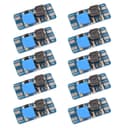

⚡ Elevate your voltage game — power up like a pro!
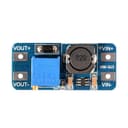
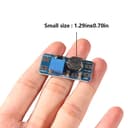
The Dorhea MT3608 DC-DC Step Up Boost Power Converter is a compact, high-efficiency voltage regulator module capable of stepping up 2-24V input to a finely adjustable 5-28V output at up to 2A current. Featuring the MT3608 chip, it offers 93% efficiency and built-in protections against undervoltage, overload, and thermal issues. Sold in packs of 10, it’s ideal for DIY electronics, industrial equipment, and power supply customization.
| ASIN | B089JYBF25 |
| Best Sellers Rank | #17,417 in Tools & Home Improvement ( See Top 100 in Tools & Home Improvement ) #79 in Power Converters |
| Brand Name | DORHEA |
| Current Rating | 2 Amps |
| Customer Reviews | 3.9 3.9 out of 5 stars (509) |
| Item Weight | 1.76 Ounces |
| Manufacturer | DORHEA |
| Model | U13538-1 |
| Mounting Type | PCB Mount |
| Part Number | U13538-1 |
| Power Source | Dc Power Supply |
| Specification Met | UL |
| UPC | 701715434011 |
| Unit Count | 10.0 Count |
P**G
The boards are defective. Not really finally.
I received 10 boards and tested 1 of them and did not work with 4.1v input. No change in output voltage regardless of potentiometer. Tried two more boards and they are the same. The boards should work with greater than 2v but did not work. I am returning them no point of checking remaining 7 boards. After further testing none of the boards are defective. The issue is that you need to turn potentiometer at least 20~30 turns all the way both sides and at one point output voltage will increase. Turn until u hear click sound. If no change then turn opposite direction and it should work but many turns in that direction.
A**S
Trial and try till it works
Hello I purchased the MT3806 so I could boost my 9v to 11volts DC. My intended use was for raising the voltage of an original Made In Japan CE-2 guitar pedal. My first thought was that the MT3806 was small enough that it could easily be hidden, and I could use heat shrink on it to hide it. My first attempt to use the MT3806 was a failure, it literally sparked, burnt and caught on fire when I turned on the power. On guitar pedals the Center is Center Negative so I reversed the VIN- and VIN+. After that it started working but the voltage did not change at all. I returned to Amazon and read the reviews and started with another brand NEW MT3806. The great part is they are very affordable(cheap) and it doesn’t hurt my wallet to try again. I tightened until the thread ran out and clicked(no voltage change). After that I began to lefty loosen the Screw type potentiometer. It took a long time but it worked towards the end of the screws thread. I was able to regulate the output voltage to 10.76vDC from an input of 9vDC. Of course I do think and I also know that I don’t intend to use a load greater than 30mA. Worked out great, no issues, no noise issues either in an audio device.
C**R
Failed within hours
Two of these failed immediately. Other two worked for a while. I am using 2 of them simultaneously for two circuits up-converting from 12V to 24V, powering a 16W circuit. But both of them failed within a few hours of use. The failure resulted in them producing only the input voltage at the output. I am on the last one (of the 5-pack) and I expect it to fail as well. Very unpleasantly surprised. Actually heavily disappointed. I removed 1 star for each failed board from the 5-pack. The ad says that these up-converters work with loads up to 2 amps. I am using them only for 0.7A each so they should be able to handle that just fine. But they do not. I requested a replacement package, foolishly hoping that another batch might work better. I will post an update once I test them out. Though I should not fail to provide more details about the up-converters. They come with nice pre-drilled solder pads, they are big enough for bigger wires for 2 amps, that is a nice touch. The adjustment trim-pot is pretty funky, the quality really is not good because when it is turned maybe 1/4 turn, the voltage barely changes, then it is just barely touched and now the output voltage jumps an extra volt. The trim-pot operation simply is not smooth enough for fine adjustments. Otherwise, once the trim-pot is adjusted, the board holds the output voltage well, no big deviations, maybe a tenth of a volt but that's also the reading error on my DMM so it's hard to tell. Size of the boards is acceptable and as advertised. If I ever get any that will actually stay working, I will slide them into a 1.5" heat shrink sleeve for protection. As far as the refund goes, I have been waiting almost a month. I have neither the boards, nor my money. On the product returns page, Amazon indicates when I should receive the refund. Whenever the date comes up, they move it out. The return page shows "Refund issuance is delayed". No explanation. Amazon is pretty good about issuing a refund once they receive the merchandise but they've had the boards 2 weeks and no refund. I wonder about their actual procedural policy and why the process is stuck. Disappointed on this front as well.
J**S
Gets the job done, with caveat
It didn't work out of box. VOUT reads a bit lower than VIN, suggesting the chip not switching. I tried to adjust the pot and no luck. After reading so many 1 star reviews with the same behavior I was a little worried. Then I checked the datasheet of the IC (MT3608), measured the layout of the board out, eventually figured it out. Is it a 100k pot and when out of the box it was adjusted so that VOUT is almost shorted to FB, in which case the IC won't be able to regulate FB to 0.6V, which is its desired setpoint. One might want to crank the pot all the way counterclockwise (oh boy it was a lot of turns) so that resistance between VOUT and FB is closer to 100k instead of 0 and then go from there. I then connected VOUT net to my electronic load for up to 5.2V@2A load and it handles that just fine. It does get uncomfortably hot when wattage is above 15w or so, you will want to validate for your application. Also the regulation linearity is just so so underload. But hey I paid 8 bucks for 10pcs so wouldn't complain too much. TLDR: Measure resistance between pot pin 2 (the pin in the middle) and VOUT. If too low (less than a couple kOhm or so), it's not likely to work as intended. Turn the pot counterclockwise until this resistance reads in 10kOhm or higher, then connect your VIN and adjust from there.
O**Y
Quality is good
L**K
I had the desire to reliably control my Noctua 12V 0.6Amp fan, but when powered from the wall-mounted, socket with a USB port (5V, 3.1Amp max supply). The fan works brilliantly within the full voltage range between 5.2V-12V. I am very happy with the purchase as the unit does not heat up at all and is stone-cold even after 3h of continuous work. The pot is quite sensitive, circa 2 turns per Volt Little side note: Comments sections are really entertaining: it appears that only a few people had sufficient grasp of knowledge, that from 4.2V LiPo battery, even if you connect four of those boost units, you will not get reliable 110V AC ;) On the other hand - always choose the boost applicable to the project. Happy tinkering, guys.
G**Q
I use these module in a product I sell. I need a source of 20V from the internal 12V supply. They are simple, convenient, readily available and inexpensive. So far, they have been reliable and easy to use.
TrustPilot
vor 2 Wochen
vor 2 Monaten