
Laden Sie die App herunter


Kundendienst
Copyright © 2025 Desertcart Holdings Limited
Laden Sie die App herunter
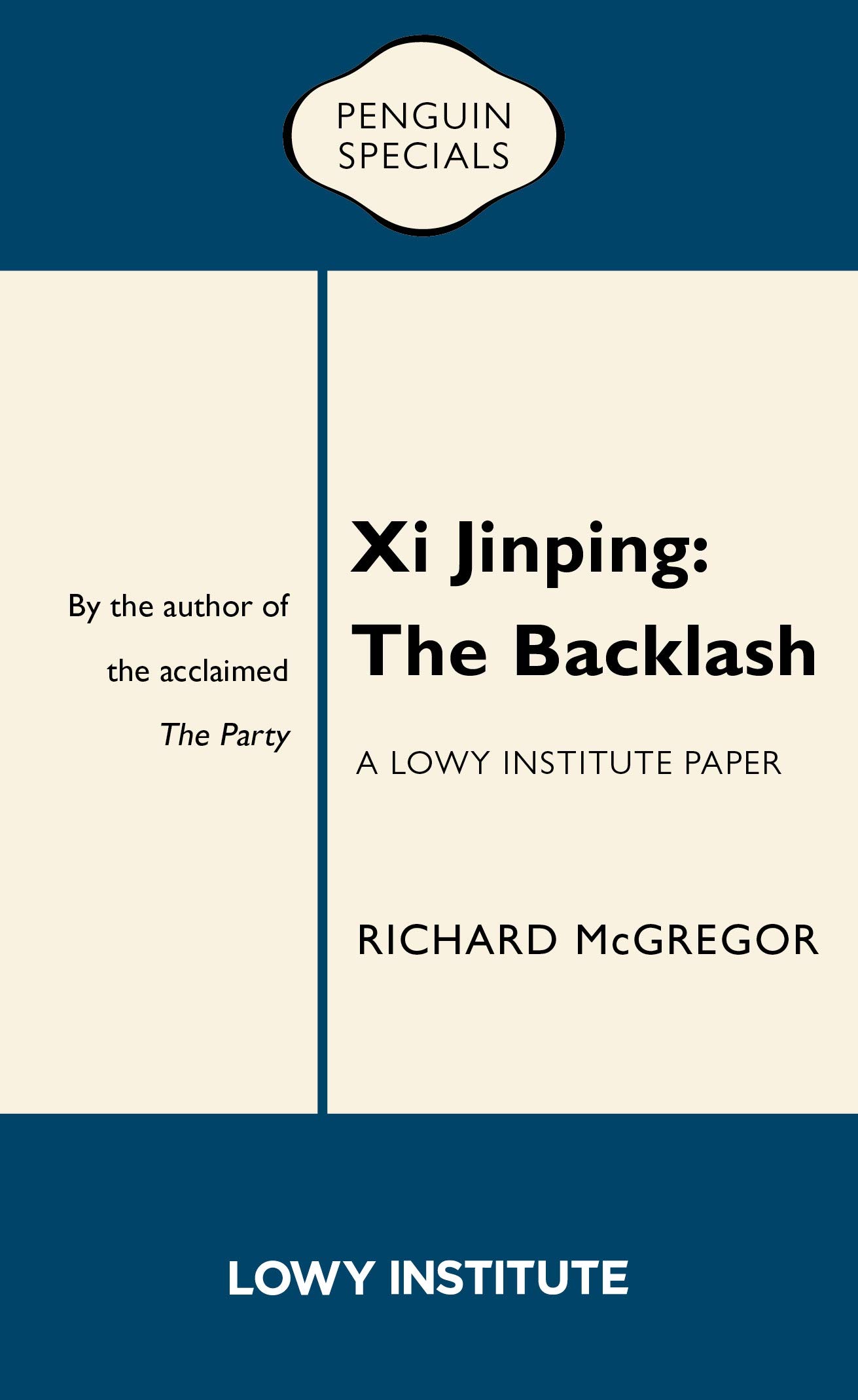
Xi Jinping: The Backlash (Penguin Specials)
E**E
Informative
I'm not going to pretend I understand China or politics very well but I did live in China for 6 years and I did see first hand the lovely and also the dogmatic political side of the average Chinese citizen. If anyone who has ever dealt with Chinese can tell you is that there are many opinionated Chinese within China, especially within the Tier 1 cities. However when it comes down to it they generally believe the propaganda that they watch on television despite the fact that so many are well travelled and communicate with foreigners for business on a frequent basis if they work in any import or export capacity. Many Chinese who don't deal with foreigners directly, especially Americans, tend to admire our soft power but don't really trust any foreigner at all. Sometimes they would ask me "Why does America attack other countries?" and this is a completely valid question to ask because I've asked myself that question to. I explain that nation states like the United States will always try, like any other country, to have an influence in areas it deems necessary. Latin America is a prime example of this. However with the average Chinese they like that I can be honest about my country but they cannot handle criticism about their own country very easily. They believe themselves to be so peaceful and yet they don't realize the technological theft, the bullying of nearby nation states and the dangers of trying to force the world to recognize their self assessed superiority. This book struck me at how accurate it measured the sentiment of the average Chinese person and it rang true to me. I think the Chinese are a marvelous people but I do wish they didn't think themselves blameless and victimized all the time because they tend to cherry pick their good deeds when it comes to their history. I think the Chinese feel defensive because they've been told since childhood that fierce nationalism coupled with pride is at the forefront of their personal strength. Even if they don't really believe this, it still affects them. I think many Chinese honestly believe what the propaganda states because its familiar but as the Hong Kong protests, the Xinjiang situation, the Taiwan issue and the state sponsored theft of intellectual property, their claims in the South China sea start to be questioned more and more not just by western nations but by the world as a whole, the Chinese will have to reevaluate the course in which they take. They can believe that they can just close off the world while still engage with it in trade, which would not really be practical or they can realize that a change in their government will be necessary so that not only can they continue to prosper but also be allowed a more lenient form of expression so that they aren't afraid of being jailed or castigated for disagreeing over issues that need to be talked about such as the ones that I mentioned before. I don't regret ever having lived in China and had nationalist sentiment in China not started to grow increasingly aggressive my wife and I would have stayed. Unfortunately for me, being Hispanic American and married to a woman from the country of Georgia, I came back to the United States to a President who riles up nationalistic fervor as well as racial and economic lines of thought as well. My wife wants to be a citizen but who knows how that will turn out (She has the green card, finally) and apparently I descend from "criminal and thief" according to the current president. The Chinese have pride which needs to be taken down a notch ("China is a peaceful harmonious country" and the Americans have a racial historical past which they've put off for too long ("Racism doesn't exist anymore and minorities are lazy and don't appreciate what they have") and both have a reckoning coming to them whether they like it or not. This book really makes me think about both countries because not only did live in both of them but because they are dear to my heart too.
P**O
Useful Update and Summary
Journalist Richard McGregor has given us a concise, useful summary of a troublesome development in international relations, in the form of a global reaction to, for want of a better phrase, the ”Xi Jinping effect" that has gradually becomes manifest since his ascent to the three highest offices in the People’s Republic of China—General Secretary of the Chinese Communist Party and Chairman of the Party’s Central Military Commission in 2012 and President of China in 2013. Indeed, the United States and many of its allies in Europe and Asia/Pacific see Xi’s China as the coming decade’s most significant global challenge across every significant transnational domain: political, economic, military, and diplomatic.Following decades of reform that gradually sought, sometimes cosmetically and other times integrally, to distance the CCP from the state and thereby protect the vibrant private-sector economy from ideological interference, Xi’s rise marks a return to a rigid emphasis on Party primacy in all walks of Chinese life. Xi has mandated Party committees and watchdogs in places where they had generally been sidelined, disbanded, or otherwise excluded in the the high tide of opening and reform in the three-plus decades before Xi. Party committees now play more prominent roles in both Chinese and foreign "private-businesses" operating in China, to include Taiwan, American, and European factories and business offices. Also notable is the renewed roles of party cells and study-and-indoctrination sessions throughout universities, workplaces, the military, and every level of society, in both urban and rural areas.Moreover, as part of the reemphasis on the Party, Xi revived the prominence of Mao Zedong and his significant historical role, granting The Great Helmsman primary agency in the Party’s Great-Chain-of-Being: Mao, the mythical presence from the party’s founding in Shanghai in 1921 through the epic drama of the Chinese Revolution—the Jiangxi Soviet, the Long March, Yenan, the Anti-Japanese National United Front of proletarians and bourgeoisie following Japan’s invasion of China in 1936, final victory in 1949, with Mao pronouncing from atop Tiananmen, “The Chinese people have stood up!”In Xi’s mind, surmises McGregor, removing Mao from the equation would delete him from the Chinese Revolution and the Party he led…the entire edifice of Party legitimacy in all sectors thus wobbles and threatens to collapse. The vast majority of living Chinese were born after the Cultural Revolution (1966--1976), the death of Mao (1976), and the decisions of the early 1980s that pointed to Mao’s “mistakes.” Consequently, the population needs to relearn the early lessons, the hardships the Party and the Chinese people faced, and, naturally, that “all our progress is due to the wise leadership of the Chinese Communist Party.” Mao remains, in Xi’s mind, the linchpin of this history and legacy, whose portrait over Tiananmen will never be removed.McGregor comments on Western concern over the persecution, if not outright suppression, of Muslims in Xinjiang and observes that under Xi, as part of this and other social control indertskings, makes China the most widely and deeply surveilled country in the world, with its pioneering advances in facial recognition technologies and imaginative uses of big data generated by the popular addiction to the internet and its massive large social media universe, all of which feed into China’s social credit system of data-gathering for loyalty report cards on all Chinese. Other measures, both technical and old-fashioned physical (read that as local “goons” who see little harm in dragging a troublemaker into a basement for some straightening out), put Orwell’s Big Brother in the shade. Dissenters are routinely jailed, subjected to grueling, repeated interrogations, and publications closed, with editors punished, for questioning the official line.McGregor is also critical of Xi’s program of asserting the full range of Chinese interests more aggressively in regional and international affairs, at the same time that the United States under Donald Trump questions its alliances and retreats from international obligations. Since Xi’s assumption of power in 2012 until today, he has steadily raised alarms in the region and beyond, provoking, on and off, calls for Cold War-type responses to his overstepping of normative boundaries established by Deng Xiaoping to “hide our capacities and bide our time.” China’s more provocative behavior is made all the more problematic in the context the erratic inconsistency of a chaotic Trump "China policy" and America’s diminished appetite for leadership, either regionally or globally, even if only the US has the sufficient array of political, economic, military, and soft-power resources to organize an international effort that might nudge China onto a more congenial path...if potential US partners were not as worried by an unreliable Trump as by Xi.McGregor’s pamphlet contains a few generic recommendations for “standing up to China”: Western and allied solidarity, competing openly, speaking up about Chinese misdeeds, being mindful of China’s interest in picking off and neutralizing via economic interest in mutually beneficial trade regional and more distant friends of democracy one by one, leaving others isolated and, perhaps, ultimately leaving the United States on its own.
TrustPilot
vor 1 Monat
vor 2 Monaten