
Laden Sie die App herunter


Kundendienst
Copyright © 2025 Desertcart Holdings Limited
Laden Sie die App herunter
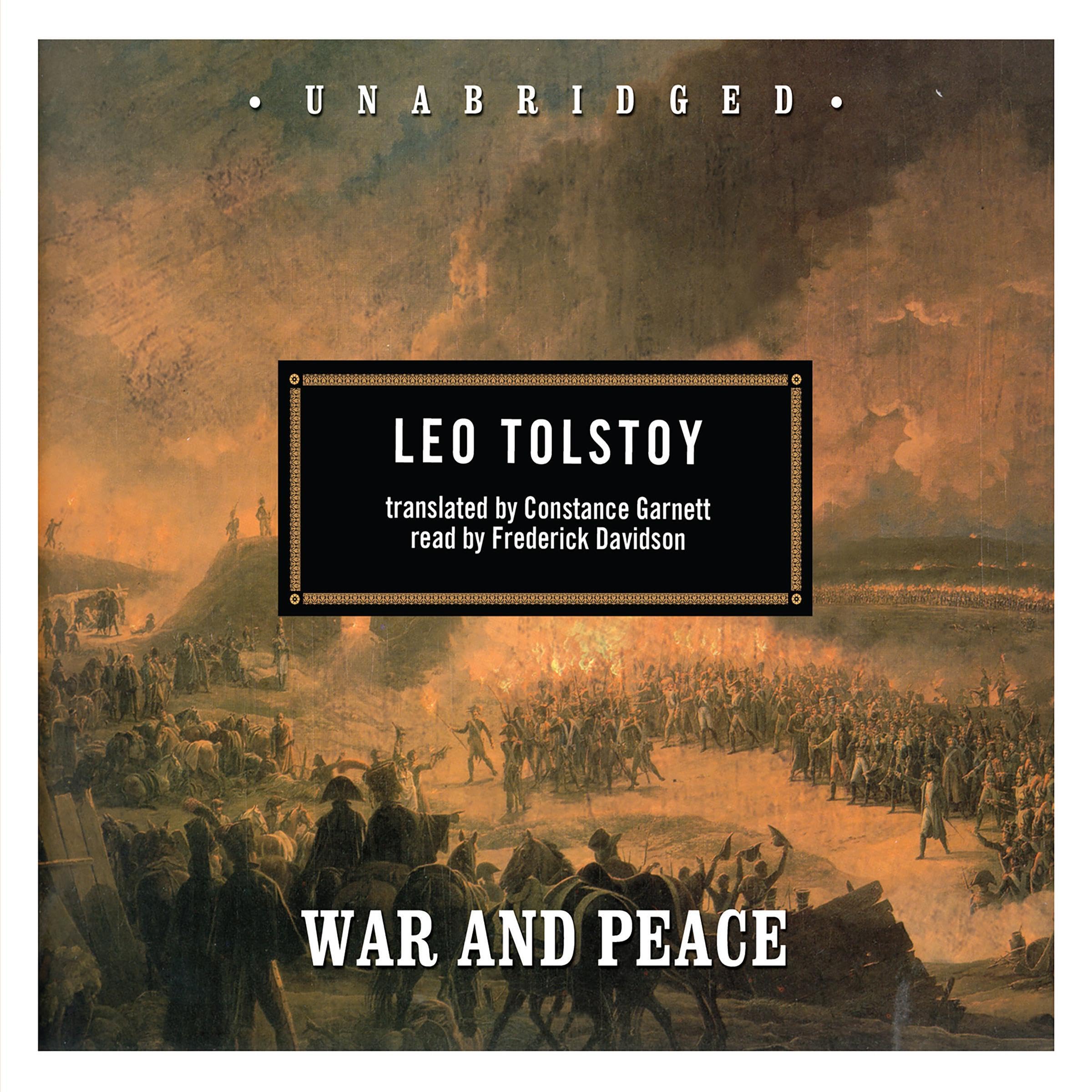
desertcart.com: War and Peace (Audible Audio Edition): Leo Tolstoy, Frederick Davidson, Blackstone Audio, Inc.: Books Review: Scratched Off My Bucket List - I officially scratched off an item from my bucket list. I read War and Peace in its entirety – and more. I didn’t just read one version. I read and referenced back and forth between two versions of the classic book. I used an ebook version translated by Anthony Briggs and the paperback version from Barnes & Noble Classics series. There were differences between the translations. The language in the digital version is more accessible to the English reader but the structure of the ebook is poorly formatted and distracting in many places. The vocabulary in the paperback version was more challenging, more florid, and the formatting was never an issue. The focus of my review from here on out will be on the book itself. There are many translations out there for readers to choose from. Those are the two I used. War and Peace is an epic tale of Russian life before, during and after Napoleon’s invasion in 1812. I knew little about the time period, the war or the culture in Russia at this tkime but Tolstoy masterfully draws the reader into the world. Despite the various locations, the use of several languages, a host of unfamiliar names and titles, War and Peace is rather easy to follow. I didn’t find it complicated, in that it never lost me. It is complex but I seemed to know where I was and who I was with from page to page. It wasn’t overwhelming. Three chief fictional figures serve as anchors to the massive world building – Pierre Bezukhov, Natasha Rostov and Andrei Bolkonsky. War and Peace is adorned with a full cast of colorful characters. Tolstoy brings us inside their heads as often as the three chief characters, changing POV where it is necessary, providing much needed insight. The most intriguing part of War and Peace for me was the exposition. Tolstoy breaks the fourth wall countless times and speaks to the reader as a professor speaks to students in a classroom. He educates us and he interjects his opinions about the war, about the historical players, and he even critiques others who have critiqued this time period. “All historians agree that the external activity of states and nations in their conflicts with one another is expressed in wars, and that as a direct result of greater or less success in war the political strength of states and nations increases or decreases.” By modern scholarly standards, this exposition would be considered taboo and unacceptable. In War and Peace, Tolstoy has written a history as much as a work of fiction. “History is the life of nations and of humanity. To seize and put into words, to describe directly the life of humanity or even of a single nation, appears impossible.” I for one actually enjoy the digressions and the exposition because I enjoy reading history. I’m not so sure other readers will fancy or appreciate these additions but I did. “The historians quite falsely represent Napoleon’s faculties as having weakened in Moscow...” Tolstoy is telling a unique story of the world as he sees it and doesn’t make anyone a hero or a villain. Napoleon is not portrayed as a monster and the leadership in Russia is not lionized. In fact, he often described the Russian leadership as disjointed, out of touch, and haphazard. It is not the unified, well-oiled machine filled with strategic maneuvers that historians often describe it as. Many of the greatest moves made by Russia were blunders or accomplished due to a lack of communication, even the headstrong actions of vigilantes and incendiaries. Pierre, Natasha and Andrei are flawed characters. Whatever strengths they possess are countered by equally destructive weaknesses. Having seen and loved the classic King Vidor film from 1956, I couldn’t separate, no matter how I tried, Pierre, Natasha and Andrei from Henry Fonda, Audrey Hepburn and Mel Ferrer. As I read, I saw their faces and heard their voices in my head. Not sure if I should commend the filmmakers for this or not. Pierre, with all his obvious quirks and shortcomings, his absentmindedness and debauchery, has always been my favorite character and reading the book did nothing to change this. (Or maybe it’s because Henry Fonda is such a great actor – I don’t know) Pierre’s time as a prisoner of the French, his emotions and thoughts when he thinks he’ll be executed by a firing squad, the long, cold, hopeless journey by foot, his conversations with Platon Karataev, are undeniably my favorite part of the book. “He baked, cooked, sewed, planed, and mended boots. He was always busy, and only at night allowed himself conversation – of which he was fond – and song… Karataev had no attachments, friendships, or love, as Pierre understood them, but loved and lived affectionately with everything life brought him in contact with… He loved his dog.” I was surprised by the Masonic chapters. They were interesting but I’m not sure if they were wholly necessary. I like how the book explored Pierre’s later years, his marriage and children, his growth as a man. The book enhances Natasha’s character in ways I had not anticipated. Natasha’s youth and aloofness disguise a rather complex and intelligent person who suffers from grand illusions and countless disappointments. Although she grows sick in body, she is strong and unique in drive and devotion – eventually. Andrei is intriguing. While he tries to be a successful man, a beacon of nobility and honor, he never quite measures up to the cold expectations of his stern father and wears this failure on his sleeve. He can never seem to find happiness in anything. He is stoic but he doesn’t want to be. His heart years for more than his head will allow. His unhappy first marriage is also a burden and results in one of the most famous lines ever written. “Never, never marry, my dear fellow! That’s my advice: never marry till you can say to yourself that you have done all you are capable of, and until you have ceased to love the woman of your choice and have seen her plainly as she is, or else you will make a cruel and irrevocable mistake.” I think one of the best features of Andrei’s character is his inability to change. His ideals, his concepts of virtue and goodness are so ingrained in him, they actually strangle him and inhibit him throughout. It is difficult for him to adjust and lighten up, take risks in social settings, to step out and try things beyond tradition. And when he does, he is injured to his heart and retreats back inside his shell of convention. The book provides the reader with deeper insight into Andrei’s life at Bald Hills, with his father, his sister Maria, and his wife Lisa, as well as the maturation of his son Nikolay. When one reads War and Peace, the world today is put on pause. There is no denying the mastery of storytelling that was Tolstoy. It’s a book everyone should read. Review: Wonderful, if the translation is good - There are a couple of things to watch out for here. 1. Make sure you are reading a really good translation of an unabridged version of the novel. This can make the difference between loving a sweeping epic, and feeling like you're trudging through a long soap-opera. 2. (I may alienate some teachers with this) BUY THE CLIFF NOTES for this one! This is the only book where some form of notes are needed to keep track of characters' names and relationships - and Russian history, if you're not familiar with the time period. Having said all that, I really enjoyed this book. I read some portions in Russian and read the Norton Critical edition translation in English ( a wonderful translation that appears to be out of print? ). I still think the imagery is amazing. I'm convinced I've been on a fox hunt, attended the Bolshoi in the 1800's, and have ridden in a troika - though I haven't. This is the power of Tolstoy's writing. The book can be read on several levels, all entertaining and thought-provoking. If you are young, read it like you would a good Jane Austin novel, concentrating on the people and the relationships. If you know some Russian History, read it for the comments it makes about the out-of-touch-with-reality, French-speaking aristocracy and the reality of war with France, as well as the characters. (The characters are Russian architypes, and therefore of interest to me, as a student of Russian History.) If you're into philosophy, politics, religion, whatever, you'll find something here to stimulate you. Tolstoy was pretty extreme on some of these topics, and it starts to show in this novel. (Reading about Tolstoy can be helpful to understanding the book as well.) The book probably deserves multiple readings, even though I know how overwhelming that sounds. (I'm a slow reader, myself!). Definitely deserves to be called a classic. I highly recommend it, even if you don't make it through the whole book. Read as much of it as you can.
A**R
Scratched Off My Bucket List
I officially scratched off an item from my bucket list. I read War and Peace in its entirety – and more. I didn’t just read one version. I read and referenced back and forth between two versions of the classic book. I used an ebook version translated by Anthony Briggs and the paperback version from Barnes & Noble Classics series. There were differences between the translations. The language in the digital version is more accessible to the English reader but the structure of the ebook is poorly formatted and distracting in many places. The vocabulary in the paperback version was more challenging, more florid, and the formatting was never an issue. The focus of my review from here on out will be on the book itself. There are many translations out there for readers to choose from. Those are the two I used. War and Peace is an epic tale of Russian life before, during and after Napoleon’s invasion in 1812. I knew little about the time period, the war or the culture in Russia at this tkime but Tolstoy masterfully draws the reader into the world. Despite the various locations, the use of several languages, a host of unfamiliar names and titles, War and Peace is rather easy to follow. I didn’t find it complicated, in that it never lost me. It is complex but I seemed to know where I was and who I was with from page to page. It wasn’t overwhelming. Three chief fictional figures serve as anchors to the massive world building – Pierre Bezukhov, Natasha Rostov and Andrei Bolkonsky. War and Peace is adorned with a full cast of colorful characters. Tolstoy brings us inside their heads as often as the three chief characters, changing POV where it is necessary, providing much needed insight. The most intriguing part of War and Peace for me was the exposition. Tolstoy breaks the fourth wall countless times and speaks to the reader as a professor speaks to students in a classroom. He educates us and he interjects his opinions about the war, about the historical players, and he even critiques others who have critiqued this time period. “All historians agree that the external activity of states and nations in their conflicts with one another is expressed in wars, and that as a direct result of greater or less success in war the political strength of states and nations increases or decreases.” By modern scholarly standards, this exposition would be considered taboo and unacceptable. In War and Peace, Tolstoy has written a history as much as a work of fiction. “History is the life of nations and of humanity. To seize and put into words, to describe directly the life of humanity or even of a single nation, appears impossible.” I for one actually enjoy the digressions and the exposition because I enjoy reading history. I’m not so sure other readers will fancy or appreciate these additions but I did. “The historians quite falsely represent Napoleon’s faculties as having weakened in Moscow...” Tolstoy is telling a unique story of the world as he sees it and doesn’t make anyone a hero or a villain. Napoleon is not portrayed as a monster and the leadership in Russia is not lionized. In fact, he often described the Russian leadership as disjointed, out of touch, and haphazard. It is not the unified, well-oiled machine filled with strategic maneuvers that historians often describe it as. Many of the greatest moves made by Russia were blunders or accomplished due to a lack of communication, even the headstrong actions of vigilantes and incendiaries. Pierre, Natasha and Andrei are flawed characters. Whatever strengths they possess are countered by equally destructive weaknesses. Having seen and loved the classic King Vidor film from 1956, I couldn’t separate, no matter how I tried, Pierre, Natasha and Andrei from Henry Fonda, Audrey Hepburn and Mel Ferrer. As I read, I saw their faces and heard their voices in my head. Not sure if I should commend the filmmakers for this or not. Pierre, with all his obvious quirks and shortcomings, his absentmindedness and debauchery, has always been my favorite character and reading the book did nothing to change this. (Or maybe it’s because Henry Fonda is such a great actor – I don’t know) Pierre’s time as a prisoner of the French, his emotions and thoughts when he thinks he’ll be executed by a firing squad, the long, cold, hopeless journey by foot, his conversations with Platon Karataev, are undeniably my favorite part of the book. “He baked, cooked, sewed, planed, and mended boots. He was always busy, and only at night allowed himself conversation – of which he was fond – and song… Karataev had no attachments, friendships, or love, as Pierre understood them, but loved and lived affectionately with everything life brought him in contact with… He loved his dog.” I was surprised by the Masonic chapters. They were interesting but I’m not sure if they were wholly necessary. I like how the book explored Pierre’s later years, his marriage and children, his growth as a man. The book enhances Natasha’s character in ways I had not anticipated. Natasha’s youth and aloofness disguise a rather complex and intelligent person who suffers from grand illusions and countless disappointments. Although she grows sick in body, she is strong and unique in drive and devotion – eventually. Andrei is intriguing. While he tries to be a successful man, a beacon of nobility and honor, he never quite measures up to the cold expectations of his stern father and wears this failure on his sleeve. He can never seem to find happiness in anything. He is stoic but he doesn’t want to be. His heart years for more than his head will allow. His unhappy first marriage is also a burden and results in one of the most famous lines ever written. “Never, never marry, my dear fellow! That’s my advice: never marry till you can say to yourself that you have done all you are capable of, and until you have ceased to love the woman of your choice and have seen her plainly as she is, or else you will make a cruel and irrevocable mistake.” I think one of the best features of Andrei’s character is his inability to change. His ideals, his concepts of virtue and goodness are so ingrained in him, they actually strangle him and inhibit him throughout. It is difficult for him to adjust and lighten up, take risks in social settings, to step out and try things beyond tradition. And when he does, he is injured to his heart and retreats back inside his shell of convention. The book provides the reader with deeper insight into Andrei’s life at Bald Hills, with his father, his sister Maria, and his wife Lisa, as well as the maturation of his son Nikolay. When one reads War and Peace, the world today is put on pause. There is no denying the mastery of storytelling that was Tolstoy. It’s a book everyone should read.
M**C
Wonderful, if the translation is good
There are a couple of things to watch out for here. 1. Make sure you are reading a really good translation of an unabridged version of the novel. This can make the difference between loving a sweeping epic, and feeling like you're trudging through a long soap-opera. 2. (I may alienate some teachers with this) BUY THE CLIFF NOTES for this one! This is the only book where some form of notes are needed to keep track of characters' names and relationships - and Russian history, if you're not familiar with the time period. Having said all that, I really enjoyed this book. I read some portions in Russian and read the Norton Critical edition translation in English ( a wonderful translation that appears to be out of print? ). I still think the imagery is amazing. I'm convinced I've been on a fox hunt, attended the Bolshoi in the 1800's, and have ridden in a troika - though I haven't. This is the power of Tolstoy's writing. The book can be read on several levels, all entertaining and thought-provoking. If you are young, read it like you would a good Jane Austin novel, concentrating on the people and the relationships. If you know some Russian History, read it for the comments it makes about the out-of-touch-with-reality, French-speaking aristocracy and the reality of war with France, as well as the characters. (The characters are Russian architypes, and therefore of interest to me, as a student of Russian History.) If you're into philosophy, politics, religion, whatever, you'll find something here to stimulate you. Tolstoy was pretty extreme on some of these topics, and it starts to show in this novel. (Reading about Tolstoy can be helpful to understanding the book as well.) The book probably deserves multiple readings, even though I know how overwhelming that sounds. (I'm a slow reader, myself!). Definitely deserves to be called a classic. I highly recommend it, even if you don't make it through the whole book. Read as much of it as you can.
L**Y
Flawed But What The Hell!
Frederik Davidson, aka David Case, was a ubiquitous voice on the audiobooks scene before his death a few years ago. He excites widely varying reactions: some find his languid, rather campy recitations rivetting; others find them merely languid and rather campy to the point of having-to-turn-the-damn-thing-off! Immediately! I think he's highly variable. He tells a good yarn but his penchant for imitating all the various voices of the characters - EVEN young girls - is offputting because he quite often makes a hash of them. Other readers "suggest" the voices; Davidson tries to play all the parts as if he's performing a one-man play. Happily, his reading of "War And Peace" minimizes (comparatively) the annoyance-level. He occasionally messes up: his voice for Dolokhov veers between "aristocratic" and "working-class" depending on the situation and his voice for Pierre is a little too buffoonish for comfort but for me his reading stays on the enjoyable side of "languid" and "campy". Besides, it's such a great story that it's almost impossible to completely ruin. And the price is an amazing bargain. However, try the audio samples to see if you can bear Mr Davidson' style of delivery before parting with your money.
N**E
Takes time to read
安**子
○トルストイの人物造形は巧みだ。ほんとうに生きているように多面的な性格と思考を備えている。描きたかったのは、理性と知性ある人、合理的思考、それと無条件の深い信仰への賛美と信頼であったろうか。これらの人物が歴史を背景に活動するものだから、これは歴史そのものではないとわかっていながら、実際に起きたことはこのようなことであっただろうかとつい思ってしまう。 ○そのような意味で、興味深い歴史的事実がいくつもあった。モスクワ遠征軍はフランス軍以外の諸国(プロシア、オーストリア等)が多く参加していた欧州連合軍であったこと。ロシア軍ではドイツ人将校が幅を利かせていたこと。クツゾフ将軍は、モスクワを守ろうとせずにあっさりと放棄して後方にさがったこと。フランス軍の敗走の原因は、①モスクワの略奪ゆえに軍としての秩序をうしなったこと、②自らの失火でモスクワに火災が発生したこと、であったこと。その壊滅は、敗走に際して略奪した多数の品を持ち帰ろうとしたために、輸送の負担になったことにあること。つまりは、ナポレオンの軍隊は、ロシア軍に敗れたというよりは、モスクワに魅せられて溶けてしまったようだ。 ○著者の歴史観は次のようなものだ「歴史は少数の偉人・天才が作るものではない。したがって有名人の行動を記録して歴史を書いたつもりになってはならない。歴史とは、人の大きな流れであって、ナポレオンも(有能な人ではあるが)、その流れのなかで役割を果たしているだけのことだ。19世紀の初めに、パリからモスクワに向けて東に動き、その反動でパリまで戻る、という大きな人の動きがあったということだ。
D**N
This is a classic of classics.
F**A
A gift. this book was read rom cover to cover and great discussions followed. Seller sent excellent book
L**A
A beautiful translation, I enjoyed reading this master piece
TrustPilot
vor 4 Tagen
vor 2 Monaten