We remain fully operational. Our teams are working around the clock to ensure your deliveries continue safely.

Laden Sie die App herunter


Kundendienst
Copyright © 2025 Desertcart Holdings Limited
Laden Sie die App herunter


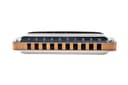

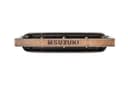


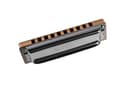
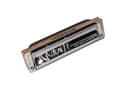
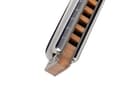
🎶 Own the sound that legends trust — Suzuki M20 Manji, where tradition meets modern mastery!
The Suzuki M20 Manji 10-Hole Harmonica combines a 10-hole diatonic layout with replaceable phosphor bronze reed plates and a resin composite comb embedded with wood particles, delivering a durable, moisture-resistant instrument with a polished stainless steel cover. Designed for both beginners and pros, it offers superior sound projection and easy maintenance, all protected in a soft-lined, hardshell case. This harmonica embodies over 70 years of Suzuki’s craftsmanship, making it a top-tier choice for blues, folk, and beyond.
| ASIN | B004D1FHMS |
| Brand Name | SUZUKI |
| Color | Silver |
| Customer Reviews | 4.4 4.4 out of 5 stars (739) |
| Finish Type | Polished |
| Global Trade Identification Number | 04939334151712 |
| Included Components | Case |
| Instrument Key | C |
| Item Dimensions | 6 x 3 x 1 inches |
| Item Type Name | Harmonica |
| Item Weight | 0.08 Kilograms |
| Manufacturer | Other |
| Manufacturer Part Number | Suzuki M20 Manji 10-Hole Harmonica C |
| Material Type | Stainless Steel |
| Model Name | Manji Suzuki Diatonic Harmonica |
| Model Number | Suzuki M20 Manji 10-Hole Harmonica C |
| Style | C |
| UPC | 133587110012 |
| Warranty Description | Limited warranty; does not cover damage resulting from accidents, misuse, alteration or normal wear. |
P**L
Good harmonica
Great beginner harmonica. Playable out of the box, and the composite materials means it's more resistant to water damage than a standard wood comb My Background: I played trombone in high school so I have a decent ear for pitch. I also grew up in the South so I'm used to the sound of a good harmonica. Why the Suzuki rocks and wails: Modern composite construction means the comb will never swell due to humidity or cleaning. The plates are screwed on rather than nailed down, meaning you can easily service the harmonica. Open ("trumpet bell") construction means the Suzuki is easier to play loud. That open construction and composite material also means the Suzuki tends to sound cleaner than other harmonicas, which may or may not be the sound you want to go for. Personally, I love the Suzuki's sound and I know I'll be able to get most of the bluesy grit that I want once I learn better techniques rather than leaning on the harmonica's construction. Comes with a felt-lined case which doesn't fit the harmonica perfectly, but is fine for tossing in your pocket and taking it on the go. The cloth also helps absorb any excess moisture while it protect the harmonica's finish, so I'm sure this thing will play like new for a long time. Versus the Hohner Marine Band: There are a million competitors, but I think most people really only need to look at modern harmonicas like the Suzuki versus the Marine Band. The Marine Band hasn't changed much in the last century for a reason. Inexpensive with a wood comb, this harmonica is so cheap that if a beginner leaves it to rust they can just buy another one. Often requires a little tuning out of the box, doesn't produce nearly as much sound as the Suzuki thanks to a more closed construction, and is nailed down so it is not easy for a beginner to service. Still a great option for people who want that classic sound, but I think most people prefer the Suzuki due to all its modern advancements. Hohner also makes modern updates of the Marine Band if you'd rather stick with them. My only reservations: My Suzuki felt a little off out of the box. In particular, the very low and very high notes were hard to sound at low volume. Since I'm just practicing and not trying to blow away a concert hall this is more of an issue for me than it might be for others. A professional player might also know how to adjust around this, but I as a beginner had to open up the harmonica and bend the reed plates a little to make the harmonica play a little more easily. Ten minutes watching instructional videos online and I was on my way. Overall: With a light tuning to make the harmonica more playable at low volume, my Suzuki is just wonderful. The sound is amazing and accurately tuned. Every time I get confident in an improvement in my abilities I can really turn the sound up to 11 thanks to the open construction and belt out some music as a reward for my training. Highly recommended. Not only am I having a blast playing the Suzuki, but maintenance seems like it will be rare and easy. Totally happy with this purchase.
T**A
Best I've played, even better than the Hohner Crossover.
I have tried at least 14 different harmonicas this past year and a half. There have been very few I liked. Among the harmonicas I do not recommend: by Hohner: Blues Harp (painful to play) and Big River (not airtight compared to most harps I tried), by Lee Oskar: Major Diatonic Harmonica (weak tone, and the top cover plate is uncomfortable on my top lip because of the deep Lee Oskar engraving), by Bushman, the Delta Frost (three reeds blew out within a few months, and I was not playing harshly. I tend to go pretty easy on my harps). by Suzuki, the Bluesmaster (arrived quite dusty.. gross, and I found its width to be uncomfortable), and by Fender, the Blues DeVille (excellent tone, but sharp reed plates and cover plates, also the matte finish on this harp is uncomfortable). I tried the Hohner Crossover, and thought it was good, but not worth the price. As far as I know, the Crossover contains the same brass reeds as cheaper Hohners. Also, the Crossover doesn't feel as good in my hand as the Manji. The build quality of the Manji is better too. The reeds are phosphor bronze, not brass. Also, the reeds have been attached using a different method than most harmonica manufacturers use. If you must have the Hohner tone, go for a Crossover. The Manji tone is a bit more pure and less dirty. I like the Manji's tone just fine, and far prefer this harp to the Crossover. It is more comfortable to hold, is built very well (quite similar to modded Hohners), sounds great, and is cheaper than the Crossover.
P**I
Great but very different sound to Hohner
I usually use Hohner harps. In particular the Big River and Special 20 and sometime the Marine band. The Manji is really solid, and feels and looks more like the Marine band. My Manji is brand new, and not sure if that's the reason, but it requires a more aggressive attack to get it to perform. Not that that is bad. I like it. I actually think the Special 20 is too soft and loose, and can get away from you. The Manji feels like a precise and solid harp. Has a nice weight, and worth having. You can tell it's inspired by the classic Hohner Marine Band. Very similar in size and design. But like I said it is VERY different sounding than the Hohner. Try it though. It's great.
☼**☼
AN ABSOLUTELY BEAUTIFUL INSTRUMENT!
After mulling over the merits of the Hohner Marine Band Crossover, Deluxe and Classic (not Progressive) Special 20 options (as well as the Seydel 1847 and the Lee Oskar), I selected this beautiful Suzuki Manji diatonic-10 in C. I realize that this harmonica tends to be a little less forgiving as far as a learning curve for beginners than some of the others mentioned, but, that's exactly what I wanted. An instrument that would demand techniques are applied correctly right off the bat. If you can get those down, you can play on just about anything later on. The construction, air-tightness, tone and materials for longevity exceeded my expectations and promises to be an instrument I will play and enjoy for a long time to come. This is not an inexpensive child's toy. It's an item that will demand some basic care on the player's part to keep it in tip-top condition, but offers the serious aficionado an ability for customization down the road, if desired. If you want a quality product you can be serious about -- that does what it's supposed to and sounds the way it should -- and ISN'T just a temporary item to goof around with -- spend a little cash and start off right. You won't lose interest or give up on it altogether! Although any of the models I mentioned above certainly fit the "quality" category, the Suzuki Manji, for me, topped those options. JLD - 4/15/2020
A**T
arrived within the time specified, great product too
W**L
I absolutely love the rich tone and ease of playing of this harmonica. My earlier harps were from a venerable German manufacturer; great tone and feel, but not as smooth and easy out of the box as this Manji was. In fact I bought this A-harp to replace an A-harp from that other maunufacturer that seemed totally impossible to break in fully, over six months!. A friend has the same model and it was rich, smooth and easy from the start, indeed her favourite harp. So maybe mine was an aberation. Suzukis, though, have won my heart - I just bought a Suzuki Promaster and it's incredible! But one more comment on this Manji-A. The Canadian price was good for the fine quality. The harmonica shipped from Japan and took the minimum time expected. It was very carefully packaged, and securely wrapped. I say wrapped because it was like a Japanese gift with a personal note inside, Japanese hospitality at its finest. Thank you Senna of Sasuke Japan!
F**E
Je voulais cette harmonica dans la gamme de do. Je n'est pas fait attention au petit "a" juste derrière le nom ce qui fait que l'appareil est en la. raté.
L**D
I've played a chromatic harmonica since being given a Hohner over half a century ago, and recently bought a Swan chromatic which I found to be just as good as the Hohners though a fraction of the price. Then while researching Harmonica playing online I discovered the incredible playing of Christelle Berthon on Youtube, and decided to try a blues harmonica, realising that these are a very different instrument, much smaller, and with a different layout of notes in the lower octave. I bought a Swan ten-hole and found that it sounded very quiet and dull. So I thought I would try the Manji as used by Berthon. There is no comparison between the two! The Manji is loud, bright-sounding, and the notes ring out making it possible to get those sweet sounds on straight playing. The reeds clearly have a 'high Q factor' in engineering terms. probably because they are spot welded rather than riveted, giving a firmer better-defined fixing pont with less energy loss. It's even louder and brighter than any of my Chromatics. I can't comment on ability to bend notes as I have a whole new thing to learn here and am struggling! I opened it up and the finish on the reed edges is cleaner than on the cheap Swan. I also like the way the cover plate screws are positioned at the front. Because blues harmonicas don't have a front plate to the comb and the lips overlap the cover plates, it is important that the cover plates seal along the front edge reasonably well. The seal on the Manji is much better than on the Swan, which has central screws and a poorer fit along the edge. Rounded ends on the front of the cover plates also makes more sense than the cruder corners on the Swan. So you don't always get what you pay for - the Swan Chromatic is very good, but in the case of the Manji it's well worth the extra money.
T**T
J'ai acheté cet harmo en remplacement de mon classique Hohner Marine Band qui manque d'étanchéité. Ainsi j'ai choisi ce Manji dans le but de palier à ce défaut puisque ce dernier possède un sommier en résine bois du plus bel effet. Ce qui signifie une étanchéité optimale sans pour autant perdre toute la chaude sonorité du bois. Certes, on n'obtient pas le même son qu'avec l'inimitable Marine Band, mais le résultat est plus satisfaisant que sur un sommier tout plastique. Je l'ai également choisi parce qu'il est de la même taille que le Marine Band. Notez tout de même que les capots arrières sont bien plus ouverts sur le Manji et (très) légèrement plus bombés sur l'avant. Sinon c'est quasiment la même chose, excepté le design plus rond, genre cool et confort. Enfin, comme la plupart des harmos récents, il est puissant, véloce et facile.
TrustPilot
vor 1 Woche
vor 1 Monat